
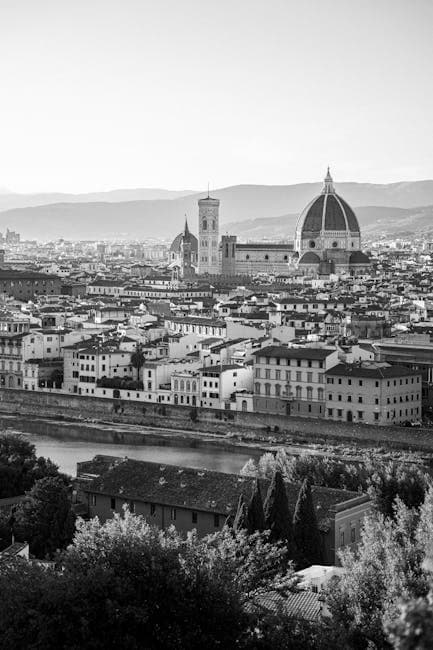
Florence: Arno River Views, Piazzale Michelangelo and San Miniato
Firenze, Italia
Audio Preview
Listen to a sample of this audio tour to get a feel for the experience.
What You'll Experience
On this Florence: Arno River Views, Piazzale Michelangelo and San Miniato audio tour in Firenze, you'll discover 12 carefully selected points of interest, each with its own story. The tour is designed to be completed at your own pace, with GPS navigation guiding you from one location to the next. As you approach each stop, the audio narration automatically begins, bringing history, culture, and local insights to life.
About This Tour
This evening route in Florence follows the Arno River from Santa Maria Novella through Via Tornabuoni and Ponte Vecchio to the Uffizi riverfront and San Niccolò. It continues up the Rampe del Poggi to Piazzale Michelangelo and San Miniato al Monte. The tour focuses on Renaissance architecture, urban views, riverfront life, and panoramic city perspectives.
Points of Interest
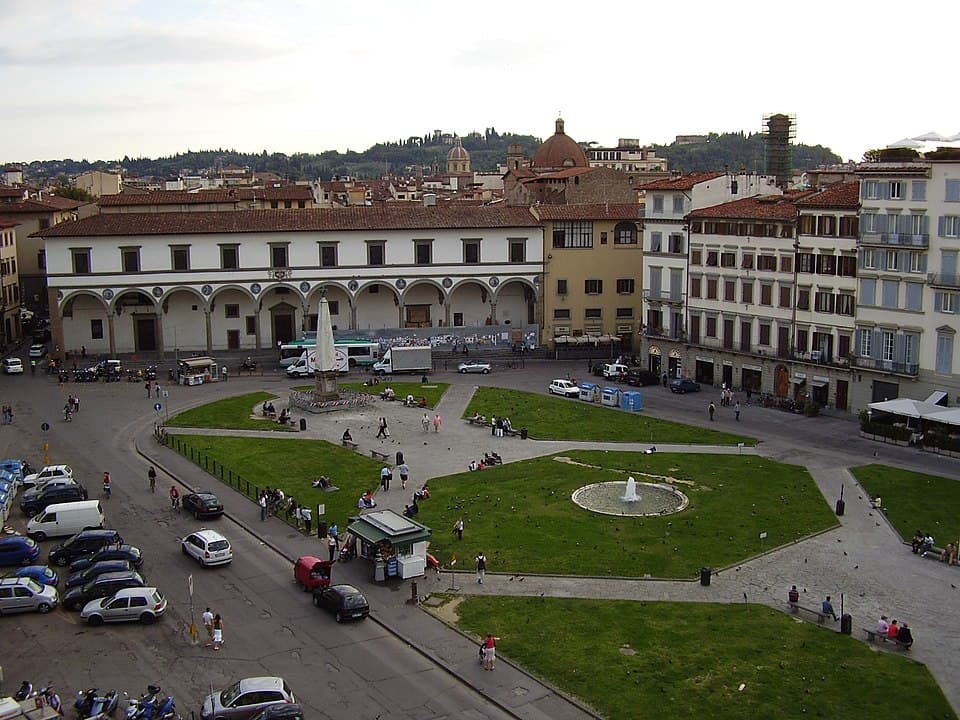
Piazza Santa Maria Novella
Open square framing church, light, and arrival
This opening stop situates visitors in Piazza Santa Maria Novella as an arrival space between the modern station and the historic core. The script should describe the elongated shape of the piazza, the framing presence of the church, and the way evening light hits the façades. It can briefly mention the piazza’s historic use for gatherings and events, including horse races once held here in front of the church. It should orient listeners to key city landmarks visible or nearby and introduce the tour’s themes of river, Renaissance architecture, and urban vistas without going in-depth on the church façade yet, as that comes next.
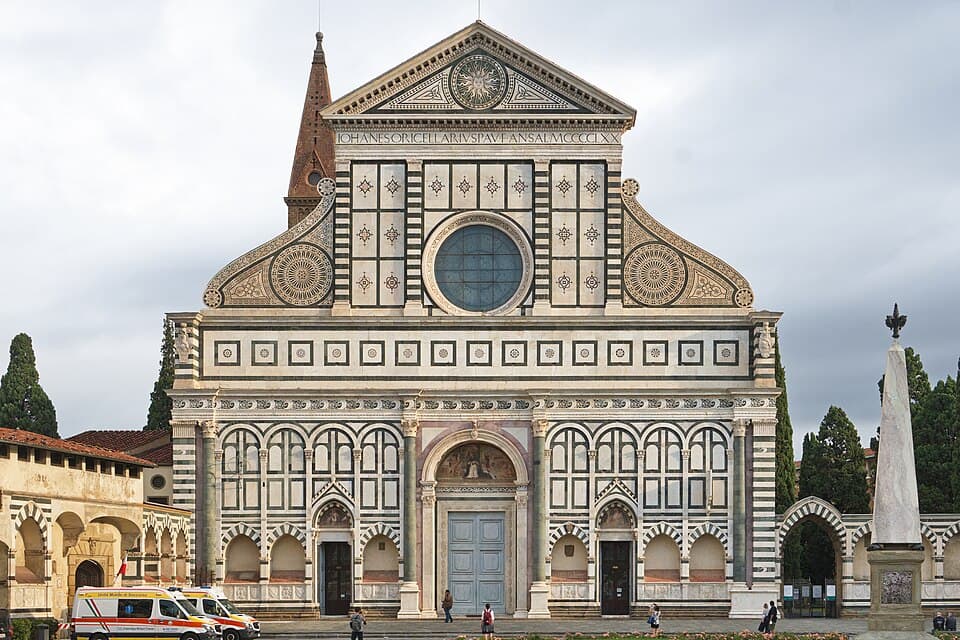
Santa Maria Novella Facade
Renaissance marble geometry and visual harmony
This short stop zooms in on the façade of Santa Maria Novella as an early Renaissance masterpiece, highlighting its polychrome marble, geometric patterns, and classical elements. The narration should explain how Leon Battista Alberti’s design unified an older Gothic church with a harmonious new front. It can point out details like the scroll-shaped volutes, the central rose window, and the green-and-white marble typical of Florence. A unique anecdote might note how parts of the lower façade predate Alberti and were incorporated, creating a conversation between medieval and Renaissance styles visible in the stone.
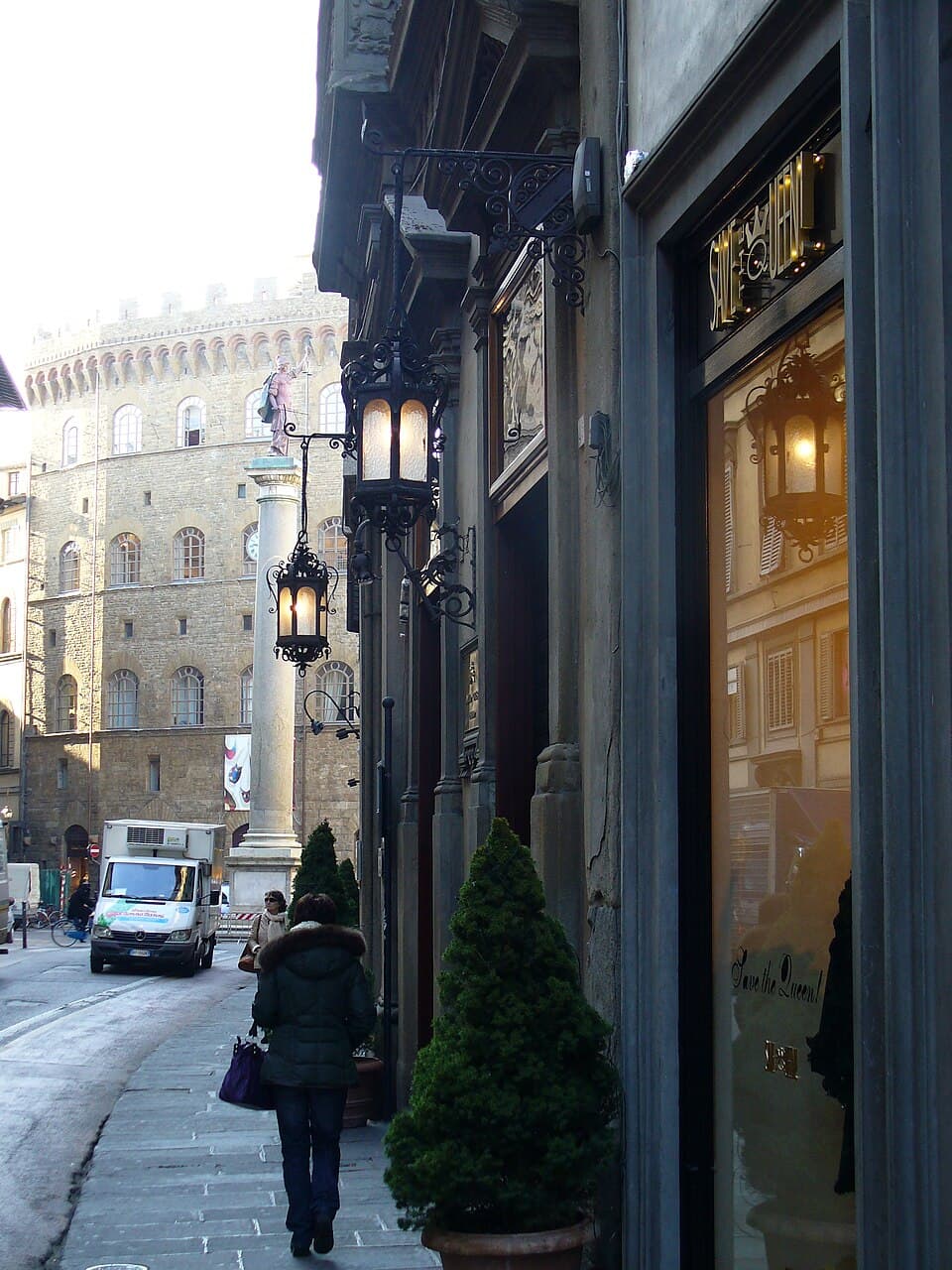
Via Tornabuoni
Noble palaces meet modern luxury shopping
This stop covers Via Tornabuoni as Florence’s elegant axis of aristocratic palaces and contemporary high-end boutiques. The script should describe the street’s relatively straight line, wide feel, and the façades of major palaces like Palazzo Strozzi and Palazzo Tornabuoni. It should connect these buildings to Renaissance banking families and the city’s tradition of wealth and display. A unique anecdote may mention how Palazzo Strozzi was built with such massive rustication that it became a kind of architectural arms race with rival families, illustrating Florentine competition through stone rather than words.
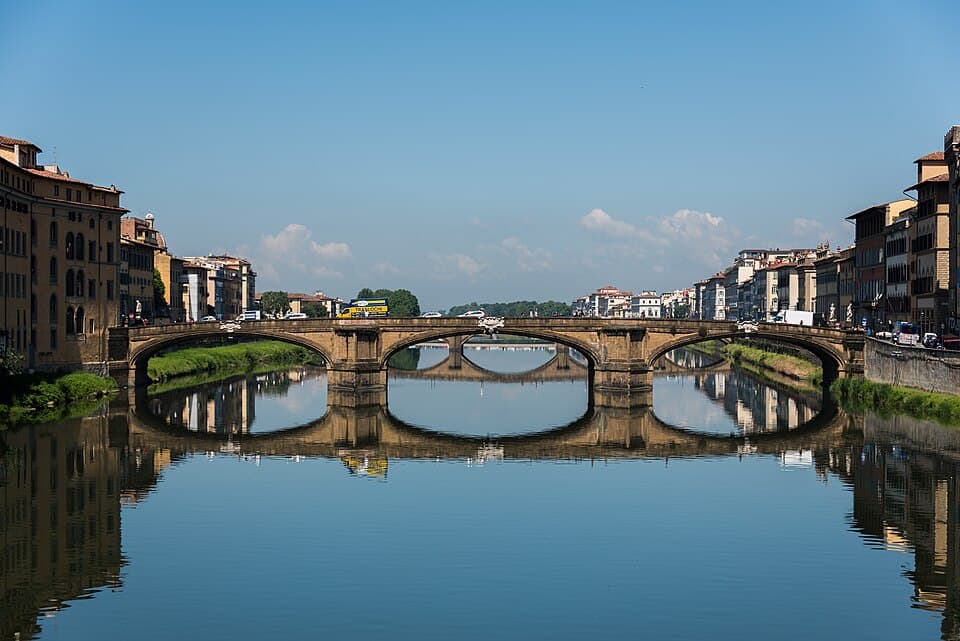
Ponte Santa Trinita
Graceful bridge and sunset view corridor
This stop introduces Ponte Santa Trinita as an elegant Renaissance bridge and one of the finest viewpoints over the Arno. The narration should describe its low, shallow arches and refined stonework, contrasting it with heavier medieval bridges. It can mention that the bridge was destroyed in war and later carefully reconstructed using recovered stones from the river. A unique anecdote might focus on the river god and seasonal statue figures placed at the bridge’s ends and how some were lost and rediscovered after the destruction, symbolizing Florence’s resilience and attachment to its river landmarks.
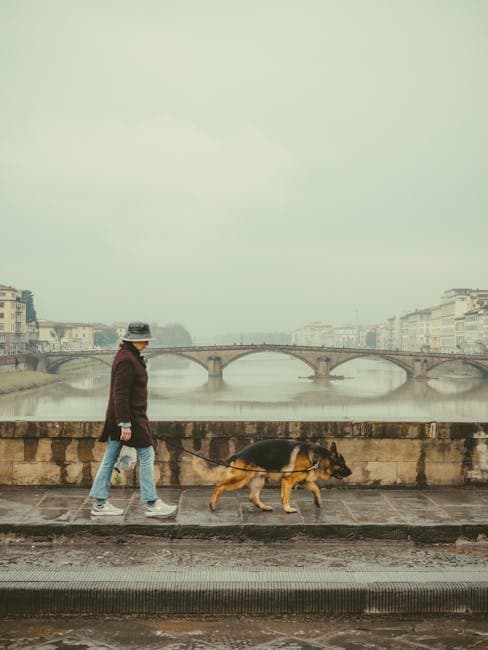
Lungarno Corsini Promenade
Elegant north-bank riverfront and reflections
This stop focuses on the stretch of Lungarno Corsini and Lungarno degli Acciaiuoli as an upper-class riverfront promenade with palaces on one side and water on the other. The script should describe the façades of noble buildings facing the river, the changing color of the stone in evening light, and the feel of strolling along the parapet. It should briefly touch on the Arno’s role in trade and in repeated flooding that shaped these quays. A unique anecdote could mention how, in earlier centuries, some palaces had private river landings or warehouses at the back, effectively turning their river-facing sides into functional as well as prestigious façades.
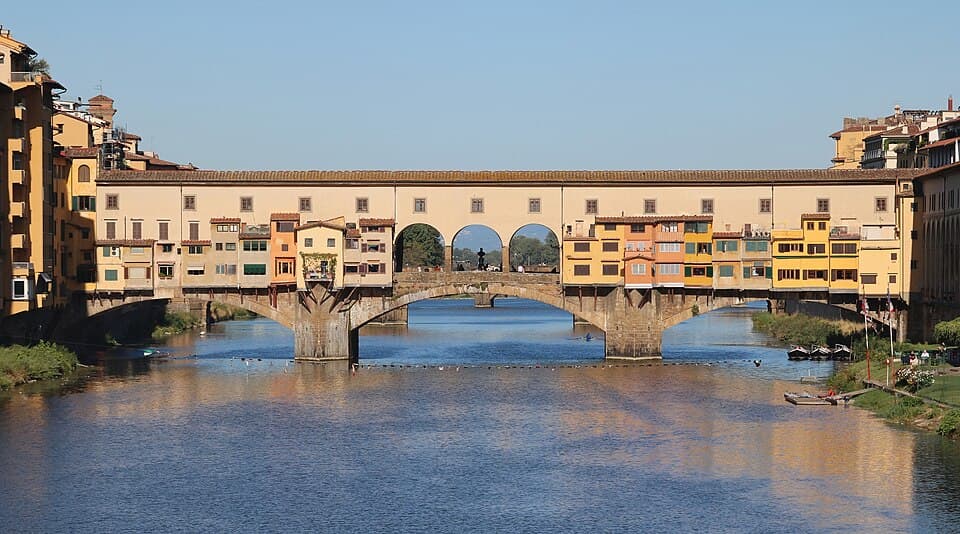
Ponte Vecchio
Medieval bridge of goldsmiths over the Arno
This stop treats Ponte Vecchio as both an urban icon and a layered historical artifact of commerce. The narration should describe its medieval structure, the houses and shops that seem to cling to the sides, and the goldsmith and jewelry tradition that replaced earlier butchers’ stalls. It should point out the Vasari Corridor running above and how Medici rulers used it to move privately between palaces. A unique anecdote may highlight the decision during the Second World War to spare this bridge from destruction, while access on both sides was blocked, leaving it as a rare survivor among city bridges.
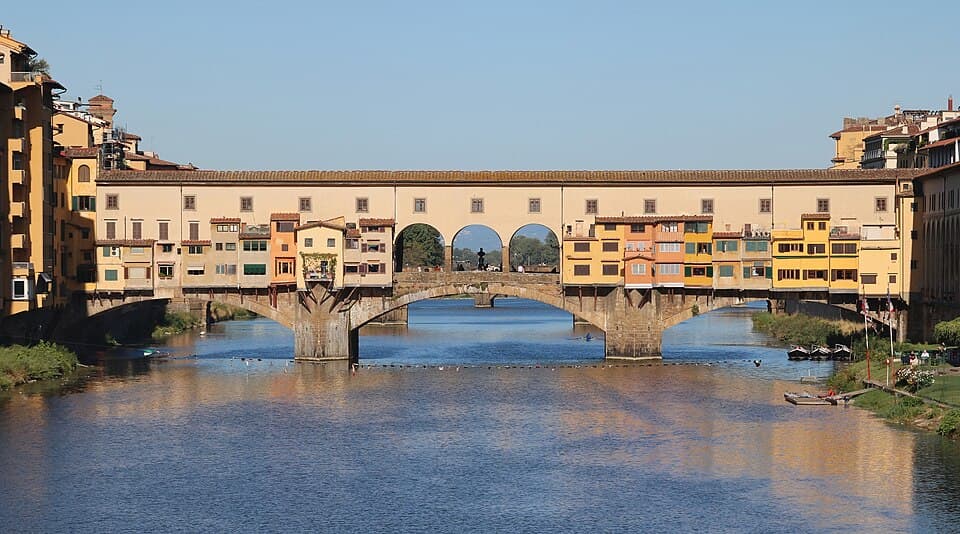
Lungarno degli Archibusieri
Uffizi-side riverfront beneath Vasari Corridor
This stop explores the narrow Lungarno degli Archibusieri under the long elevated passage of the Vasari Corridor. The script should describe the heavy Uffizi wall on one side, the arcades and corridor above, and the glimpses of the river through openings. It can clarify how this area linked the Medici’s political and residential centers while overlooking the water. A unique anecdote may note how, in more recent times, this stretch has become an outdoor gallery of sorts, with changing displays or occasional art interventions beneath the corridor, echoing the museum above but in the open air.
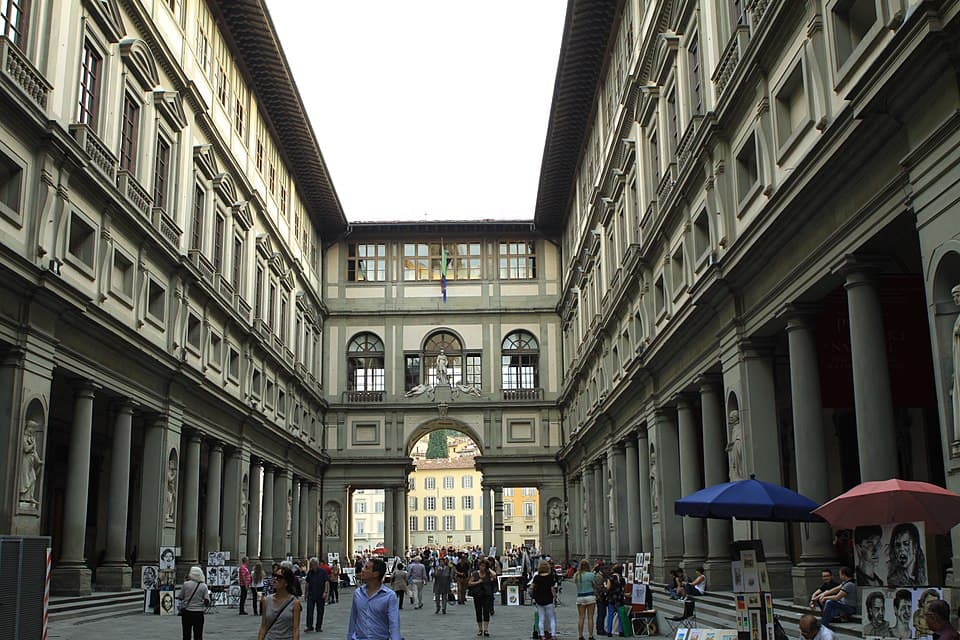
Piazza degli Uffizi
Stone canyon framing river and performers
This stop presents Piazza degli Uffizi as a dramatic, U-shaped courtyard formed by Vasari’s long galleries. The narration should describe the linear perspective down the central axis, the statues in niches, and the way the space opens toward the Arno at one end. It should highlight how the piazza functions today as a lively passage with street musicians and portrait artists, contrasting with the ordered architecture. A unique anecdote might mention how, before becoming a museum, the Uffizi housed the city’s administrative offices, giving the name “offices” to a place now synonymous with high art.
San Niccolò Riverside
Quieter south-bank embankment and local bars
This stop covers the San Niccolò riverside as a more relaxed, neighborhood stretch of the Arno’s south bank, in contrast to the grand north-bank palaces. The script should describe the old walls and towers nearby, the low embankment, and clusters of bars and cafés that create an evening social scene. It should connect the area’s character to its history as a slightly out-of-the-center quarter tied to crafts and river-related work. A unique anecdote may refer to how, during summer, temporary riverbeach setups or outdoor events sometimes appear here, turning the embankment into a seasonal gathering spot for locals.
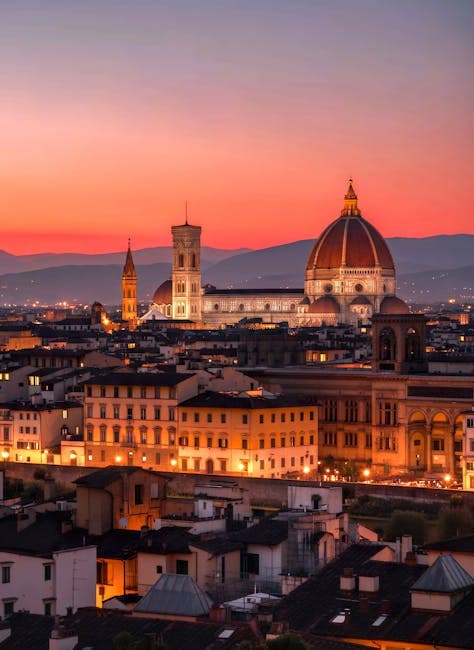
Rampe del Poggi
Scenic 19th-century stairways climbing the hill
This stop highlights the Rampe del Poggi as a series of monumental 19th-century ramps, stairways, and water features carved into the hillside to connect Florence to a new panoramic terrace. The narration should explain their creation during the period when Florence briefly served as capital of a unified Italy, as part of broader urban redesigns. It should describe grotto-like niches, balustrades, and small cascades encountered on the climb. A unique anecdote can note how, for many Florentines, these ramps became a favored spot for Sunday strolls and leisurely ascents, turning the route itself into an attraction, not just the viewpoint at the top.
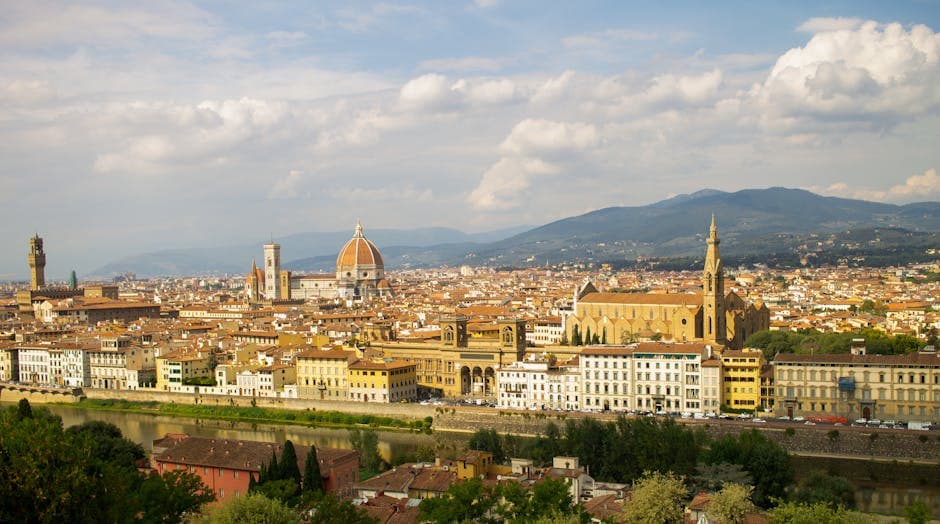
Piazzale Michelangelo
Broad terrace with classic Florence skyline view
This stop focuses on Piazzale Michelangelo as the grand 19th-century terrace offering the textbook panorama over Florence. The script should describe the sweeping view: Duomo dome, Palazzo Vecchio tower, Arno bends, and surrounding hills, especially in evening or twilight light. It should briefly explain the square’s creation as a monument to Michelangelo, including the bronze copy of David and other sculptures. A unique anecdote may mention how generations of visitors and locals have treated this as a ritual sunset spot, with painters and photographers lining the railing to capture nearly identical, yet always changing, views of the city.
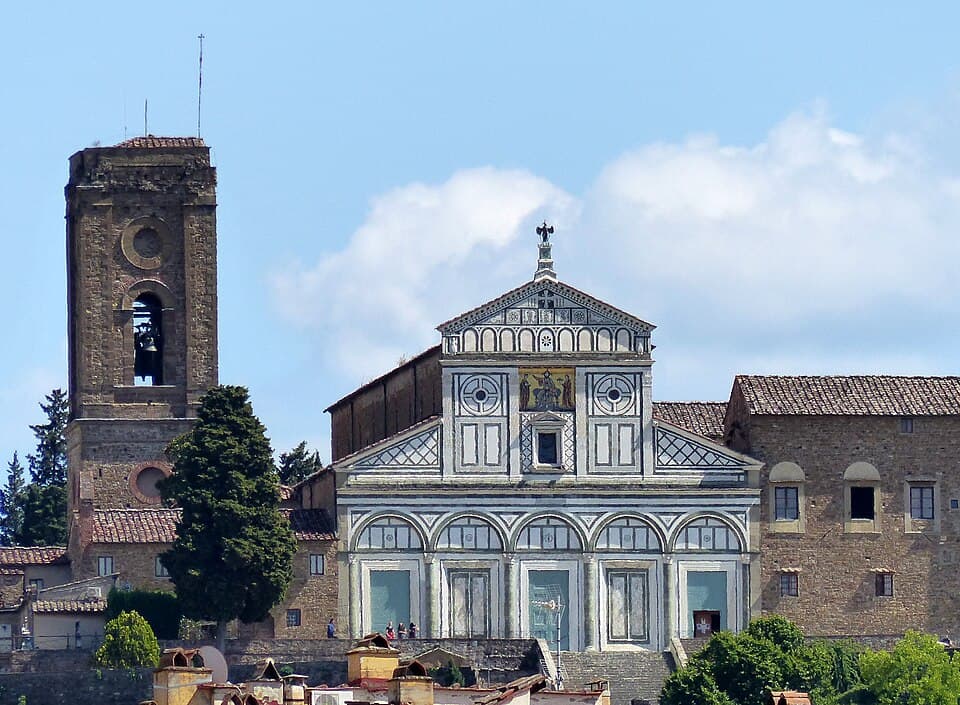
Basilica of San Miniato
Romanesque hilltop church and serene outlook
This final stop presents the Basilica of San Miniato al Monte as an older, more intimate counterpart to the busy terrace below, ending the tour in a quieter mood. The narration should describe its Romanesque marble façade, mosaic, and simple geometric forms, along with the adjoining cemetery and monastic buildings. It should highlight the slightly higher, more tranquil view over Florence from the church terrace compared to Piazzale Michelangelo. A unique anecdote might mention the longstanding tradition of monks or religious communities here producing herbal products or liqueurs, tying the hilltop sanctuary to a quieter, self-sufficient way of life. It should also gently wrap up the tour’s themes and say farewell.
Start This Tour
Download Roamway to experience this audio tour
Tour Details
Access
Free
Stops
12 points of interest
Languages
English
More tours in Firenze
View all tours in FirenzeOther tours you might enjoy:
Florence: Medici Power, Palaces and Churches
This tour explores central Florence through key Medici sites, from San Lorenzo and its basilica, chapels, and palace to San Marco, Piazza Santissima Annunziata, and the political center around Palazzo Vecchio and Piazza della Signoria. It examines Medici patronage, art, architecture, religion, and government, including the Uffizi courtyard, Vasari Corridor exterior, and Pitti Palace.
Florence: Markets, Street Food and Wine Culture
This tour explores Florence’s food culture through historic markets, street food areas, and traditional wine bars on both sides of the Arno. It includes Mercato Centrale, Sant’Ambrogio, Via dei Neri, and the Santa Croce and Oltrarno districts. Themes include everyday Florentine life, local products, wine traditions, and artisan gelato.
Florence: Duomo Complex and Renaissance Churches Highlights
This tour focuses on Florence’s historic center, from the Piazza del Duomo and its cathedral complex to Orsanmichele, Badia Fiorentina, Santa Croce, and Santa Maria Novella. It examines medieval and Renaissance architecture, religious art, funerary monuments, and civic history, including key façades, sculptural programs, and interior highlights where accessible.
Frequently Asked Questions
How do I start this audio tour?
Download the Roamway app, search for this tour, and tap 'Start Tour'. The app will guide you to the starting point using GPS. Once you're there, the audio narration begins automatically.
Do I need an internet connection?
No! Once you've downloaded the tour in the Roamway app, it works completely offline. The GPS navigation and audio narration function without an internet connection.
Can I pause and resume the tour?
Yes! You can pause the tour at any time and resume later. Your progress is automatically saved, so you can complete the tour over multiple sessions if needed.