
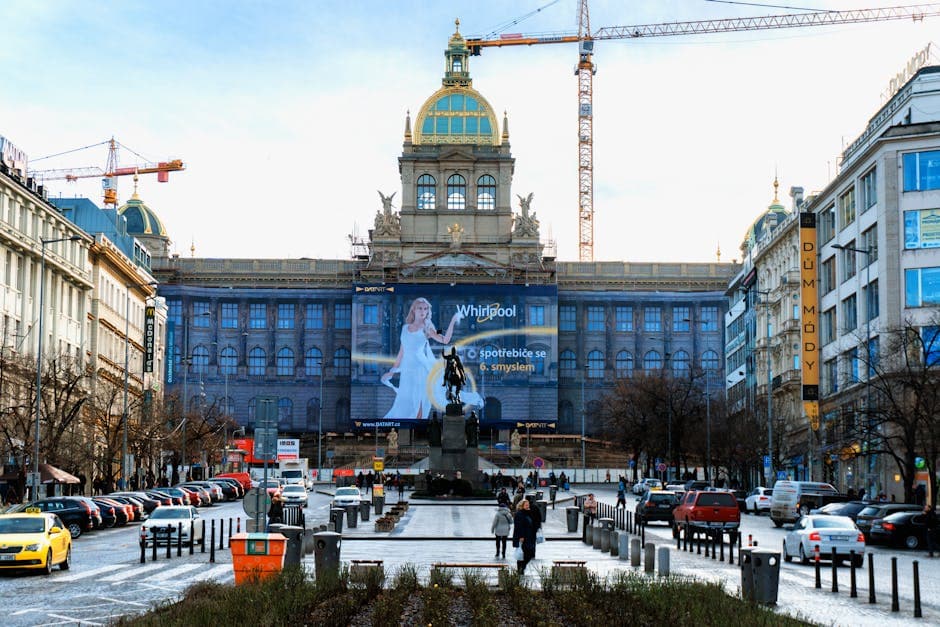
Prague New Town: Wenceslas Square, Revolutions & Riverfront
Praga, Česko
Audio Preview
Listen to a sample of this audio tour to get a feel for the experience.
What You'll Experience
On this Prague New Town: Wenceslas Square, Revolutions & Riverfront audio tour in Praga, you'll discover 12 carefully selected points of interest, each with its own story. The tour is designed to be completed at your own pace, with GPS navigation guiding you from one location to the next. As you approach each stop, the audio narration automatically begins, bringing history, culture, and local insights to life.
About This Tour
This tour explores central Prague from Wenceslas Square to the Vltava riverfront, focusing on modern Czech history. It covers sites linked to Saint Wenceslas, the National Museum, Jan Palach, the Velvet Revolution, and the First Republic. Key themes include political protests, 19th–20th century architecture, urban development, and cultural life around Národní třída, the National Theatre, and the Dancing House.
Points of Interest
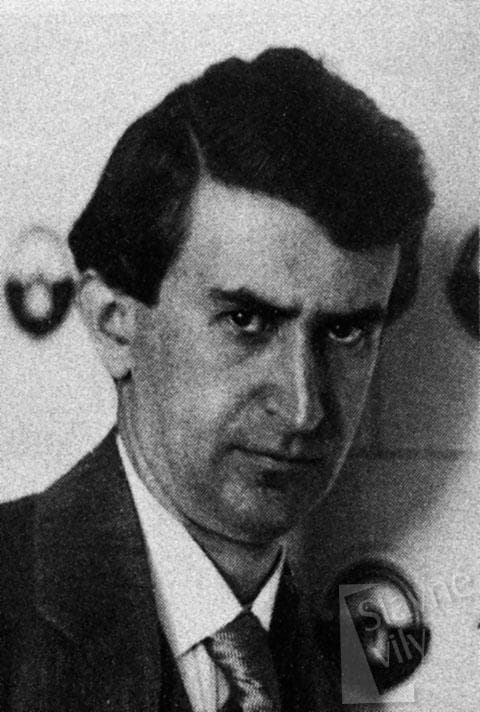
Wenceslas Square Approach
Modern Prague’s grand boulevard and protest stage
This stop introduces Wenceslas Square as a long, sloping boulevard rather than a traditional square, framed by 19th–20th century façades and crowned by the National Museum. The script should outline its origins in Charles IV’s New Town plan and its transformation from a horse market to a civic and commercial center. It should highlight the square’s role as a mass gathering place for events under the Habsburgs, Nazi occupation, communism, and after 1989. An anecdote can describe how crowds filled the square during major demonstrations, such as people standing on tram stops and statues to gain a better view of speakers. This stop sets the tone, connecting space, politics, and everyday life before the tour moves uphill toward the statue and museum façade.
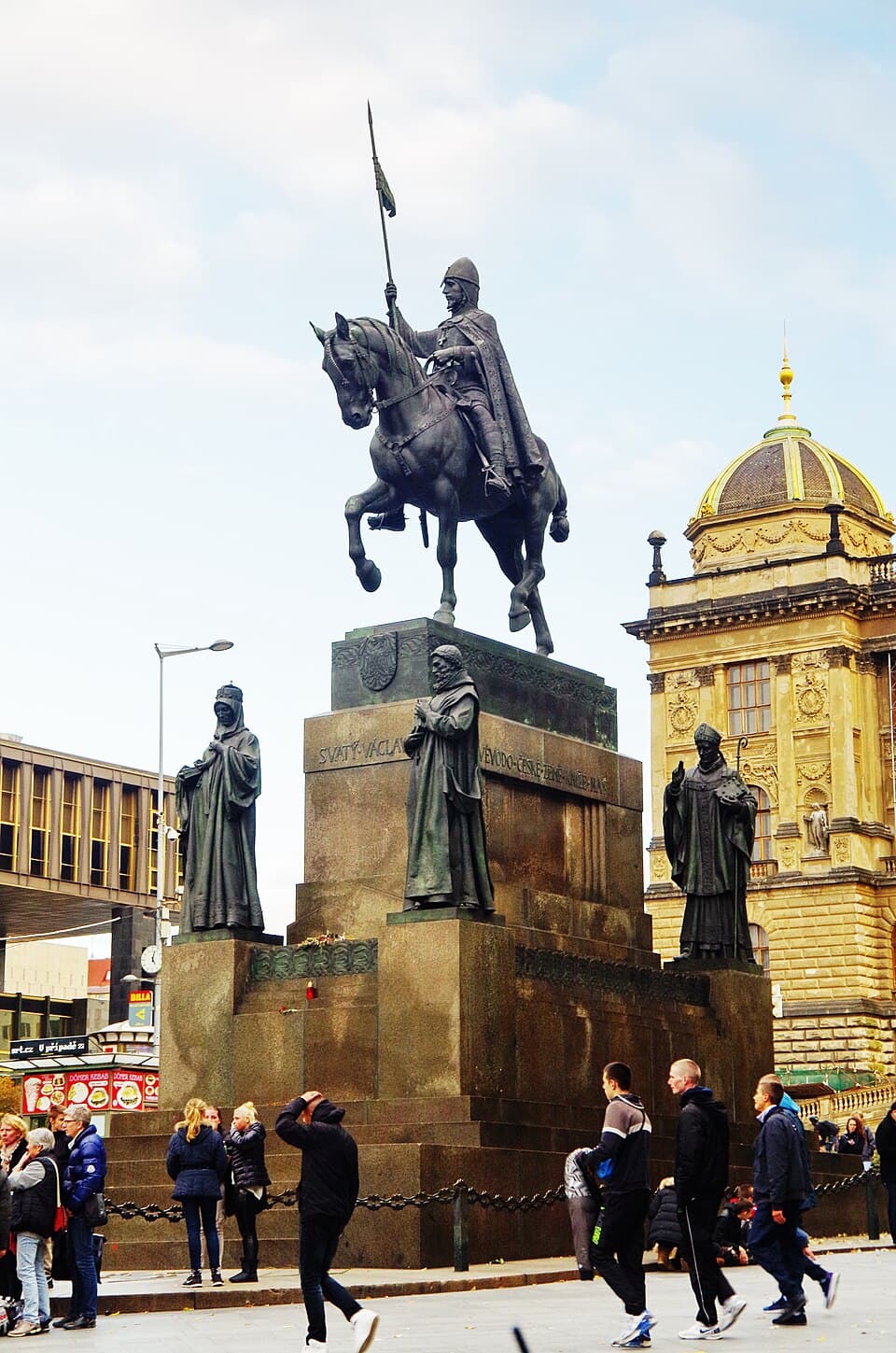
Saint Wenceslas Statue
Patron duke watching over the National Museum
This stop focuses on the equestrian statue of Saint Wenceslas and the monumental façade of the National Museum behind it. The script should explain Saint Wenceslas as a 10th‑century duke and patron saint, and how the statue became a symbolic meeting point and backdrop for demonstrations and vigils. It should describe the National Museum’s neo‑Renaissance architecture as a statement of Czech national pride and learning during the National Revival. An anecdote might recount how people arranged to “meet under the tail” of the Wenceslas statue, turning a patriotic monument into a colloquial urban landmark. Another anecdote can allude to damage from historical events, such as marks left by warfare or demonstrations that locals still point out.
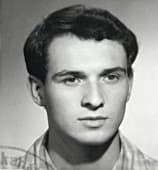
Jan Palach Memorial
Quiet tribute to student sacrifice in 1969
Here the focus is on the modest memorial near Wenceslas Square honoring Jan Palach and Jan Zajíc, students who self‑immolated in 1969 to protest the Soviet occupation after the Prague Spring. The script should recount their actions in cautious, respectful terms and situate them in the broader context of post‑1968 repression. It should describe the memorial’s simple design and how flowers and candles often appear there, especially around anniversaries. One anecdote might describe how, during Palach’s funeral, huge silent crowds lined the streets despite official pressure, treating the procession as a political protest. Another could mention how later, in the late communist period, unofficial commemorations of Palach’s act became small but significant moments of resistance.
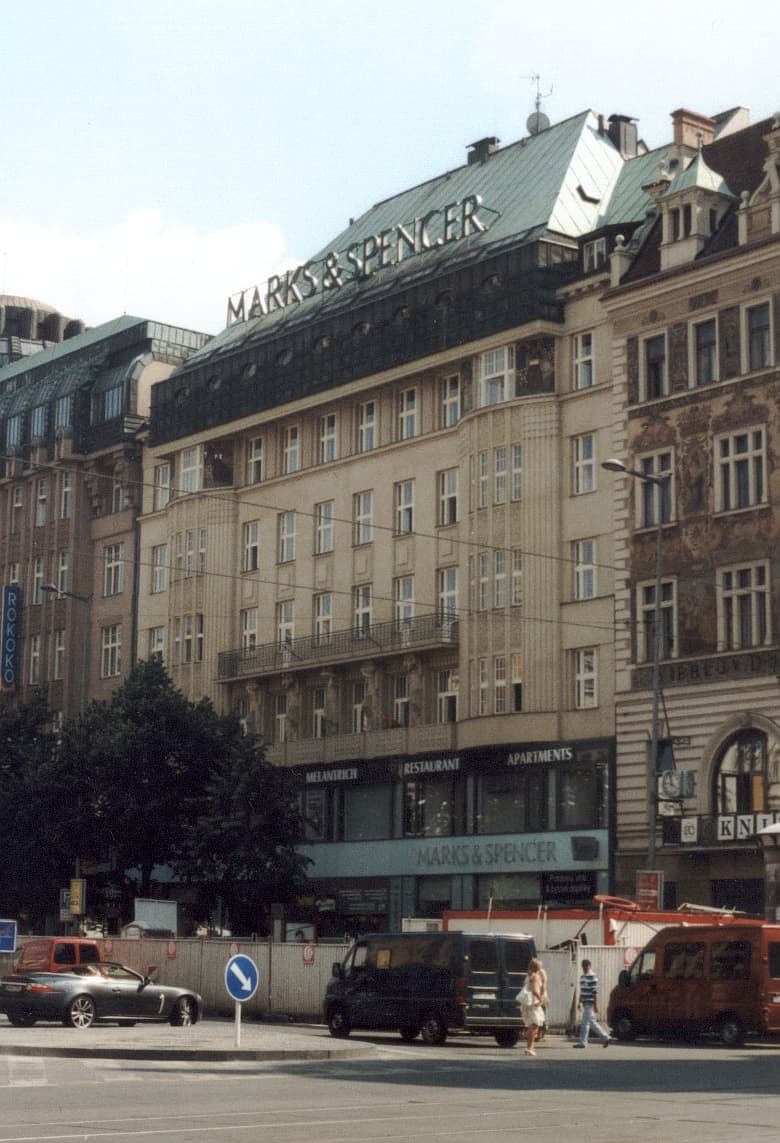
Melantrich Balcony
Where Velvet Revolution leaders addressed the crowds
This stop centers on the former Melantrich publishing house building along Wenceslas Square, whose balcony became a key platform for Velvet Revolution speeches in 1989. The script should briefly trace the building’s role in Czech publishing life and then focus on how opposition leaders and artists spoke from the balcony to vast crowds below. It should describe the atmosphere of those November evenings, with people ringing keys and listening to figures like Václav Havel. An anecdote might evoke how loudspeakers were improvised and how people relayed news mouth‑to‑mouth further down the square when they could not hear clearly. Another anecdote can mention how some listeners brought their children, hoping they would later remember being present at a historic turning point.
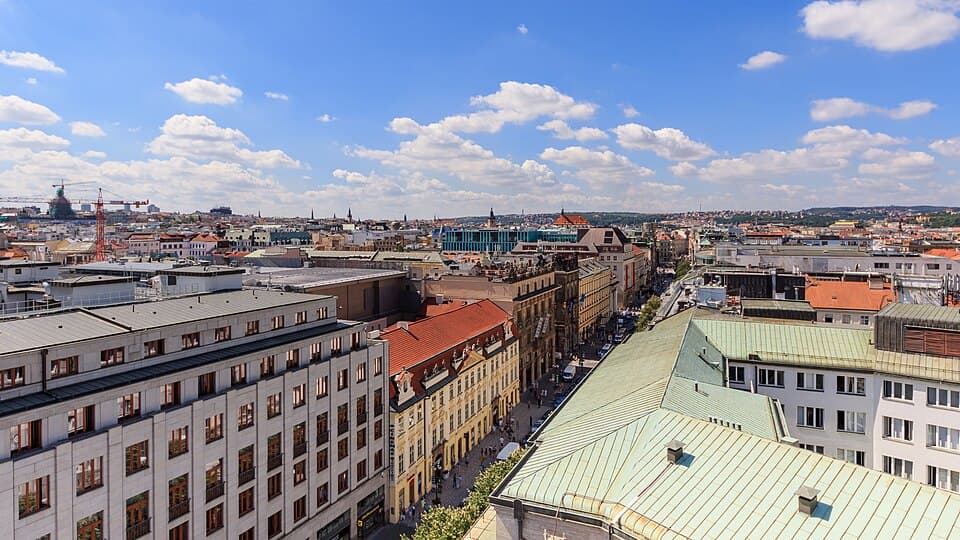
Na Příkopě Street
From medieval moat to banking boulevard
This stop explains Na Příkopě as the former site of a moat and wall dividing Old and New Towns, later transformed into a prestigious shopping and banking avenue. The script should outline how the fortifications were dismantled and replaced by a straight, elegant street lined with banks and representative buildings during the 19th and early 20th centuries. It should connect this to Prague’s economic modernization and the emergence of a Czech middle class, especially in the First Republic era. An anecdote might relate how bank clerks and office workers from Na Příkopě would crowd local cafés at lunchtime, turning the street into a daily fashion and gossip parade. Another anecdote can note how, during currency reforms or banking crises, people queued anxiously outside institutions here, highlighting the street’s financial centrality.

Můstek and Old Walls
Gateway between Old Town and New Town
At Můstek, the focus is on the historic junction where Old and New Towns meet, above the former moat and little bridge that gave the area its name. The script should explain the medieval fortification line and how it shaped the city’s layout, later buried beneath modern streets and metro tunnels. It should point out how today’s busy crossroads and underground passages sit on layers of earlier defenses and markets. An anecdote might mention archaeological finds revealed during metro construction, such as remains of the old bridge or fortifications. Another could evoke how, in earlier centuries, this area was crowded with small stalls and traders catching people moving between the two towns.
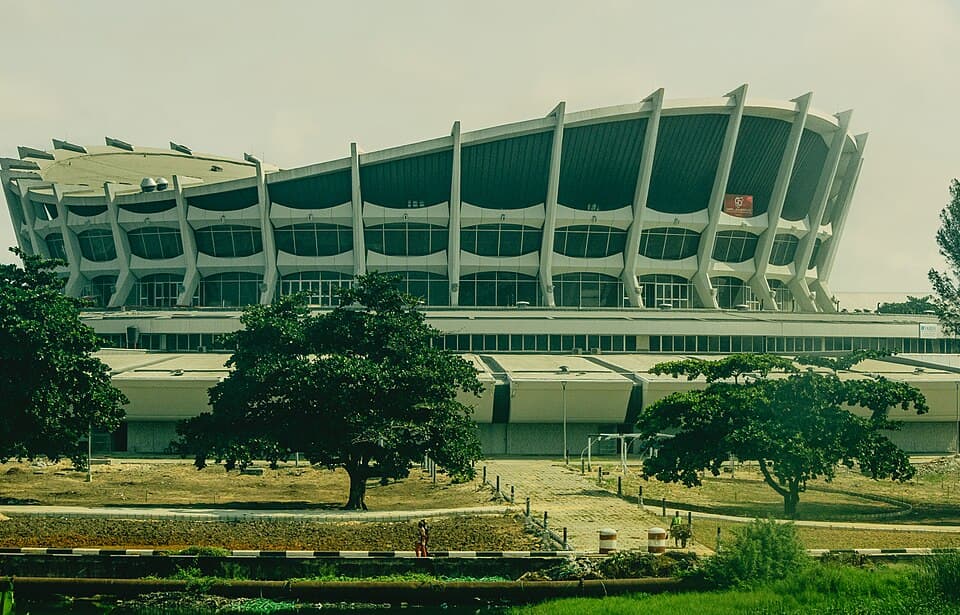
National Theatre Exterior
National Revival dream on the Vltava riverbank
This stop highlights the National Theatre (Národní divadlo) as a key symbol of the Czech National Revival, prominently placed on the Vltava riverfront. The script should describe its neo‑Renaissance architecture, sculptural decoration, and gilded roof, explaining how citizens funded its construction as a “theatre of the nation.” It should recount the dramatic episode of the theatre burning soon after its initial completion and being rebuilt with renewed public fundraising. An anecdote can describe how people pinned small donation certificates or badges to their clothes as visible proof of contribution. Another may refer to the opening performances that mixed art and politics, where audiences read nationalist meaning into operas and plays, turning evenings at the theatre into quiet political statements under foreign rule.
Národní Třída Memorial
Bronze hands marking 17 November 1989
Here the focus is the Velvet Revolution memorial on Národní třída, with its bronze hands and plaque marking the student demonstration that was violently suppressed on 17 November 1989. The script should describe the peaceful march, the police cordon and beatings in this confined street, and how news of the crackdown spread and helped spark mass protests. It should interpret the memorial’s imagery and mention how candles and ribbons often appear here. An anecdote might describe students hiding in courtyards and passages along Národní třída as police pushed in from both ends. Another can recall how, in the following years, people began leaving keys, flowers, or small messages at this spot, turning a traffic street into a place of quiet pilgrimage.
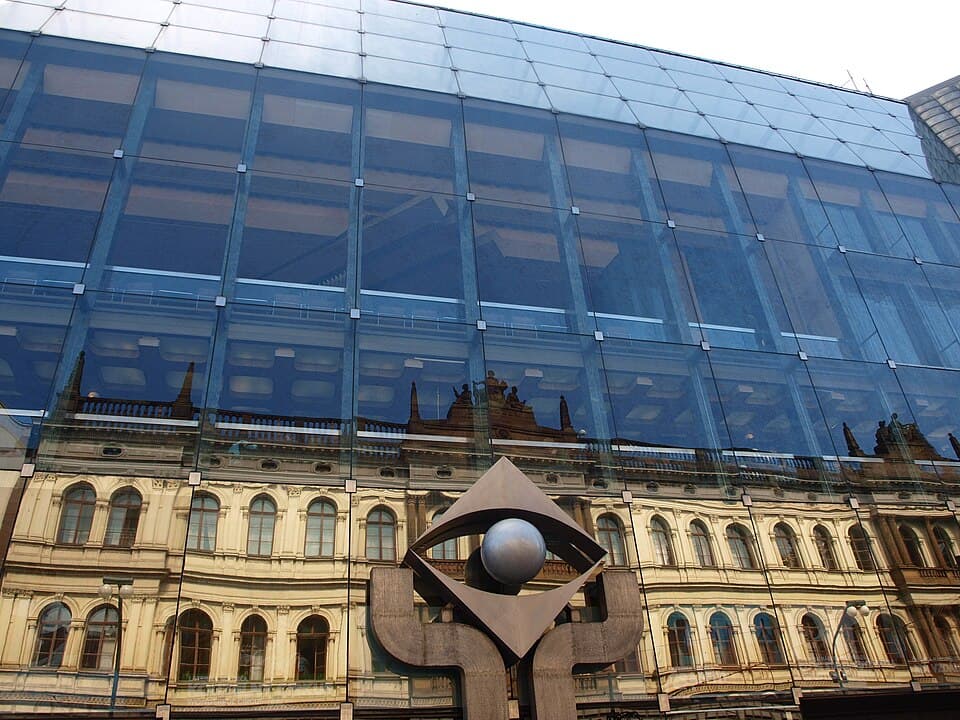
Laterna Magika Theatre
Experimental stage beside a protest avenue
This stop looks at the Laterna Magika theatre and broader Národní třída context, linking avant‑garde culture with political change. The script should explain Laterna Magika’s role as an experimental multimedia theatre that gained fame during the socialist period, blending film, dance, and live performance. It should also note that its building housed the Civic Forum headquarters in 1989, where opposition figures coordinated actions after the crackdown. An anecdote might recall how, during tense days of the Velvet Revolution, journalists and activists crowded the theatre’s corridors, improvising press centers with typewriters and copying machines. Another could mention how some of Laterna Magika’s productions subtly pushed boundaries, becoming gathering points for audiences hungry for cultural innovation within a restrictive system.
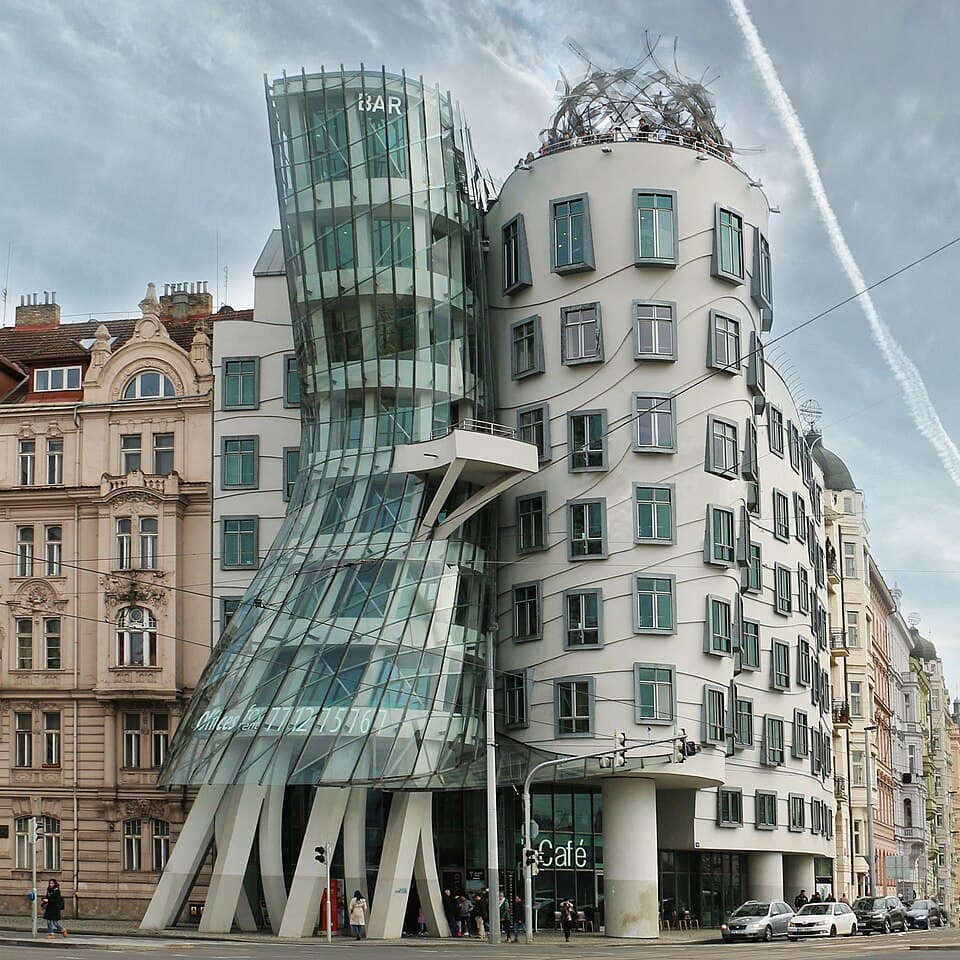
Dancing House Riverfront
Deconstructivist landmark on the Vltava’s curve
This stop focuses on the Dancing House (Tančící dům) and its setting on a sweeping bend of the Vltava river. The script should describe its dynamic, deconstructivist design, often likened to a dancing couple, and contrast it with neighboring 19th‑century apartment blocks. It should mention that the plot once housed a building destroyed during the Second World War, leaving a gap later filled by this bold post‑communist project. An anecdote might recount initial public debates over the unconventional design and its nicknames, reflecting changing attitudes to modern architecture in historic Prague. Another could note how the building’s rooftop views became a way for locals to rediscover their own city skyline after decades when such vantage points were less accessible.
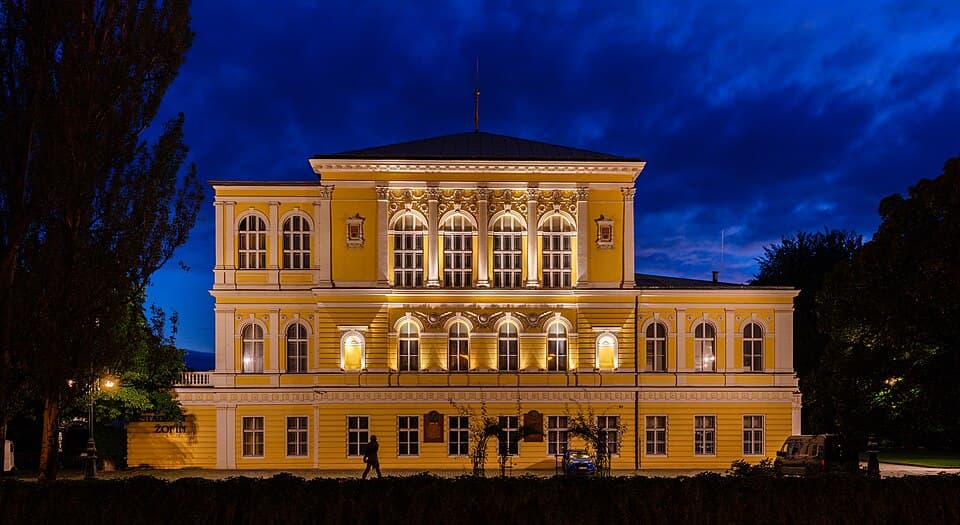
Slavonic Island and Žofín
Island of concerts, salons, and First Republic politics
This stop covers Slavonic Island (Slovanský ostrov) and the Žofín Palace, a neo‑Renaissance hall known for cultural and political gatherings. The script should explain how the island developed as a leisure spot with promenades and how Žofín became a venue for concerts, balls, and key political meetings, especially in the 19th century and the First Republic. It should note events where prominent Czech figures spoke or where important cultural societies met. An anecdote might evoke a particular concert that drew crowds across the bridges, with people listening from boats or the riverbank when tickets sold out. Another could describe how, in the interwar years, elegant dances at Žofín blended social display with informal political networking among Prague’s elites.

Legion Bridge Viewpoint
Panoramic link between river, theatre, and New Town
The final stop stands on Legion Bridge (Most Legií), offering views back to the National Theatre, Slavonic Island, and up toward the city center. The script should invite listeners to visually connect the sites visited: Wenceslas Square behind the buildings, Národní třída, the theatre, island, and riverfront. It should briefly recall key themes of national revival, occupation, protest, and cultural life, framing the bridge as a symbolic connector between eras and neighborhoods. An anecdote might mention how, during major events, crowds gathered on this bridge to watch fireworks or listen to distant concerts at Žofín or the National Theatre. Another could note how photographers have long favored this spot for capturing the theatre’s silhouette reflected in the river, underlining the enduring link between architecture and the landscape. The stop should close the tour with a reflective, appreciative tone.
Start This Tour
Download Roamway to experience this audio tour
Tour Details
Access
Free
Stops
12 points of interest
Languages
GermanEnglishSpanishFrench
More tours in Praga
View all tours in PragaOther tours you might enjoy:
Prague: Castle District, Lesser Town and Charles Bridge
This tour explores Prague’s historic Castle District and Lesser Town, from the courtyards of Prague Castle and St. Vitus Cathedral to the Old Royal Palace, St. George’s Basilica, and Golden Lane. It continues through Nerudova Street and Malá Strana to the Lennon Wall, Kampa Island, and Charles Bridge, focusing on political history, religious heritage, and architectural development.
Prague Old Town & Jewish Quarter: History and Heritage
This tour explores Prague’s Old Town Square, the Astronomical Clock, and nearby medieval courtyards before continuing through Charles University and the historic theater district. It then focuses on the Jewish Quarter, including synagogues, the Old Jewish Cemetery, and museum sites, highlighting religious history, urban development, and architectural styles from Gothic to Art Nouveau.
Prague: Gothic and Baroque Churches from Castle to Old Town
This tour explores Prague’s major Gothic and Baroque churches from Prague Castle through Malá Strana to the Old Town. It includes exteriors and interiors of sites such as St. Vitus Cathedral, Loreta, Strahov Monastery, St. Nicholas, and the Church of Our Lady before Týn. The route examines religious history, architectural styles, and artistic decoration along Charles Bridge and surrounding quarters.
Frequently Asked Questions
How do I start this audio tour?
Download the Roamway app, search for this tour, and tap 'Start Tour'. The app will guide you to the starting point using GPS. Once you're there, the audio narration begins automatically.
Do I need an internet connection?
No! Once you've downloaded the tour in the Roamway app, it works completely offline. The GPS navigation and audio narration function without an internet connection.
Can I pause and resume the tour?
Yes! You can pause the tour at any time and resume later. Your progress is automatically saved, so you can complete the tour over multiple sessions if needed.