
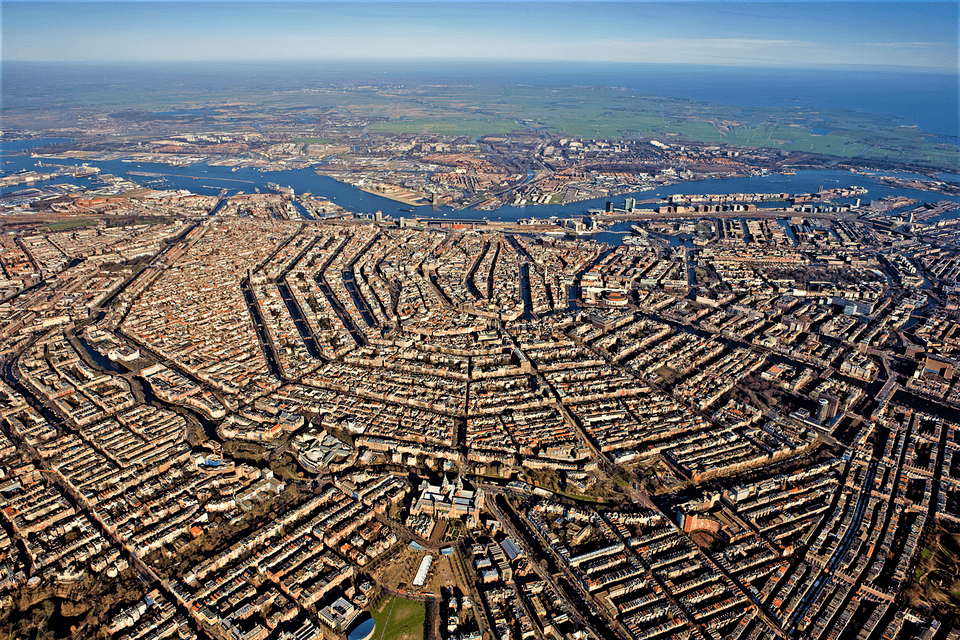
Amsterdam Museum Quarter: Art, Architecture and City Life
Amsterdam, Nederland
Audio Preview
Listen to a sample of this audio tour to get a feel for the experience.
What You'll Experience
On this Amsterdam Museum Quarter: Art, Architecture and City Life audio tour in Amsterdam, you'll discover 10 carefully selected points of interest, each with its own story. The tour is designed to be completed at your own pace, with GPS navigation guiding you from one location to the next. As you approach each stop, the audio narration automatically begins, bringing history, culture, and local insights to life.
About This Tour
This tour explores Amsterdam’s Museumplein and surrounding streets, focusing on major museums, public art spaces, and cultural venues. Stops include the Rijksmuseum exterior and passageway, Stedelijk, Van Gogh and Moco museums, the Concertgebouw, and Vondelpark. Themes include art history, urban design, architectural styles, and the city’s modern cultural identity.
Points of Interest
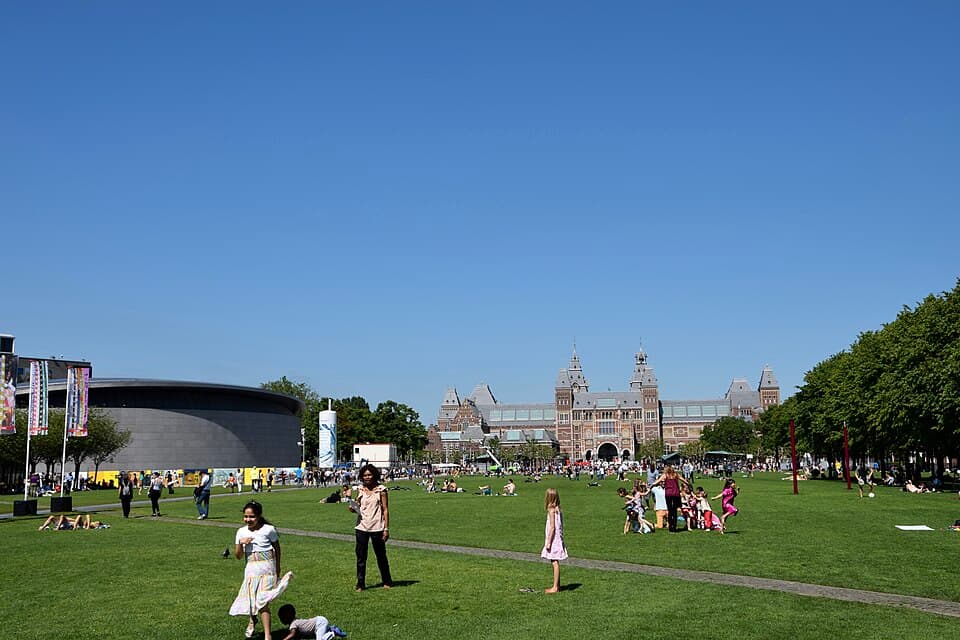
Museumplein
Central green stage for Amsterdam’s great museums
This stop introduces Museumplein (Museum Square) as the central stage for Amsterdam’s major cultural institutions, framed by the Rijksmuseum, Stedelijk, Van Gogh Museum, Moco, and the Concertgebouw. The narration should cover its origins as reclaimed land and a 19th-century cultural axis, later redesigns into a more open urban park, and its role in public gatherings and festivals. Visual description should emphasize the broad lawn, water features, seasonal ice rink or installations, and the surrounding mix of historic and modern facades. One anecdote can describe how the square has hosted huge celebrations and demonstrations, such as football victory parties or political rallies, showing it as both a backdrop for art and a living civic stage. Another anecdote can touch on the evolution and eventual removal or relocation of famous photo spots like the "I amsterdam" letters, reflecting debates about tourism and city identity.
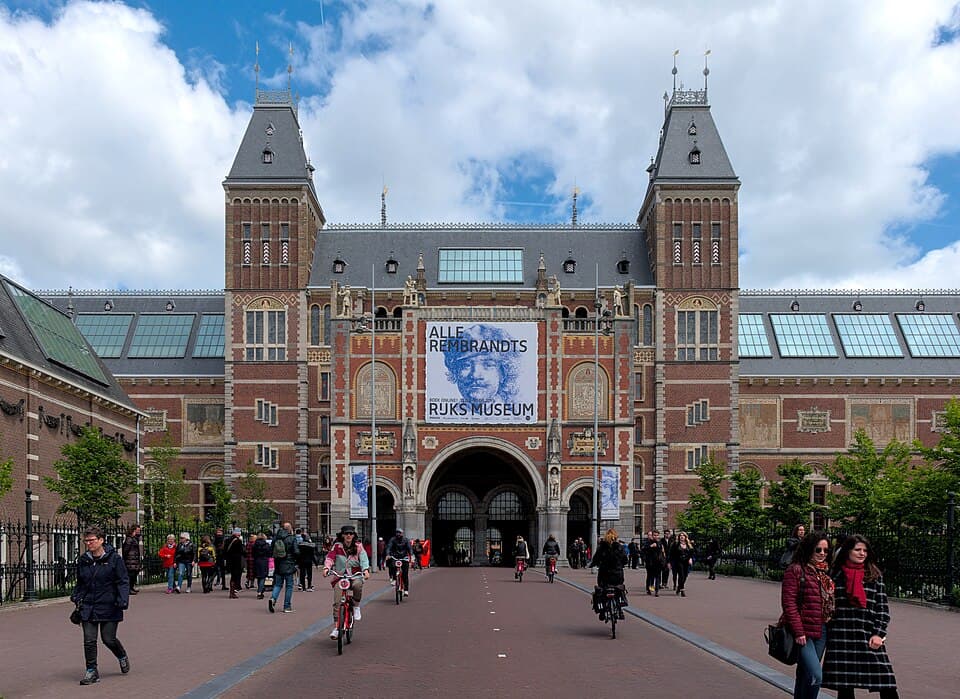
Rijksmuseum
National art treasure in a neo-Gothic palace
This stop focuses on the exterior of the Rijksmuseum as the Netherlands’ main national art museum and an emblem of 19th-century nation-building. The narration should describe architect Pierre Cuypers’ neo-Gothic and Renaissance Revival design, the decorative brickwork, towers, and historical imagery embedded in the facade. Historical context should include how the museum was meant to present a visual story of Dutch history and Golden Age painting, with figures like Rembrandt and Vermeer symbolically represented. One anecdote can discuss early controversies over the building’s style, which some contemporaries considered too Catholic or medieval for a modern Dutch state. Another anecdote may cover the major 21st-century renovation that modernized the museum while sparking debates over its bicycle passage and how to balance heritage with everyday city life.
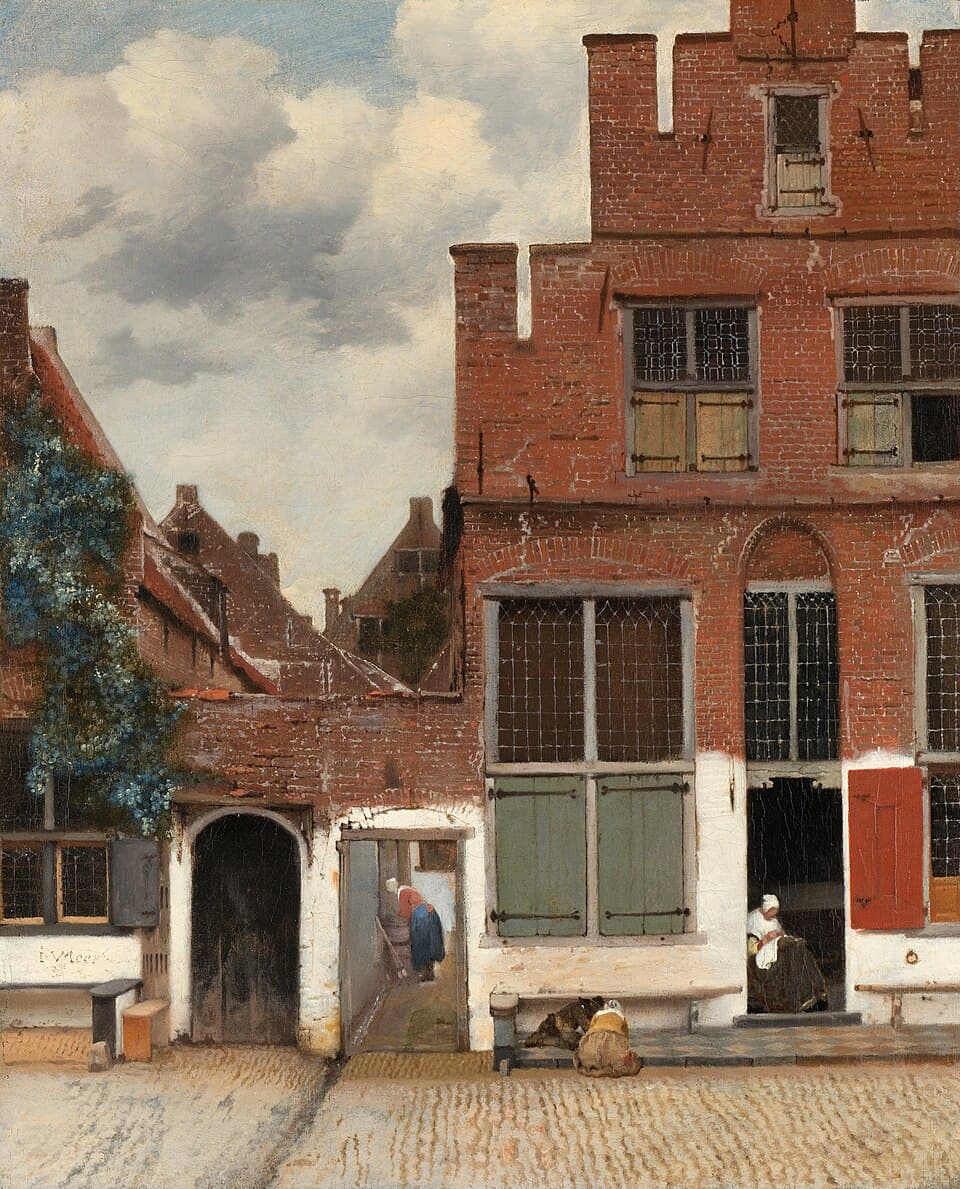
Rijksmuseum Passageway
Bicycle underpass linking city and museum
This stop centers on the covered passageway beneath the Rijksmuseum, where cyclists and pedestrians move through a vaulted corridor between city districts. The narration should describe the high arches, decorative vaulting, and how this underpass physically cuts through a national monument while remaining a daily transport route. Historical context can mention that this passage was part of the original design, symbolically allowing the city to flow through its national museum. One anecdote should explore the long-running debates and negotiations during renovation over whether to close the passage to bicycles, which eventually led to its preservation as a cycling route after strong public resistance. Another anecdote might highlight how musicians and street performers sometimes use the acoustics of the passage as an informal concert space, blending everyday traffic with spontaneous culture.
Stedelijk Museum
Modern art museum with striking bathtub extension
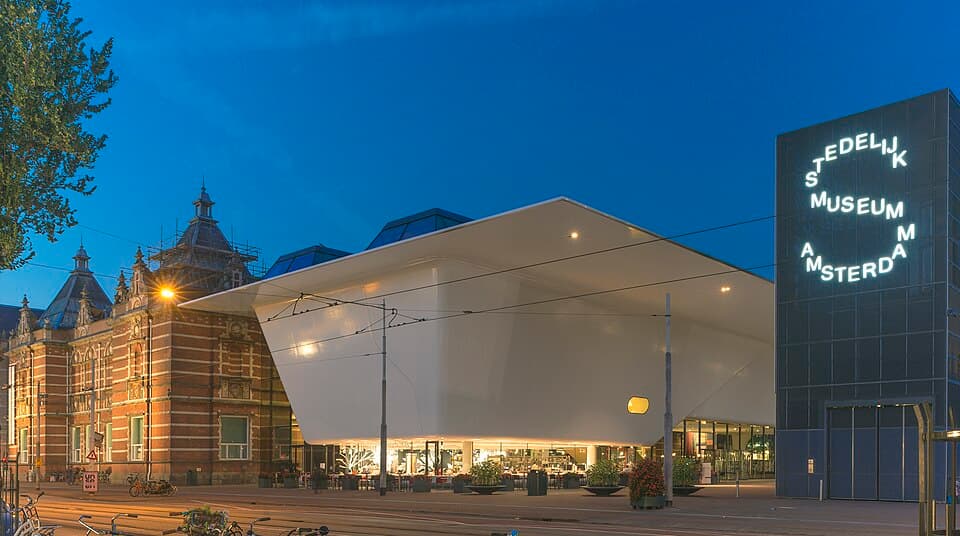
This stop presents the Stedelijk Museum as Amsterdam’s key institution for modern and contemporary art and design. The narration should cover the contrast between the original 19th-century brick building and the dramatic white, bathtub-like extension added in the 21st century. Historical context should trace its evolution from a city museum into a leading venue for avant-garde art, linked to movements like De Stijl and Cobra, and to figures such as Piet Mondrian and Kazimir Malevich, whose works have been shown there. One anecdote can discuss the controversial public reaction to the new extension’s futuristic form, which earned it nicknames comparing it to a bathtub or sink. Another anecdote might highlight a notable experimental exhibition or performance that challenged traditional museum norms, illustrating the Stedelijk’s role as a testing ground for new art forms.
Van Gogh Museum
Dedicated home for Vincent van Gogh’s legacy
This stop focuses on the Van Gogh Museum’s exterior and its role as the main repository of Vincent van Gogh’s paintings, drawings, and letters. The narration should describe the main building’s modernist brick and glass architecture and the separate curved exhibition wing, explaining how the ensemble reflects a calm, contemplative setting for an intense artistic life. Context should briefly outline Van Gogh’s career, his time in the Netherlands and France, and the role of his brother Theo and later family in preserving his work until a dedicated museum was created. One anecdote can recount how the museum’s opening helped transform Museumplein into an international pilgrimage site for Van Gogh admirers. Another anecdote may describe periods when particular masterpieces like “Sunflowers” or “The Bedroom” drew exceptional visitor numbers, illustrating the powerful public fascination with his story and imagery.
Moco Museum
Street art and pop culture in a historic villa
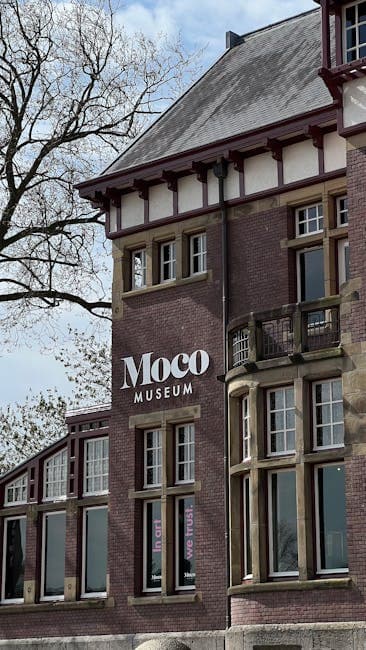
This stop highlights the Moco Museum as a contemporary, independent museum focusing on street art, pop art, and modern icons, housed in a historic townhouse beside the larger institutions. The narration should describe the contrast between the old villa’s brick, gables, and decorative details and the edgy, often playful works shown inside and in its garden. Context can mention how Moco brings artists such as Banksy, Andy Warhol, or other street and pop artists into the Museumplein conversation, bridging gallery culture and urban art. One anecdote might describe how the museum has used its small garden and exterior surfaces for outdoor installations or Instagram-famous pieces that spill into public view. Another anecdote could touch on debates about street art moving from public walls into private museums, and how Moco’s presence here symbolizes that shift.
Concertgebouw
Amsterdam’s grand hall for classical music
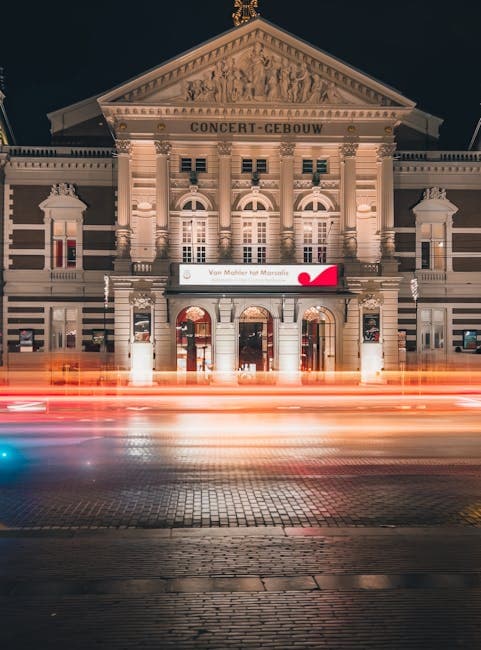
This stop introduces the Concertgebouw as Amsterdam’s principal classical concert hall, renowned for its acoustics and its prominent position at the end of Museumplein opposite the Rijksmuseum. The narration should describe its 19th-century neoclassical facade, triangular pediment, and ornamentation that signals music and civic pride. Historical context should cover its founding as part of the city’s cultural expansion and its later recognition as the Royal Concertgebouw, home to an internationally respected orchestra. One anecdote can discuss how the hall’s acoustics are often praised by musicians and critics, leading some to rank it among the best in the world. Another anecdote might recall wartime or politically tense periods when programming choices or performances carried special symbolic weight, showing the hall as a place where music and history intersect.
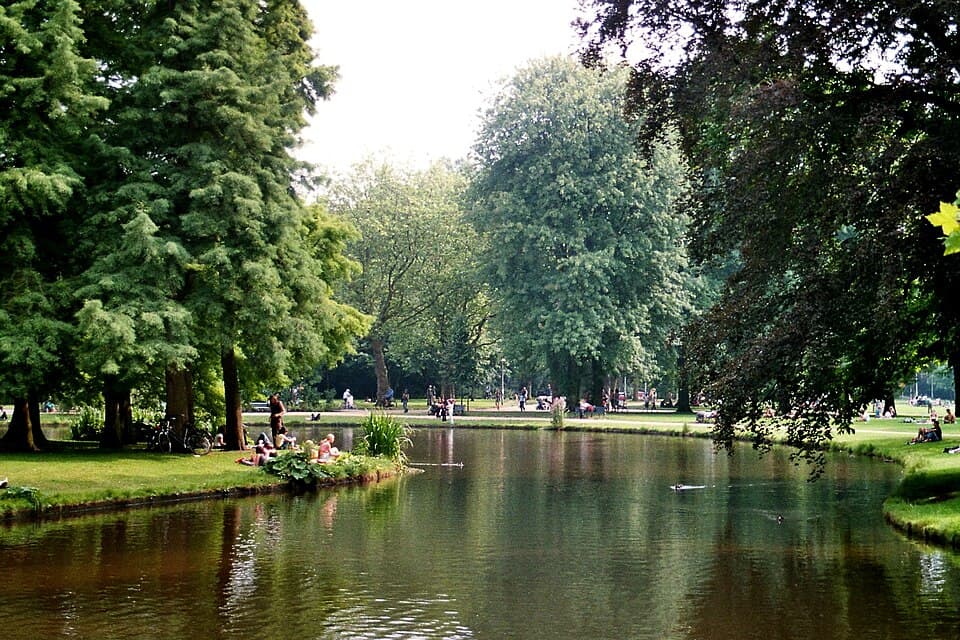
Vondelpark Entrance
Leafy threshold from museum quarter into park life
This stop focuses on the main Vondelpark entrance closest to Museumplein, treated as a symbolic gateway from formal cultural institutions into a more relaxed urban park. The narration should describe the entrance’s layout, nearby gates or statues if visible, and the immediate transition from traffic and buildings to trees, paths, and open lawns. Context should introduce Vondelpark’s history as a 19th-century landscaped park named after the poet Joost van den Vondel, later becoming a vital space for leisure, jogging, dog walking, and open-air events. One anecdote can discuss the park’s role in the counterculture era, when it became a gathering place for hippies and free concerts. Another anecdote might mention how locals and visitors alike treat the park almost like an outdoor living room, with picnics, yoga, or small performances spilling across the grass in warmer months.
Vondelkerk
Neo-Gothic church named for poet Vondel
This stop presents Vondelkerk, a neo-Gothic church near Vondelpark, emphasizing its distinctive spire and brick facade in the residential streets. The narration should describe architectural features such as pointed arches, stained-glass windows, and the slim tower that helps it stand out among townhouses. Context can explain that the church, named after Joost van den Vondel, reflects 19th-century Catholic revival architecture in Amsterdam and has since taken on new roles beyond traditional worship. One anecdote could highlight its later use for cultural events, weddings, or community gatherings, showing how sacred spaces adapt to changing urban life. Another anecdote might note how its tower serves as a quiet landmark for people navigating between the park and the Museum Quarter, a familiar silhouette above the rooftops.
PC Hooftstraat
Luxury shopping street with design and gallery fronts
This stop focuses on PC Hooftstraat as a high-end shopping street bordering the Museum Quarter, lined with luxury boutiques, design stores, and some galleries. The narration should describe the narrow, elegant streetscape, with traditional Amsterdam townhouses converted into glossy storefronts, and modern glass-and-steel renovations alongside preserved facades. Context can explain that the street is named after the 17th-century writer Pieter Cornelisz Hooft, linking today’s fashion and design to a literary past. One anecdote may touch on the street’s transformation from a relatively ordinary residential area into a symbol of upscale consumer culture, sometimes called Amsterdam’s answer to other European luxury avenues. Another anecdote can highlight how some galleries and concept stores experiment with window displays as art installations, blurring the line between shopfront and exhibition space—an appropriate final reflection for a tour about art, architecture, and city life.
Start This Tour
Download Roamway to experience this audio tour
Tour Details
Access
Free
Stops
10 points of interest
Languages
English
More tours in Amsterdam
View all tours in AmsterdamFrequently Asked Questions
How do I start this audio tour?
Download the Roamway app, search for this tour, and tap 'Start Tour'. The app will guide you to the starting point using GPS. Once you're there, the audio narration begins automatically.
Do I need an internet connection?
No! Once you've downloaded the tour in the Roamway app, it works completely offline. The GPS navigation and audio narration function without an internet connection.
Can I pause and resume the tour?
Yes! You can pause the tour at any time and resume later. Your progress is automatically saved, so you can complete the tour over multiple sessions if needed.