
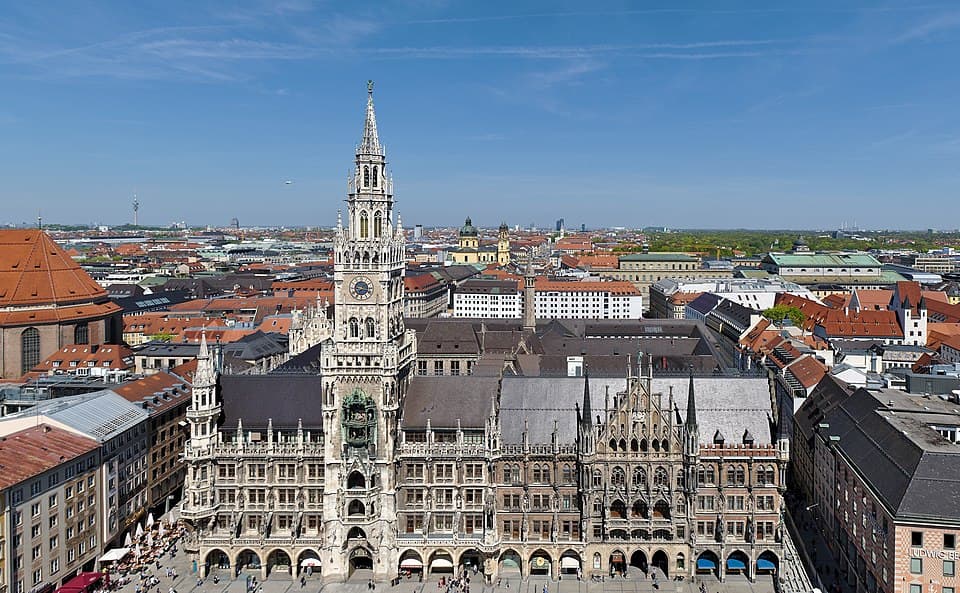
Munich: From Odeonsplatz to Haidhausen Architecture
München, Deutschland
Audio Preview
Listen to a sample of this audio tour to get a feel for the experience.
What You'll Experience
On this Munich: From Odeonsplatz to Haidhausen Architecture audio tour in München, you'll discover 11 carefully selected points of interest, each with its own story. The tour is designed to be completed at your own pace, with GPS navigation guiding you from one location to the next. As you approach each stop, the audio narration automatically begins, bringing history, culture, and local insights to life.
About This Tour
This tour traces Munich’s development from Baroque court city to 19th‑century boulevard planning and late 19th‑century residential districts. It covers central landmarks such as Odeonsplatz, the Residenz, Nationaltheater, and Maximilianstrasse, then crosses the Isar to Haidhausen’s Jugendstil streets, churches, and village-like squares, focusing on architecture, urban design, and political history.
Points of Interest
Odeonsplatz
Monumental gateway to Munich’s court city
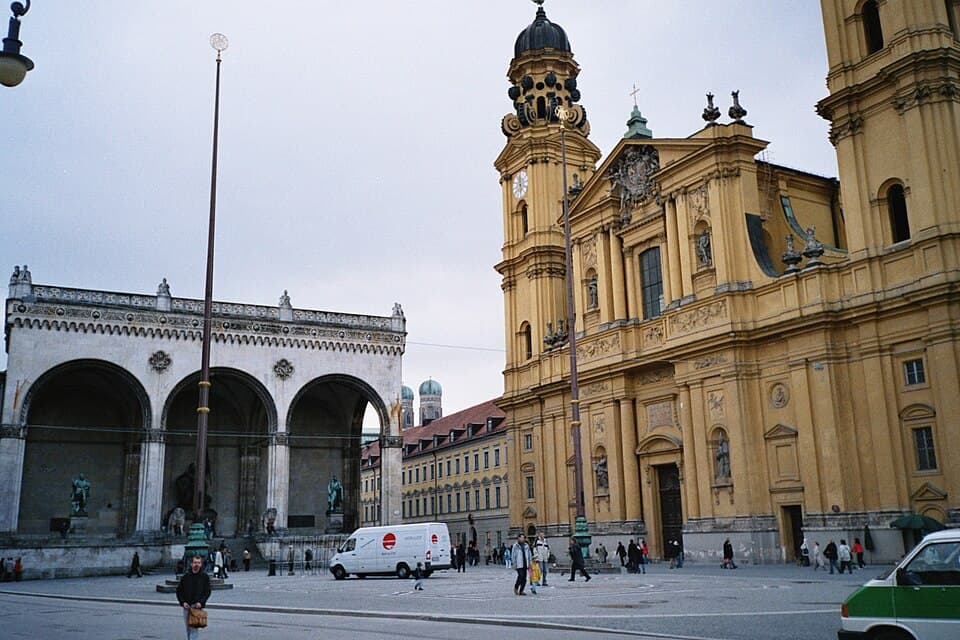
This stop introduces Odeonsplatz as a key ceremonial square and starting point for the tour’s themes of power, planning, and style. The guide should explain how the square was laid out as a northern entrance to the old town, framed by the Residenz, Theatinerkirche, Feldherrnhalle, and 19th‑century façades. They should highlight its role in royal processions and public gatherings across different regimes. An anecdote can cover how Ludwig I used such spaces to reshape Munich’s image as an arts capital, or how the square often appears in paintings and photographs as the “face” of the royal city. The tone sets expectations: from this square, listeners will move through courts, boulevards, and finally to residential Haidhausen.
Theatinerkirche
Baroque court church of the Wittelsbach dynasty
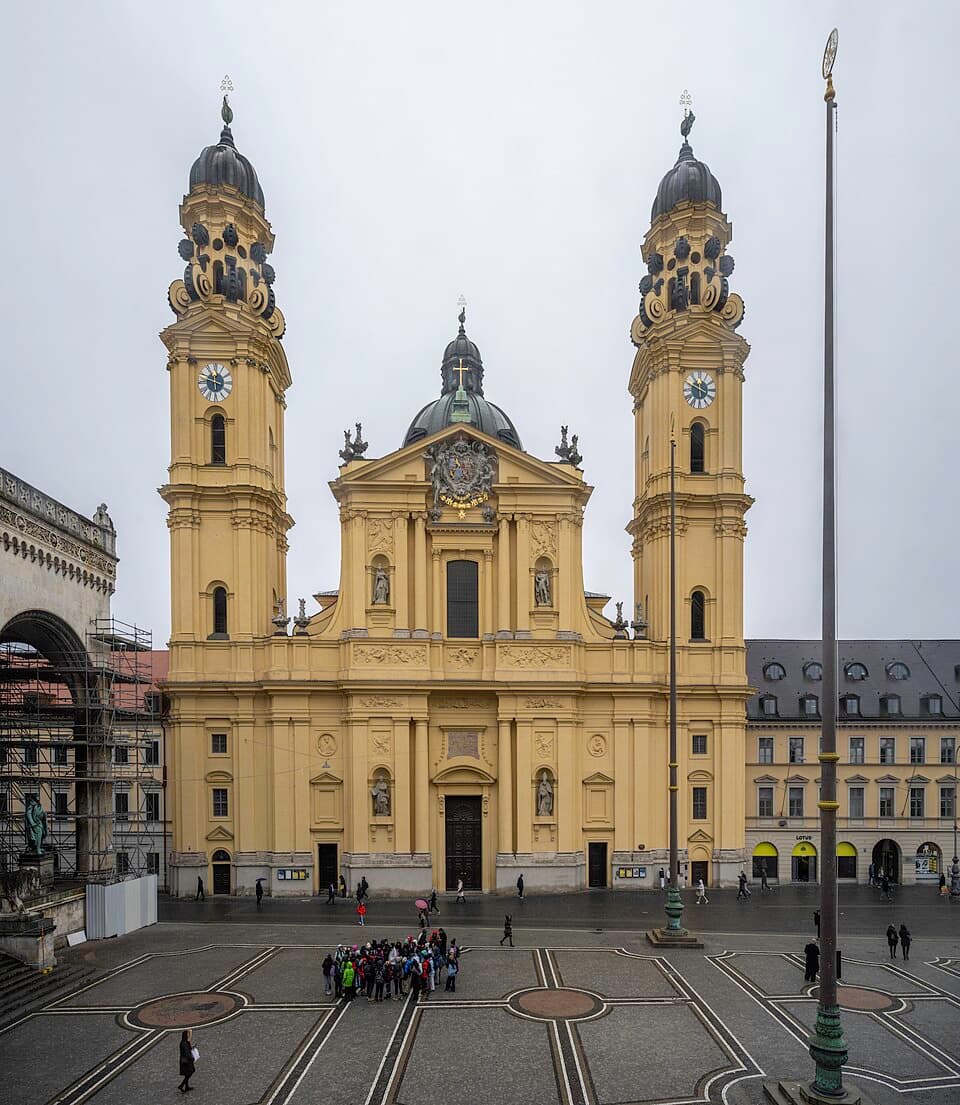
This stop focuses on the Theatinerkirche’s striking yellow Baroque façade and its luminous, white stucco interior. The narration should explain its origins as a dynastic church commissioned by the ruling Wittelsbachs and tied to a long‑desired heir, linking Italian Baroque influences to Munich’s identity. Inside, the guide can describe the high nave, sculpted decoration, and function as a burial place for members of the royal family. One anecdote might recount how its unusual color and silhouette initially divided opinion in a more medieval cityscape, while another can mention a notable royal ceremony, such as a wedding or funeral, that drew crowds to this space. This stop deepens the theme of religion as a stage for power.
Feldherrnhalle
Military monument and charged political stage
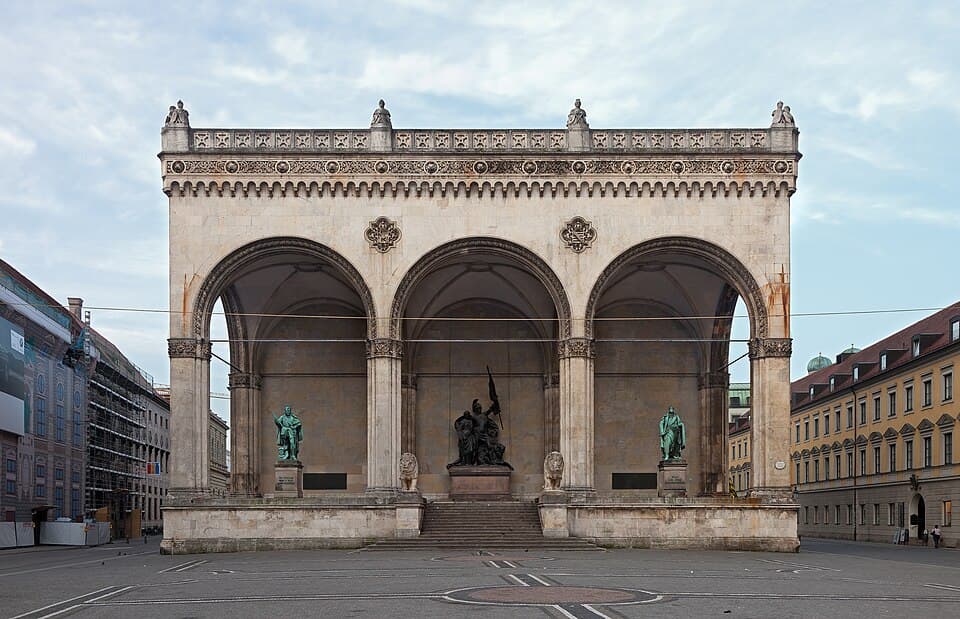
At the Feldherrnhalle, the focus is on its design as a 19th‑century loggia honoring Bavarian military leaders, modeled after Florence’s Loggia dei Lanzi. The script should detail its sculptures, arches, and relation to Odeonsplatz as a theatrical backdrop for royal ceremonies and parades. Political history plays a stronger role here: listeners should learn how the site later became associated with a failed putsch and subsequent regime propaganda in the 20th century, without sensationalism. An anecdote might describe how post‑war Munich responded to this problematic legacy, for example by adding memorial elements or changing uses of the space. This stop illustrates how architecture can be reinterpreted across regimes.
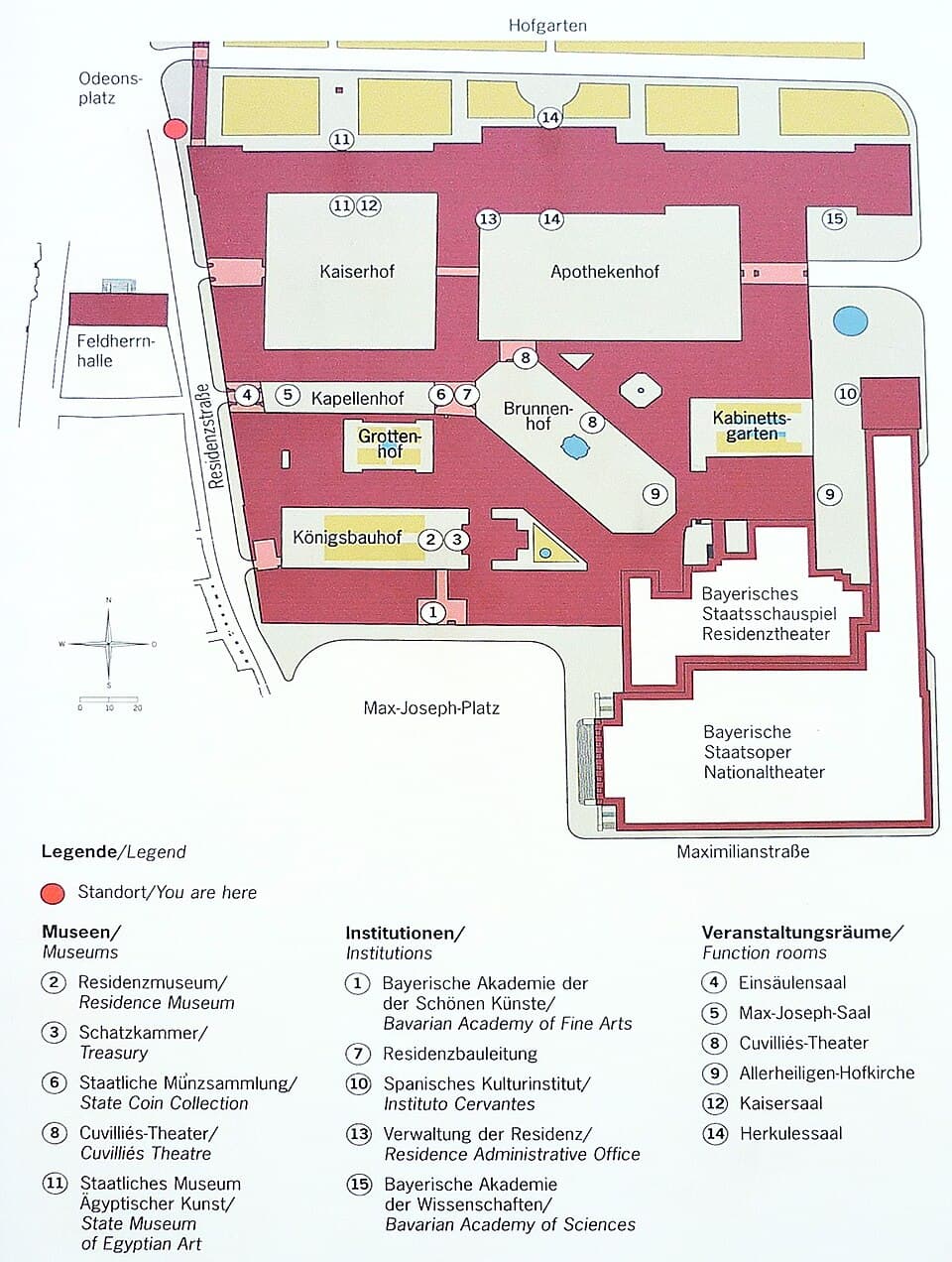
Residenzstrasse And Residenz
Renaissance palace frontage and ceremonial street
This stop examines Residenzstrasse as a prestigious street lined with palace façades and later townhouses, marking the edge of the Munich Residenz. The narration should describe how the palace evolved from a medieval fortress into a sprawling Renaissance and Baroque residence, and how its façades project power toward the city. Listeners can be guided to notice details like arcades, portals, and the rhythm of windows that stage the approach to the royal complex. An anecdote could involve a famous visitor or diplomatic reception at the Residenz that would have processed along this street, while another might touch on how wartime damage and reconstruction changed specific façade sections. This stop connects the idea of the palace as a self‑contained world to the urban fabric around it.
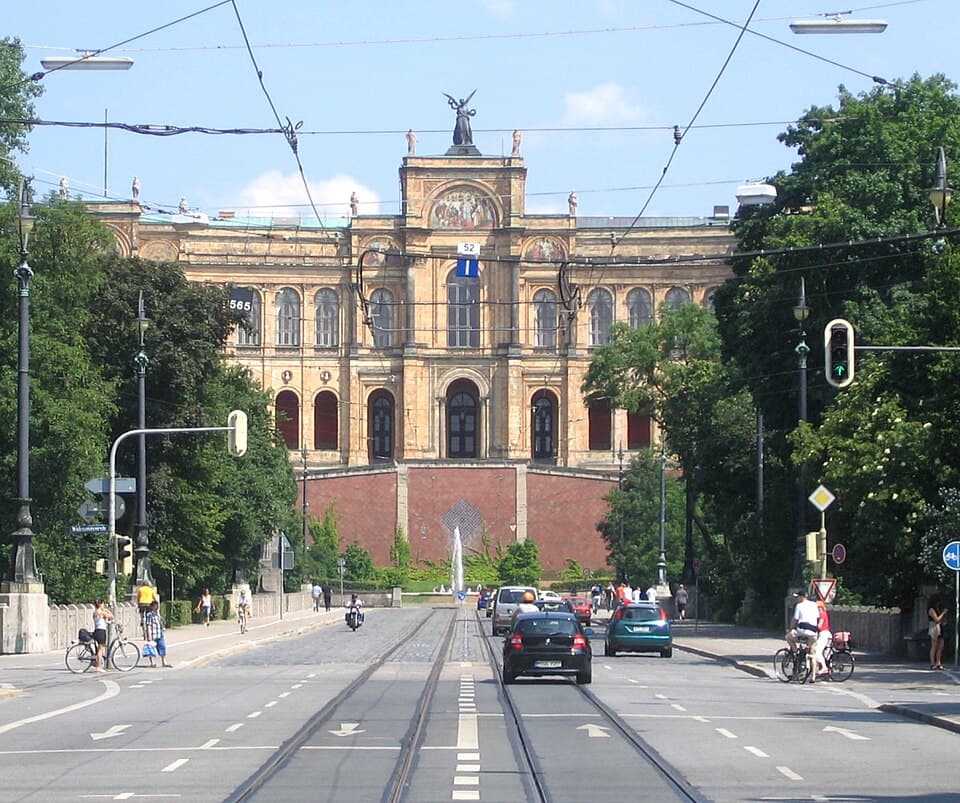
Maximilianstrasse
State boulevard linking court city and river
Here, the focus is on Maximilianstrasse as a planned 19th‑century boulevard commissioned under King Maximilian II, combining Neo‑Gothic and Neo‑Renaissance elements. The guide should explain how this street cut a new axial line from the old town toward the Isar, flanked by institutional buildings and high‑status residences. Listeners should be invited to notice the ornate façades, sculptural decoration, and the carefully choreographed perspective culminating in the Maximilianeum on the hill. An anecdote may describe the boulevard’s role in early department stores or luxury trade, reflecting a shift toward bourgeois consumption, while another could mention how some façades were controversially altered or rebuilt in the 20th century. This stop emphasizes urban design as a statement of modern statehood.
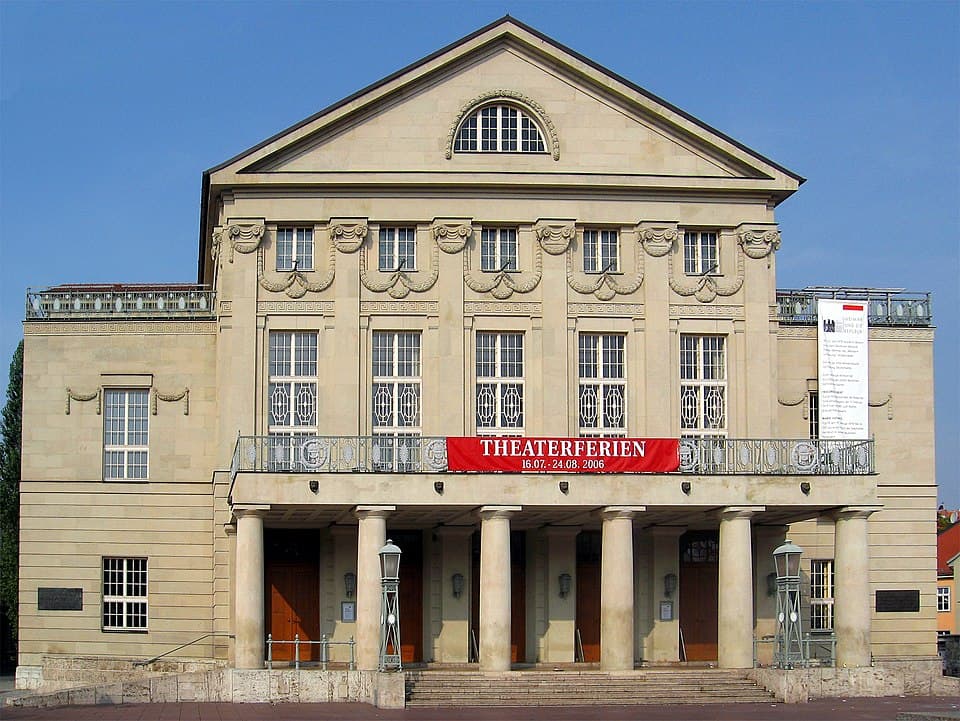
Nationaltheater
Opera house of royal and civic culture
At the Nationaltheater, listeners learn about the history of Munich’s main opera house, rebuilt multiple times after fires and wartime destruction. The narration should describe its Neo‑Classical temple façade facing Max‑Joseph‑Platz and its role as home of the Bavarian State Opera. Architectural features like the portico, columns, and roofline can be linked to ideas of public culture and civic pride. Anecdotes might include the premiere of a significant opera associated with a major composer, and a story about wartime damage and the debate over whether to reconstruct the house historically or adopt a more modern design. This stop highlights how music and theater joined royal and bourgeois society in a shared cultural space.
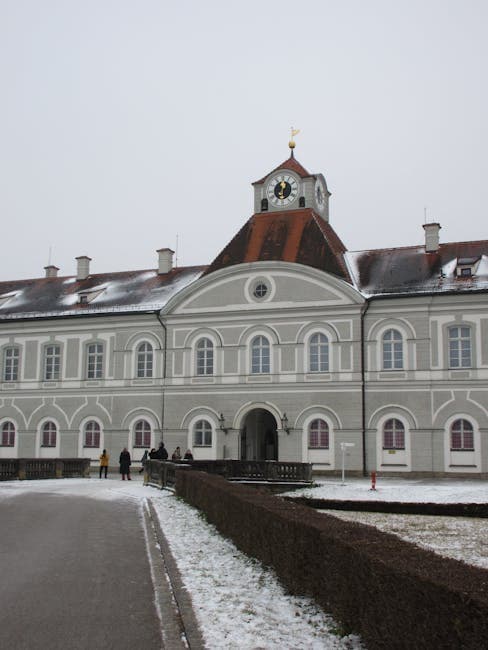
Maximiliansbrücke
River crossing with grand city vistas
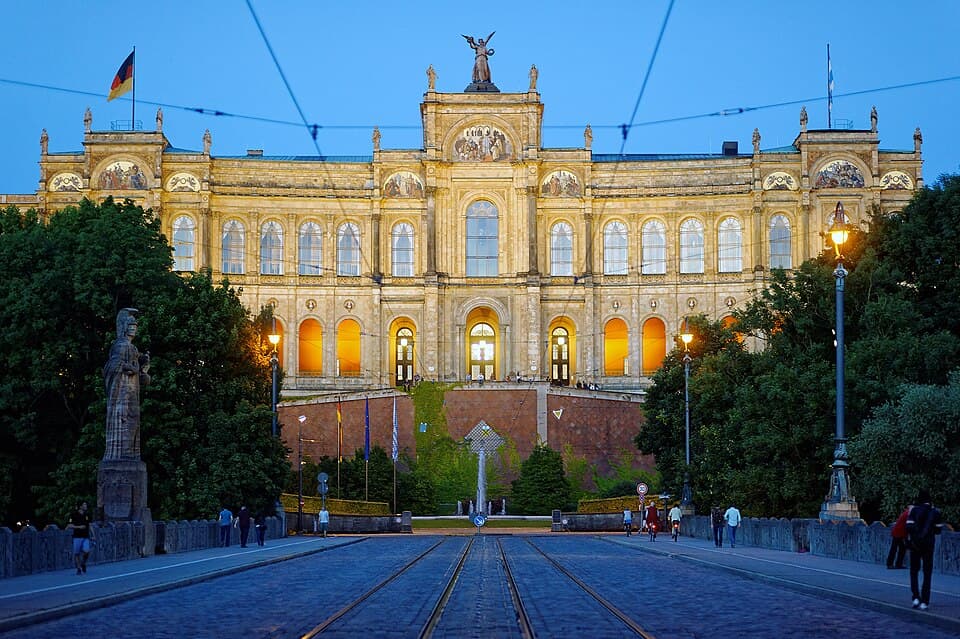
This stop uses Maximiliansbrücke to explore the Isar as a geographic and symbolic boundary between old Munich and its eastern expansions. The guide should describe the bridge’s structure, its decorative elements, and the carefully planned views it offers: back toward Maximilianstrasse and the city center, and forward to the Maximilianeum above the riverbank. An anecdote may recall historical floods that reshaped how Munich built along the Isar, or a story about how the riverbanks were transformed from industrial and utilitarian zones into recreational landscapes. Another anecdote can briefly evoke artists or photographers using this vantage point to capture the city. This stop marks the transition from royal core to newer residential quarters.
Maximilianeum
Parliament building crowning the Isar axis
At the Maximilianeum, focus lies on its original conception as an educational foundation and its later role as the seat of the Bavarian State Parliament. The narration should explain its position at the end of Maximilianstrasse, the terraced setting above the river, and its blend of historicist styles. Listeners can be guided to notice its arcades, sculptures, and the broad staircases and retaining walls that connect it to the landscape. One anecdote might describe how scholarship places at the Maximilianeum supported talented students from across Bavaria, including later prominent politicians or intellectuals. Another could mention post‑war adaptations needed to house the parliament, reflecting changes from monarchy to democratic state. This stop underlines continuity and transformation in state architecture.
Max-Weber-Platz
Jugendstil façades in a busy urban node
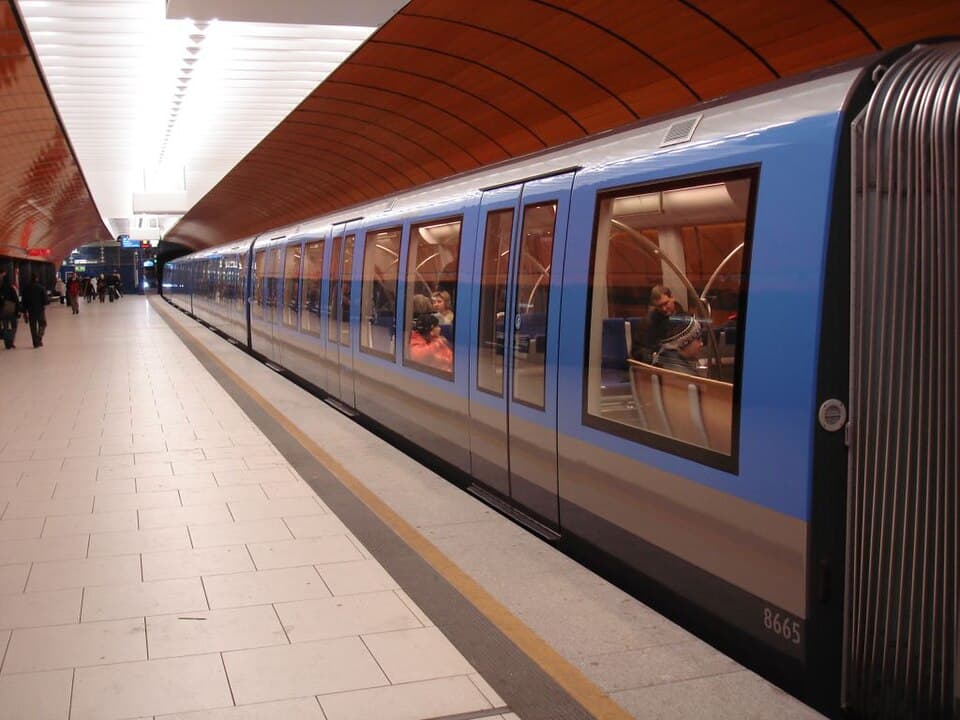
This stop introduces Max‑Weber‑Platz as an important junction between the city center and Haidhausen, framed by late 19th‑ and early 20th‑century apartment blocks. The focus is on Jugendstil and related historicist façades: bay windows, curved gables, floral ornaments, and corner turrets. The guide should contrast the scale and function of these residential buildings with the monumental palaces and boulevards seen earlier. An anecdote might discuss how the arrival of tram and later underground lines turned the square into a transport hub, triggering specific building projects. Another could recall a locally known café or meeting place that became a haunt for students or neighborhood politics in the 20th century. This stop signals a shift to everyday urban life in Haidhausen.
St. Johann Baptist
Neo-Gothic parish landmark of Haidhausen
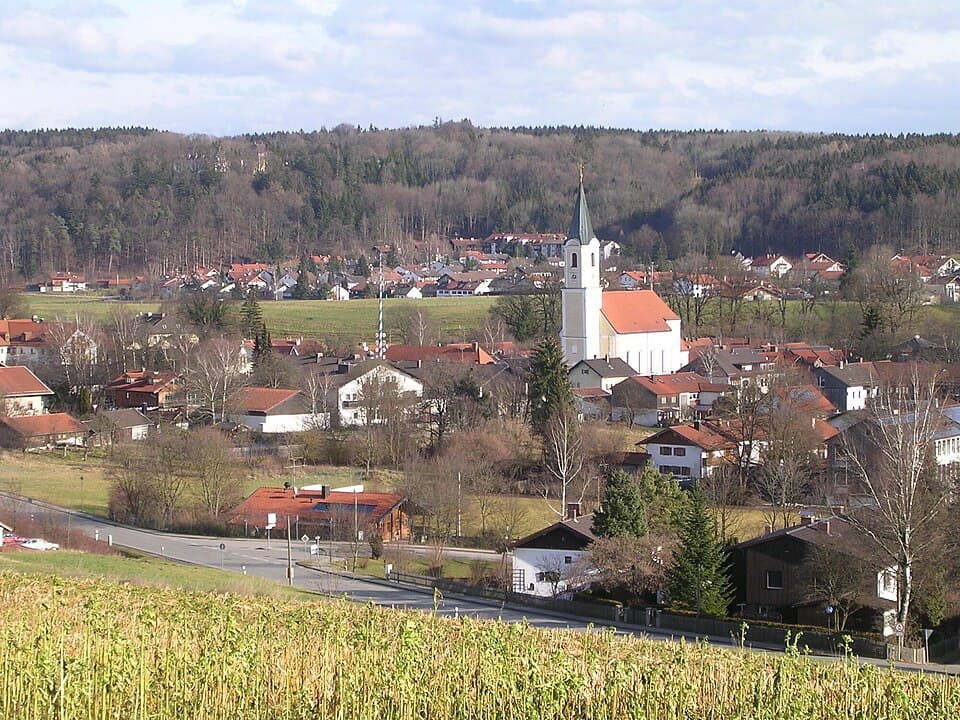
Here, the Parish Church of St. Johann Baptist is presented as a key Neo‑Gothic landmark anchoring the growing district of Haidhausen. The narration should explain its tall spire, pointed arches, and brick construction, relating them to 19th‑century Catholic revival and urban parish building. Listeners should hear how the church served a working‑ and middle‑class population quite different from the courtly world around the Residenz. An anecdote might cover a local festival or procession connected to the parish that animated the surrounding streets, and another can mention how war damage or later renovations altered parts of the interior or stained glass. This stop emphasizes community life and religious identity in a suburban context.
Wiener Platz
Village-like square in urban Haidhausen
The final stop, Wiener Platz, reveals Haidhausen’s roots as a village-like settlement absorbed into the growing city. The guide should describe the small square’s irregular shape, low historic houses, and market or kiosk structures, contrasting them with the grand boulevards and palaces of earlier stops. Listeners can be encouraged to notice rooflines, painted façades, and the intimate scale of the space. An anecdote might recount how Wiener Platz developed around a local market, supplying nearby residents and workers, while another could mention a traditional pub or shop that survived waves of redevelopment and gentrification. This stop concludes the tour by tying together themes of urban growth, architectural layering, and the coexistence of monumental and everyday spaces in Munich.
Start This Tour
Download Roamway to experience this audio tour
Tour Details
Access
Free
Stops
11 points of interest
Languages
GermanEnglishSpanishFrench
More tours in München
View all tours in MünchenOther tours you might enjoy:
Munich Old Town: Squares, Churches, Residenz & Nazi Era
This tour covers Munich’s historic center from Marienplatz to Odeonsplatz, passing major squares, churches, courtyards, and remnants of the medieval city wall. It examines Gothic and Baroque architecture, royal Bavarian residences, and sites linked to 20th‑century politics, including locations connected to the Nazi era and local resistance gestures.
Munich: Beer Culture, Old Town Markets and Isar Districts
This tour explores Munich’s historic beer culture from Viktualienmarkt and the Hofbräuhaus area through Tal and the Isartor to the Isar riverbank and Haidhausen. It covers traditional beer halls, beer gardens, and former brewing sites, while also touching on market life, local architecture, bathing traditions, and brewing technology around the Deutsches Museum and Gasteig cultural quarter.
Munich: Art, Memory, and Modern Architecture Walk
This tour explores Munich’s Kunstareal and nearby districts through key sites such as Königsplatz, the Pinakotheken museums, Museum Brandhorst, and Lenbachhaus. It examines classical and modern architecture, public art, and museum collections. Themes include ancient art, Expressionism, Nazi-era propaganda, postwar reconstruction, and contemporary design in public space.
Frequently Asked Questions
How do I start this audio tour?
Download the Roamway app, search for this tour, and tap 'Start Tour'. The app will guide you to the starting point using GPS. Once you're there, the audio narration begins automatically.
Do I need an internet connection?
No! Once you've downloaded the tour in the Roamway app, it works completely offline. The GPS navigation and audio narration function without an internet connection.
Can I pause and resume the tour?
Yes! You can pause the tour at any time and resume later. Your progress is automatically saved, so you can complete the tour over multiple sessions if needed.