
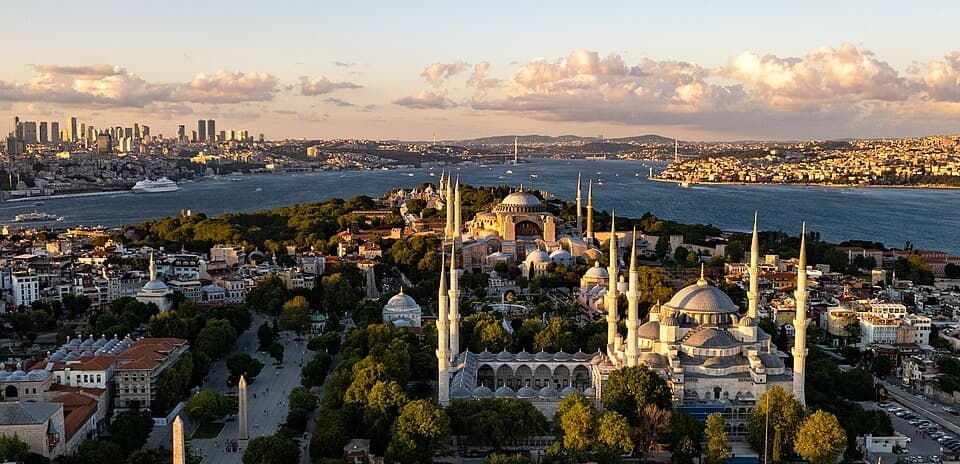
Istanbul: Imperial Mosques, Aqueducts and Skyline Views
İstanbul, Türkiye
Audio Preview
Listen to a sample of this audio tour to get a feel for the experience.
What You'll Experience
On this Istanbul: Imperial Mosques, Aqueducts and Skyline Views audio tour in İstanbul, you'll discover 11 carefully selected points of interest, each with its own story. The tour is designed to be completed at your own pace, with GPS navigation guiding you from one location to the next. As you approach each stop, the audio narration automatically begins, bringing history, culture, and local insights to life.
About This Tour
This tour explores Istanbul’s historic peninsula from Süleymaniye to the Galata Bridge, focusing on Ottoman imperial mosque complexes and earlier Byzantine layers. It includes major külliyes, madrasas, tombs, and aqueducts, highlighting shifts from classical Ottoman to baroque architecture, urban planning, and the city’s changing skyline and religious landscape.
Points of Interest
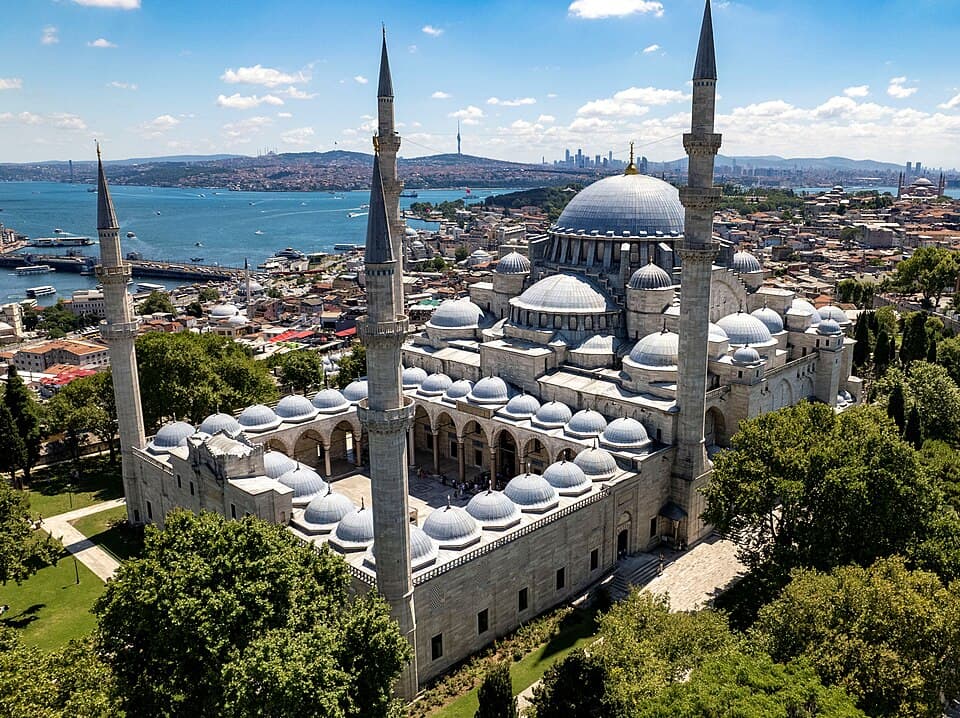
Süleymaniye Mosque Terrace
Sinan’s masterpiece above the Golden Horn
This stop focuses on the exterior of Süleymaniye Mosque and its terrace views over the Golden Horn. The script should introduce Süleyman the Magnificent, architect Mimar Sinan, and the idea of the imperial mosque as both religious symbol and urban landmark. It should highlight the balanced classical Ottoman composition: central dome, semi‑domes, minarets, and cascading volumes stepping down the hill. The terrace panorama can be used to orient listeners to the city’s seven hills and to connect visually to later stops like Fatih, Zeyrek, and the Galata Bridge. An anecdote may mention Sinan’s careful use of topography to make Süleymaniye appear even more dominant without exceeding height limits imposed by the palace.
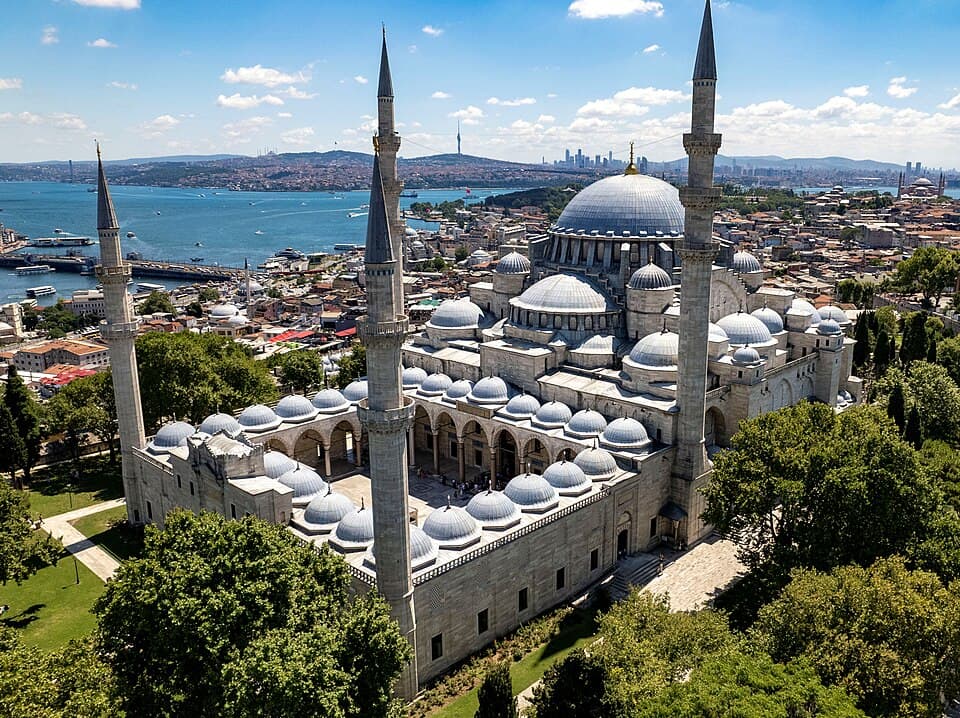
Süleymaniye Mosque Complex
Külliye of schools, hospice, and tombs
Here the focus shifts from the main mosque to the wider Süleymaniye külliye: medreses, hospital, hospice, soup kitchen, caravanserai, and the tombs of Süleyman and Hürrem. The narration should explain the külliye as a self‑contained urban micro‑city providing social services and higher religious education. Architectural details of the courtyards, modest facades, and the garden‑like tomb enclosure will contrast with the monumentality of the main mosque. One anecdote can describe the soup kitchen’s role in feeding both the poor and traveling scholars, and another can note how Süleyman’s tomb became a symbolic place of loyalty where later sultans reportedly sought inspiration before campaigns.
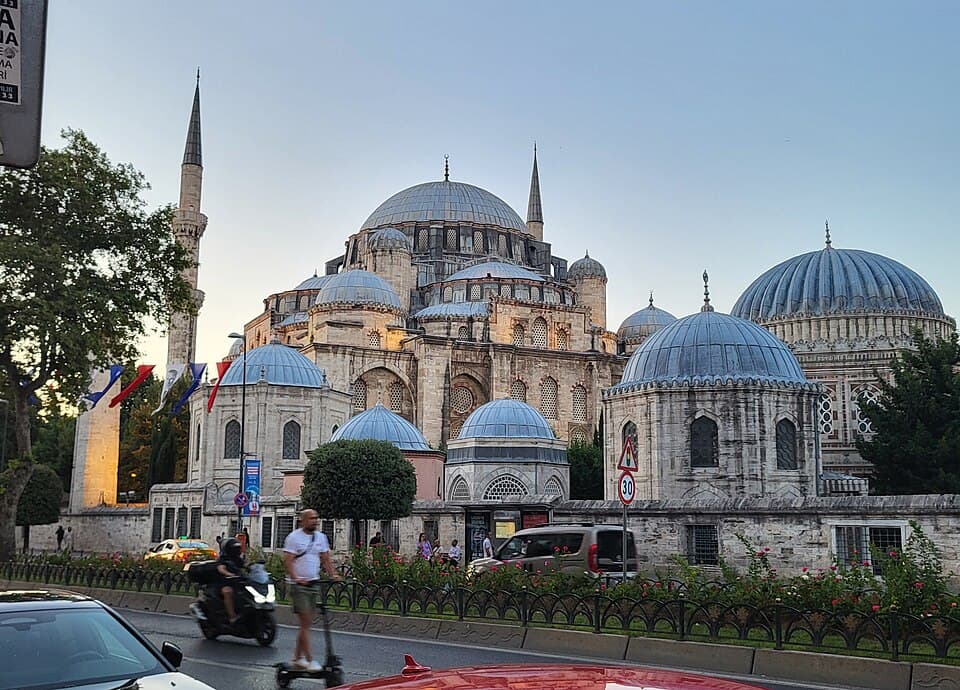
Şehzade Mosque
Early Sinan design for an imperial prince
This stop examines Şehzade Mosque as one of Mimar Sinan’s earlier major imperial commissions, built in memory of Süleyman’s son. The script should describe its harmonious four‑semi‑dome plan, slender minarets, and calm courtyard arcades, noting how it anticipates Sinan’s later work at Süleymaniye. Background on Ottoman succession politics and the death of the prince provides emotional context. An anecdote can mention that Sinan reportedly considered Şehzade his ‘apprentice’ work, while Süleymaniye was his ‘journeyman’ masterpiece. Another story may touch on how the surrounding cemetery became a favored burial ground for high officials seeking proximity to the martyred prince.
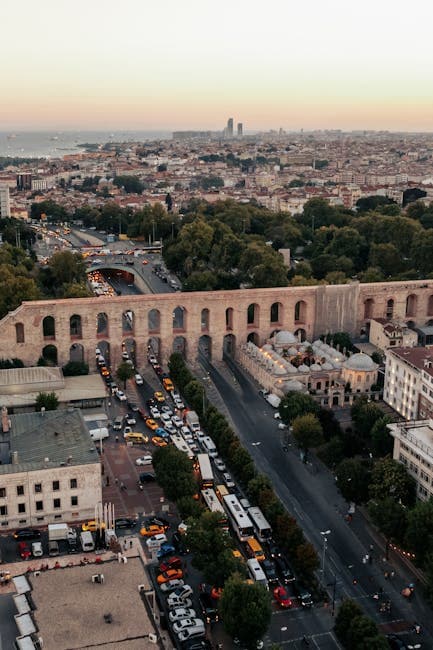
Valens Aqueduct Viewpoint
Late Roman aqueduct over Ottoman streets
At this viewpoint, the focus is on the Valens Aqueduct (Bozdoğan Kemeri) as a piece of late Roman and Byzantine infrastructure that continued into the Ottoman era. The narration should describe its long stone arcades striding over the valley, its role in bringing water from distant hills, and the way later Ottoman streets and buildings wove around it. Historical context can cover how Constantinople’s size depended on such water systems and how the Ottomans maintained and repaired them. An anecdote might recount how sultans on procession would pass under its arches, turning an engineering work into a ceremonial backdrop, and another may note later Ottoman‑era repairs using slightly different stonework visible to a careful eye.
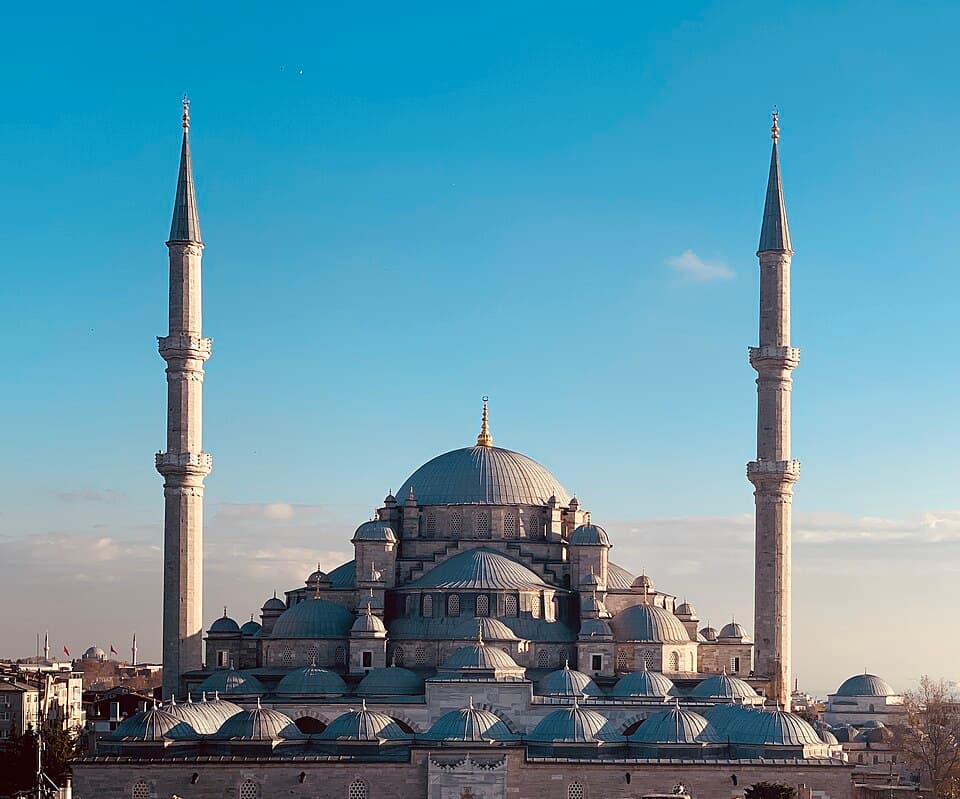
Fatih Mosque and Complex
Conquering sultan’s mosque on the Apostles’ hill
This stop covers Fatih Mosque and its extensive complex on the site of the Byzantine Church of the Holy Apostles. The script should explain Mehmed II’s role as the Conqueror and his vision of a new Ottoman capital, using this mosque and külliye as a key statement. It should note the original 15th‑century mosque and its later rebuilding after an earthquake, highlighting how current architecture reflects later tastes while the overall layout still signals early Ottoman ambition. Details about the medreses, hospice, and surrounding neighborhood as a scholarly and religious center are important. Anecdotes may include the story of the mosque’s dual identity as both a religious space and a symbol of triumph over Byzantium, and the way its medreses attracted scholars from across the empire, giving the quarter a reputation as an intellectual hub.
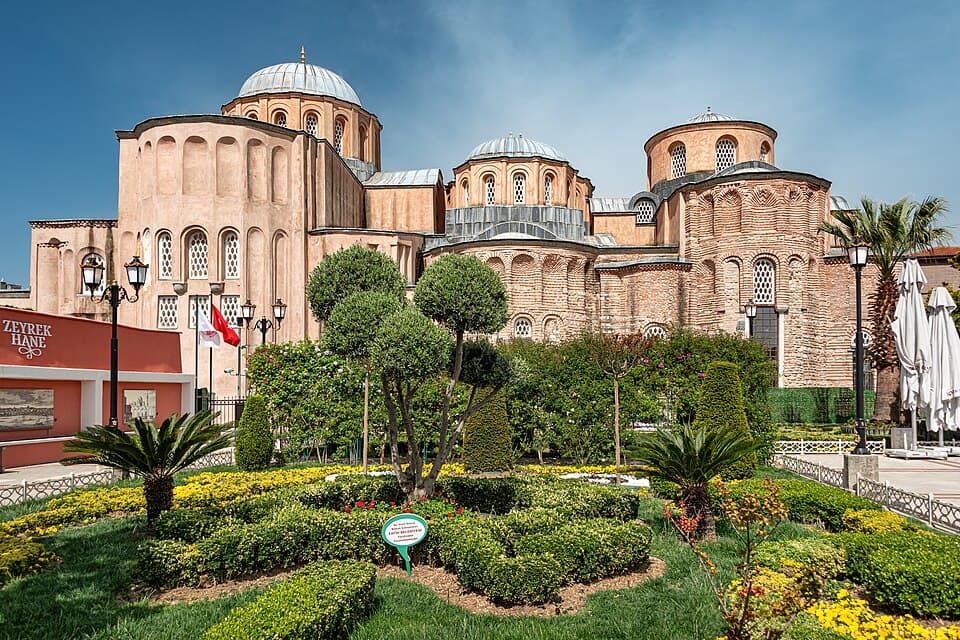
Zeyrek Mosque and Overlook
Byzantine Pantokrator turned Ottoman mosque
This stop focuses on Zeyrek Mosque’s exterior as the former Byzantine Pantokrator Monastery and the nearby overlook over the Golden Horn. The narration should outline its origin as an imperial monastery complex, its multi‑part church structure, and its later conversion into an Ottoman mosque and medrese area. Architectural comments can highlight the brick‑and‑stone Byzantine masonry, irregular volumes, and contrasted later Ottoman additions. The overlook is a chance to compare the view from this hill with Süleymaniye’s, framing the continuity of sacred high points. An anecdote can mention that in the early Ottoman period, the former monastery buildings briefly housed one of the first higher Islamic colleges in the city, and another can describe how local residents later used some of the former monastic spaces for everyday storage and workshops, reflecting the changing life of the complex.
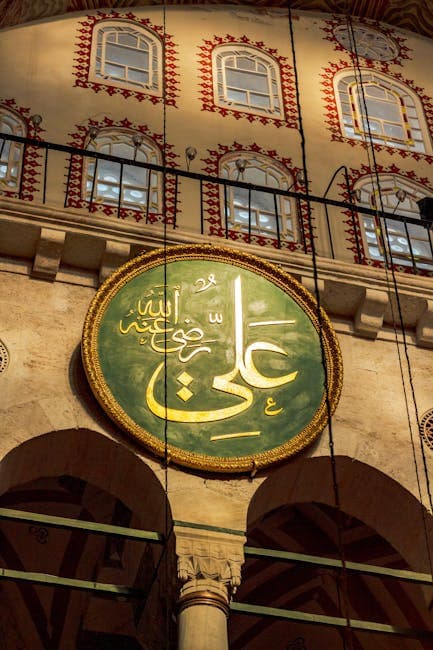
Atik Ali Paşa Mosque
Early Ottoman complex by Çemberlitaş column
This stop looks at Atik Ali Paşa Mosque near the Çemberlitaş (Column of Constantine), emphasizing it as a high‑status but non‑imperial complex built by a grand vizier. The script should explain how such foundations expressed elite piety and political influence within sight of the old Byzantine imperial forum. Architectural details include its multi‑domed roof, compact courtyard, and relationship to adjacent streets and shops. Contextual notes can highlight how grand vizier complexes complemented rather than rivaled sultanic mosques. One anecdote may recall how the nearby Çemberlitaş was long associated with imperial ceremonies and relics of Constantine, while another could describe how the mosque’s surroundings evolved into a busy commercial quarter serving travelers and merchants.
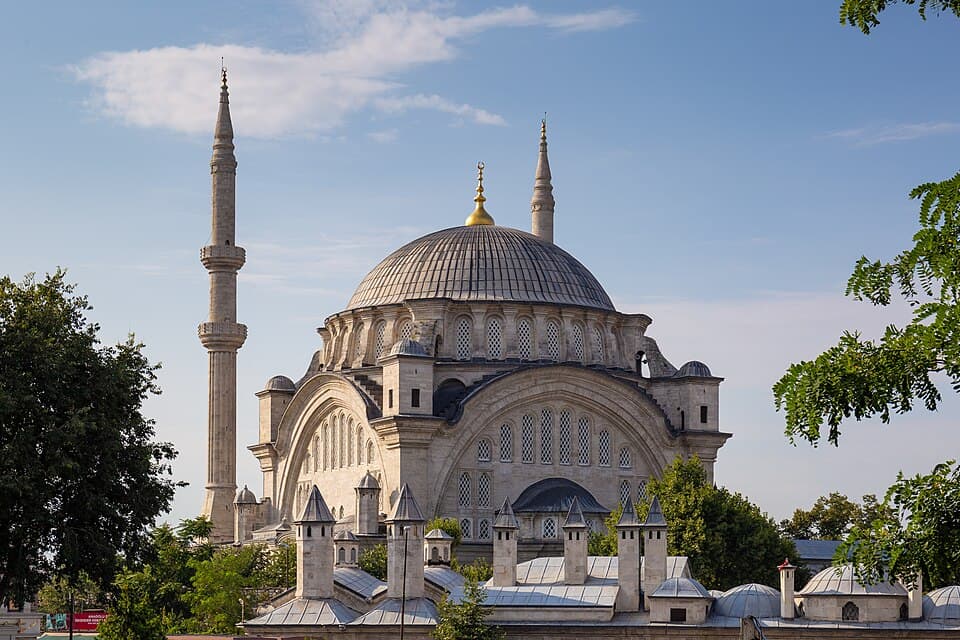
Nuruosmaniye Mosque
Ottoman Baroque mosque beside the Grand Bazaar
This stop introduces Nuruosmaniye Mosque as a key example of mid‑18th‑century Ottoman Baroque, set at the edge of the Grand Bazaar. The narration should highlight its curving courtyard, ornate stone carving, and distinctive, more vertical sense of space compared to classical mosques. Historical context can mention the changing tastes of the Ottoman court and growing interaction with European styles. The complex’s relationship to nearby commercial structures shows how piety and trade intertwined. One anecdote might note that the name “Nuruosmaniye” refers to the “Light of Osman”, linking the sultan’s legitimacy to divine illumination, while another can recount how the mosque’s illuminated windows were especially admired by travelers approaching from the bazaar at dusk.
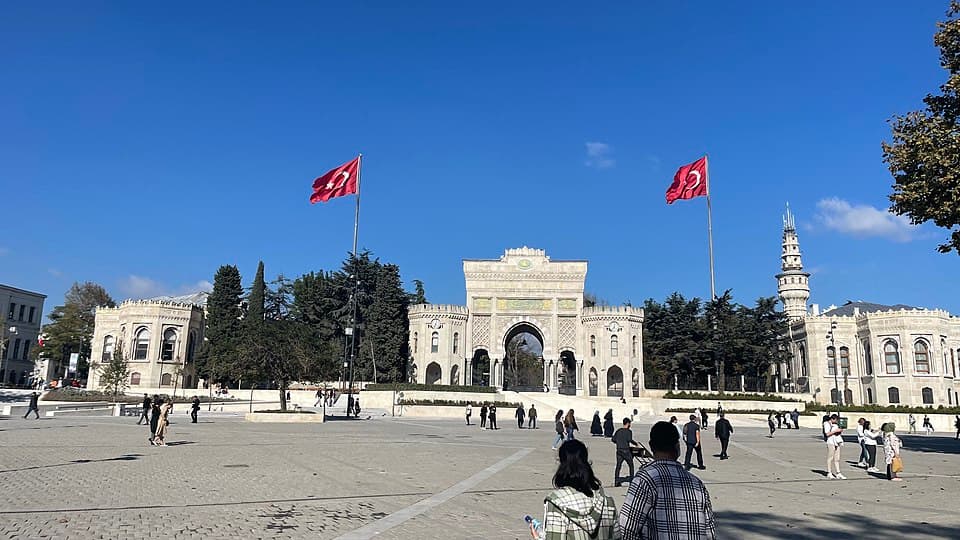
Beyazıt Square and Mosque
Historic square between mosque, market, and state
This stop covers Beyazıt Mosque and the surrounding Beyazıt Square as a layered civic and religious space. The script should explain the mosque’s origins under Sultan Bayezid II, later restorations, and its position along the main axis between the Grand Bazaar and the old city center. Beyazıt Square’s transformation from a more enclosed space to an open modern plaza, often used for demonstrations and public events, should be emphasized. Architectural observations include the mosque courtyard, porticos, and its slightly more modest profile compared to Süleymaniye or Fatih. An anecdote could mention bookstalls and second‑hand book markets that historically clustered around the mosque precinct, and another might touch on the square’s role in various political gatherings and student movements in the 20th century.
Istanbul University Main Gate
Darülfünun and Ottoman higher learning
This stop focuses on the monumental main gate of Istanbul University, on the edge of Beyazıt Square, and its roots in the Ottoman Darülfünun (house of sciences). The narration should trace the evolution from traditional medrese education to modern, Western‑style higher learning in the late Ottoman and early Republican periods. Visual details include the neo‑orientalist facade, inscription bands, and the way the gate frames the campus beyond. The contrast with nearby mosque courtyards underlines changing ideas about knowledge and the state. An anecdote might recall that some of the earliest modern science and law lectures in the empire were given under the Darülfünun name, and another can mention the university’s later role in student protests that spilled into Beyazıt Square.

Galata Bridge Viewpoint
Skyline panorama of mosques and aqueducts
The final stop uses the view from the Galata Bridge back toward the Historic Peninsula to synthesize the tour’s themes. The script should guide listeners in picking out key silhouettes: Süleymaniye high above the Golden Horn, the cluster of Fatih and nearby mosques on the ridge, Zeyrek slightly lower, and hints of Nuruosmaniye and Beyazıt’s area behind the bazaar roofs. It should also reference the line of the Valens Aqueduct crossing the hills, illustrating how water infrastructure and mosque domes share the skyline. The narration can briefly recap the shift from Byzantine to Ottoman, from classical Sinan designs to baroque experiments, and from religious to secular institutions. One anecdote might mention how 19th‑century travelers sketched almost this exact panorama, making it a standard image of Istanbul abroad, while another can note how fishermen along the bridge today continue a living tradition that has gradually become part of the city’s iconic views.
Start This Tour
Download Roamway to experience this audio tour
Tour Details
Access
Free
Stops
11 points of interest
Languages
GermanEnglishSpanishFrench
More tours in İstanbul
View all tours in İstanbulOther tours you might enjoy:
Istanbul: Sultanahmet to Galata Bridge Historic Highlights
This tour explores Istanbul’s historic peninsula from Sultanahmet Square to the Galata Bridge, passing major Byzantine and Ottoman landmarks. It includes mosques, cisterns, bazaars, fountains, and monuments such as Hagia Sophia, the Blue Mosque, the Grand Bazaar, and Süleymaniye Mosque, with context on religion, imperial power, daily life, and urban development.
Istanbul: Street Food, Bazaars and Neighborhood Cafés
This tour explores central Istanbul from Eminönü to Karaköy and Cihangir through its street food, historic markets, and café culture. It includes the Egyptian Spice Bazaar, Tahtakale backstreets, Galata Bridge, and waterfront meyhanes, highlighting local snacks, Ottoman-era commerce, neighborhood life, and evolving coffeehouse traditions.
Istanbul Bosphorus: Palaces, Mosques and Waterfront Life
This tour follows the European shore of the Bosphorus from Kabataş to Kuruçeşme, focusing on imperial palaces, mosques, and modern city life. It covers Dolmabahçe and Çırağan Palaces, Beşiktaş and Ortaköy squares, parks, and bridge viewpoints, with attention to Ottoman architecture, maritime history, and contemporary waterfront culture.
Frequently Asked Questions
How do I start this audio tour?
Download the Roamway app, search for this tour, and tap 'Start Tour'. The app will guide you to the starting point using GPS. Once you're there, the audio narration begins automatically.
Do I need an internet connection?
No! Once you've downloaded the tour in the Roamway app, it works completely offline. The GPS navigation and audio narration function without an internet connection.
Can I pause and resume the tour?
Yes! You can pause the tour at any time and resume later. Your progress is automatically saved, so you can complete the tour over multiple sessions if needed.