
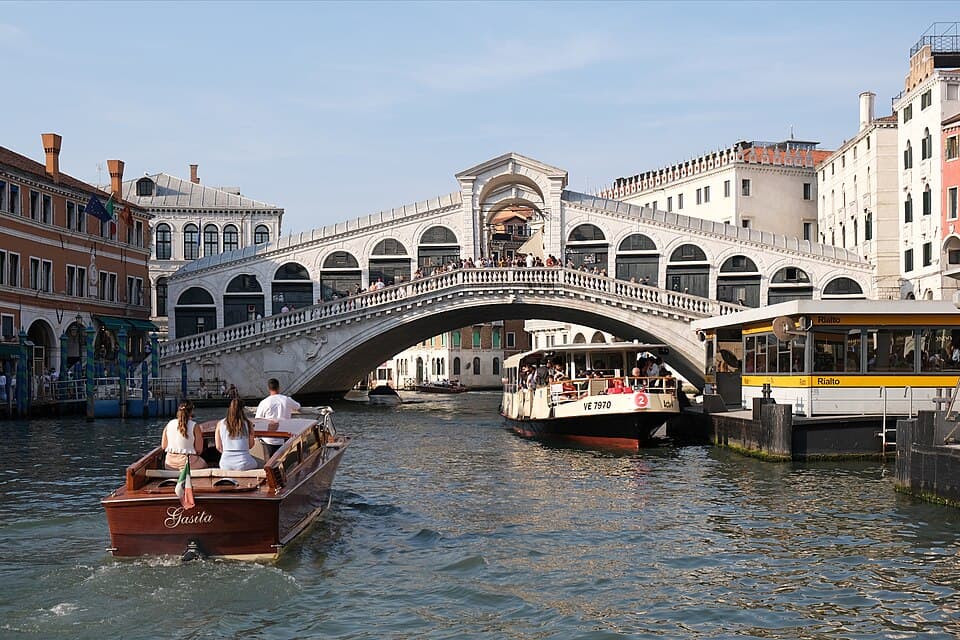
Venice: St. Mark’s to Rialto History & Canals
Venezia, Italia
Audio Preview
Listen to a sample of this audio tour to get a feel for the experience.
What You'll Experience
On this Venice: St. Mark’s to Rialto History & Canals audio tour in Venezia, you'll discover 11 carefully selected points of interest, each with its own story. The tour is designed to be completed at your own pace, with GPS navigation guiding you from one location to the next. As you approach each stop, the audio narration automatically begins, bringing history, culture, and local insights to life.
About This Tour
This tour explores central Venice from Piazza San Marco to the Rialto area, focusing on major civic and religious landmarks. It covers the exteriors of St. Mark’s Basilica, the Doge’s Palace, and the Bridge of Sighs, then continues along the Riva degli Schiavoni to historic campos, markets, and viewpoints, highlighting Venetian politics, trade, and architecture.
Points of Interest
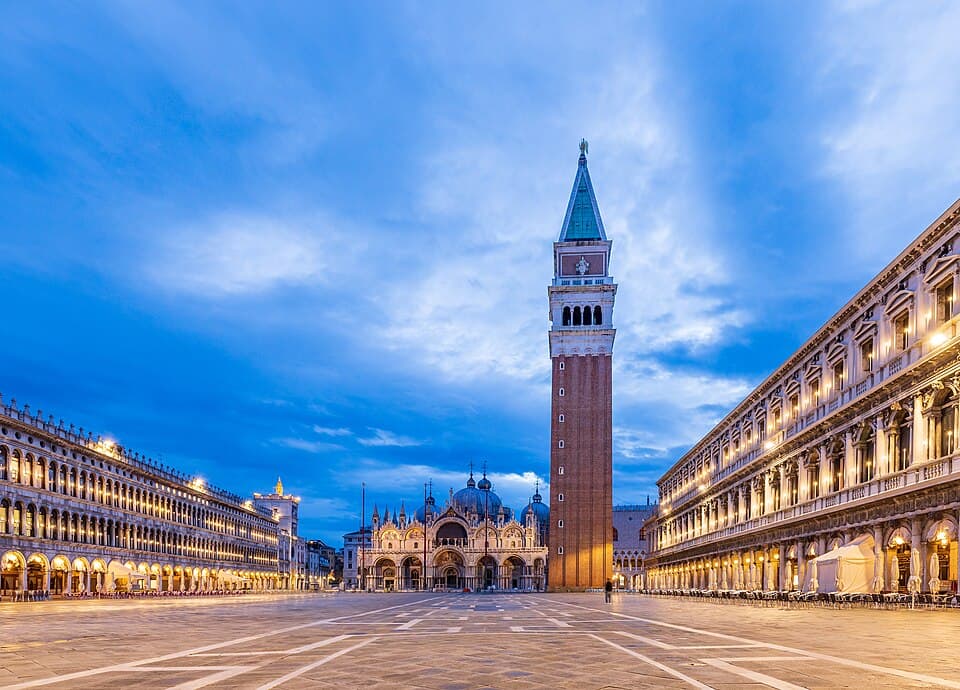
Piazza San Marco
Venice’s grand ceremonial and political stage
This stop introduces Piazza San Marco as Venice’s main civic stage and the symbolic heart of the republic. The script should set the scene: the vast rectangular space, the Campanile, the arcades of the Procuratie, St. Mark’s Basilica at one end, and the Doge’s Palace to the side. It should explain the piazza’s role in ceremonies, festivals, and daily life, including visiting rulers and public announcements. Mention the old practice of flooding turning the square into a shallow reflective pool and the historical use of the Campanile as both watchtower and symbol. Include an anecdote about the Campanile’s dramatic collapse in the early 20th century and its faithful reconstruction “as it was, where it was.”
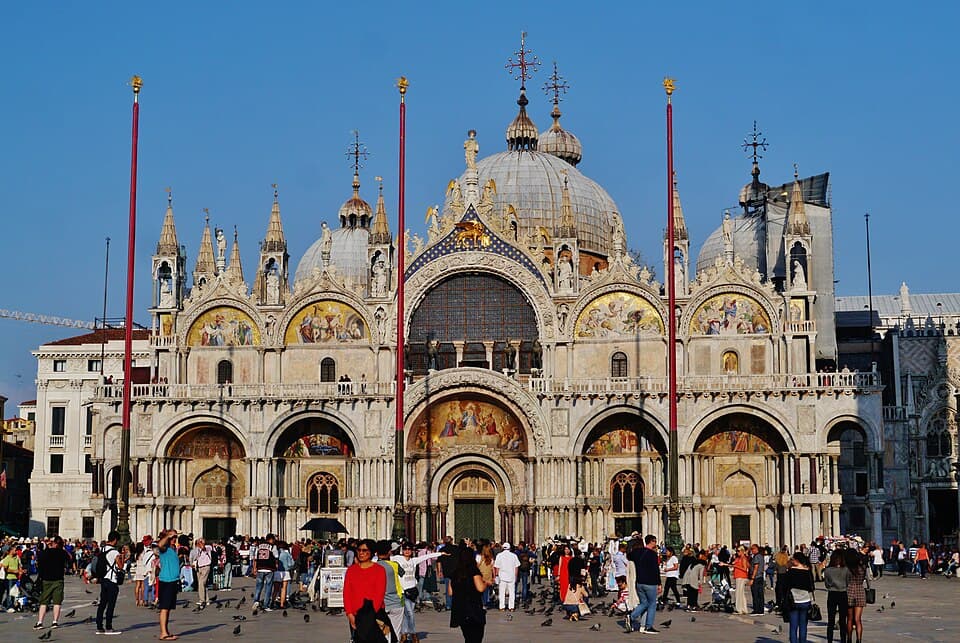
St. Mark’s Basilica
Byzantine relic shrine and Venetian state church
This stop focuses on the exterior of St. Mark’s Basilica as both a religious shrine and a statement of Venice’s power. The script should describe the domes, arches, and golden mosaics above the main portals, emphasizing the strong Byzantine and Eastern influences. It should recount how the relics of St. Mark were brought from Alexandria and how that story shaped Venice’s patron saint and identity. Mention the famed horses above the central arch, their journey as spoils of war from the Eastern Mediterranean, and later removal indoors for conservation. Include a unique anecdote about the smugglers hiding St. Mark’s body in a barrel or basket, supposedly covered with pork to evade Muslim inspectors.
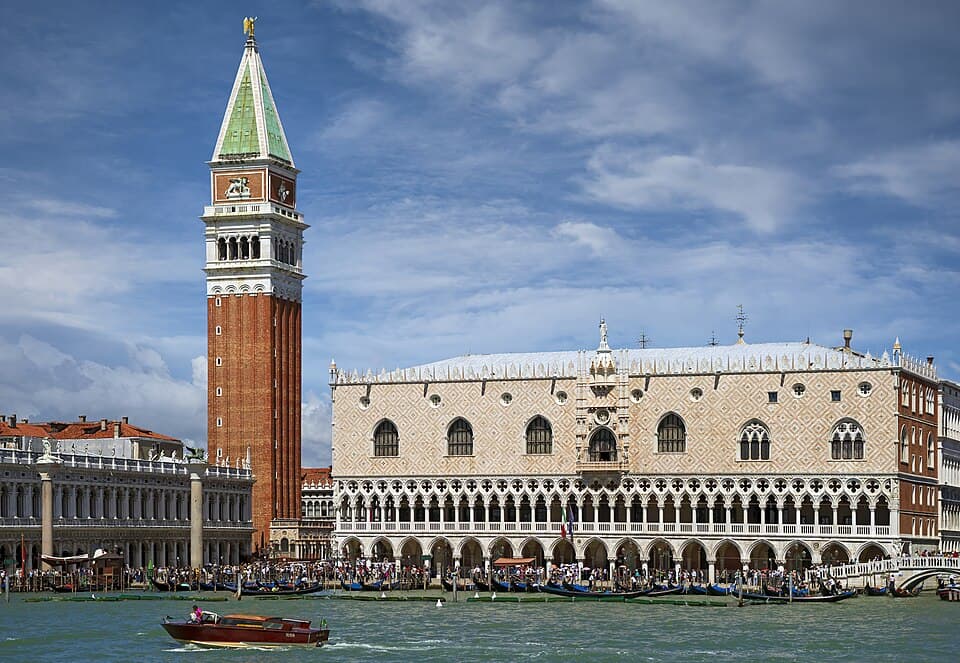
Doge’s Palace
Seat of Venice’s government and justice
This stop covers the Doge’s Palace exterior and courtyard as the center of Venetian political life. The script should describe the pink-and-white marble façade, the distinctive Gothic arches, and the contrast between the elegant lagoon-facing side and the more enclosed courtyard. It should explain the role of the Doge, the Great Council, and various magistracies that met here, stressing the republic’s complex checks and balances. Mention the courtyard wells and monumental staircase, highlighting how the architecture expressed power yet remained accessible from the square. Include an anecdote about the strict rules limiting the Doge’s personal freedom, such as needing official approval to leave the palace or city, underscoring that he was more servant than absolute ruler.
Ponte della Paglia Viewpoint
Classic side view of the Bridge of Sighs
This stop uses the Ponte della Paglia as a viewpoint to explain the Bridge of Sighs and the adjacent palace-prison complex. The script should have visitors look into the narrow canal, noting the enclosed white limestone bridge linking the Doge’s Palace to the former prison. It should explain that prisoners crossed here after sentencing, and later romantic writers imagined their "sighs" at a final glimpse of Venice. Clarify the contrast between this poetic image and the harsher reality of cramped cells and political prisoners. Include a unique anecdote about a famous escape from the nearby prison, often associated with an 18th-century adventurer who used a hole in the roof and rooftop route to gain freedom.
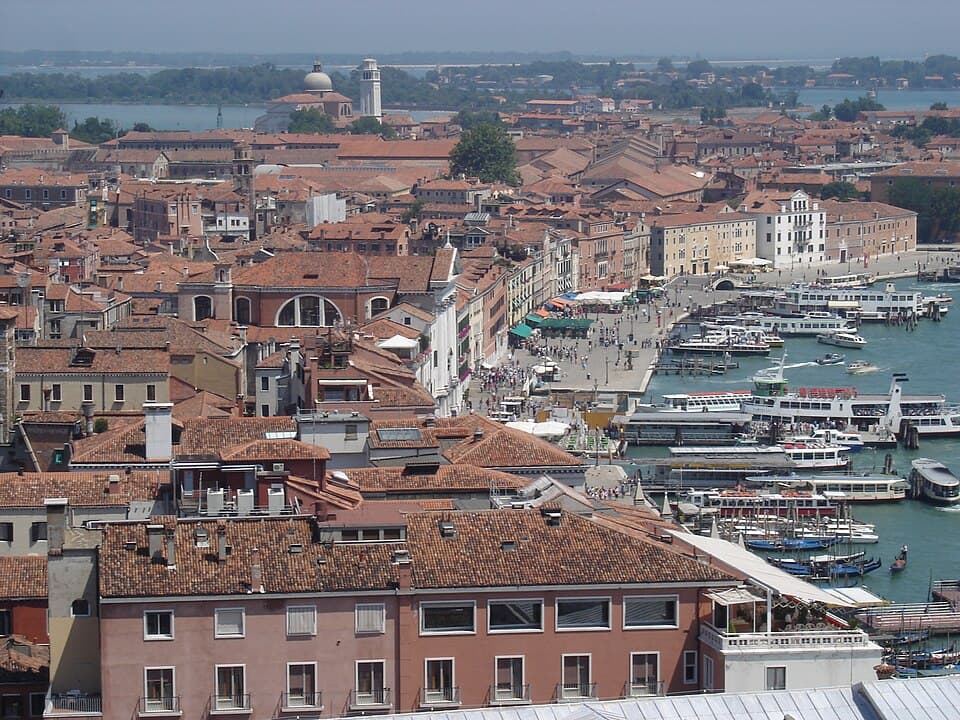
Riva degli Schiavoni
Waterfront of ships, soldiers, and strangers
This stop explores the Riva degli Schiavoni waterfront as Venice’s historic promenade and working quayside. The script should describe the wide stone embankment, the views of the lagoon, San Giorgio Maggiore, and the forest of moored boats. It should explain the origin of the name from Dalmatian (Slav) communities and mercenaries who lived and worked nearby. Discuss how this was once crowded with ships unloading goods and pilgrims disembarking, alongside inns and arsenals further along. Include a unique anecdote about foreign ambassadors or nobles arriving by ceremonial barge, stepping directly onto the Riva under the gaze of the Doge’s Palace and crowds gathered on the waterfront.
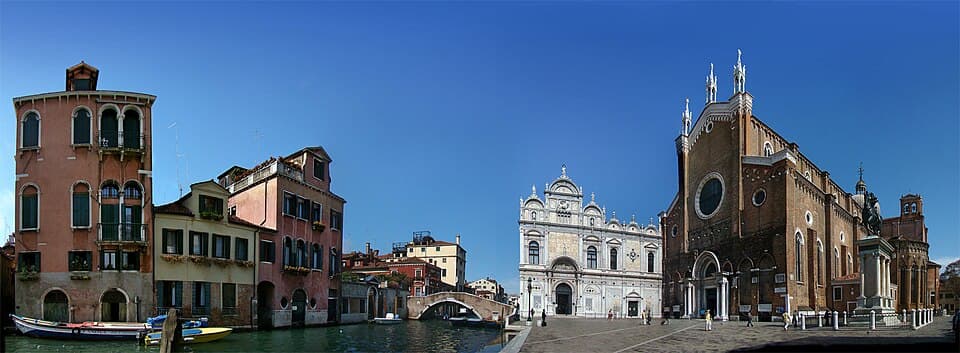
Campo Santi Giovanni e Paolo
Gothic church and doges’ burial ground
This stop presents Campo Santi Giovanni e Paolo (Zanipolo) as a major religious and civic space. The script should describe the vast Gothic brick church of Santi Giovanni e Paolo, its rose window and façade, and the open campo in front, often animated by locals and students. It should explain that many doges are buried inside, making it a kind of Venetian pantheon. Mention the equestrian statue of a Renaissance condottiere in the square and how such military leaders served the republic. Include a unique anecdote about grand state funerals that once processed here from the Doge’s Palace, with bells tolling and a long line of officials crossing the city to this church.
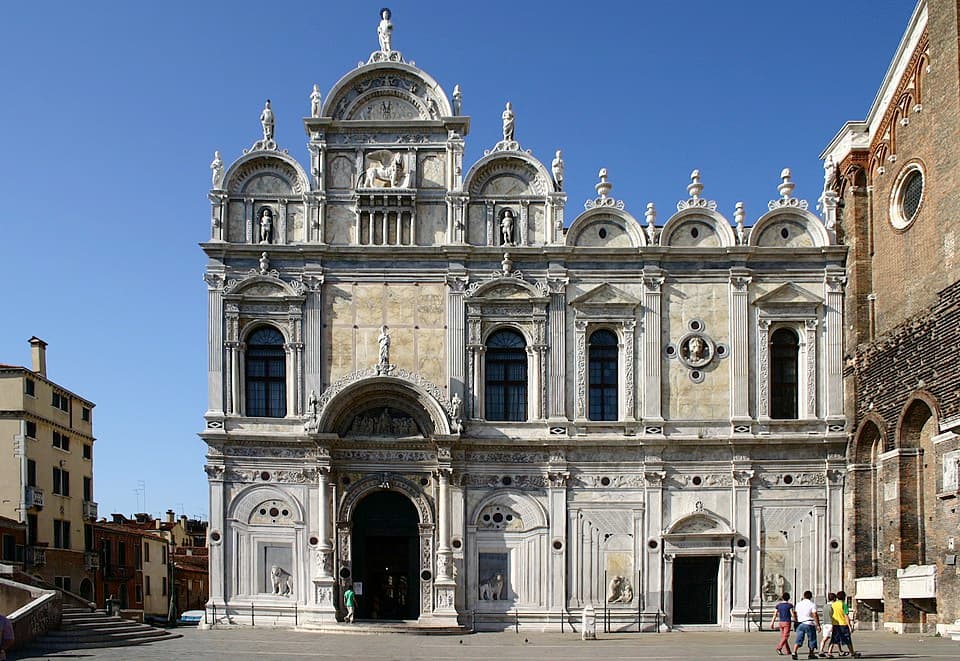
Scuola Grande di San Marco
Lavish confraternity house turned hospital façade
This stop focuses on the exterior of the Scuola Grande di San Marco, now part of a hospital complex. The script should describe its richly decorated Renaissance façade with colored marble, sculpted reliefs, and illusionistic architectural details. It should explain what a "scuola" was: a powerful lay confraternity devoted to charity, devotion, and social networking among citizens. Mention that inside once hung important cycles of paintings narrating the life of St. Mark and miracles, created by leading Venetian artists. Include a unique anecdote about the building’s reconstruction after a later fire or collapse, when architects used trompe-l’oeil techniques on the façade to imitate depth and columns carved in flat relief.
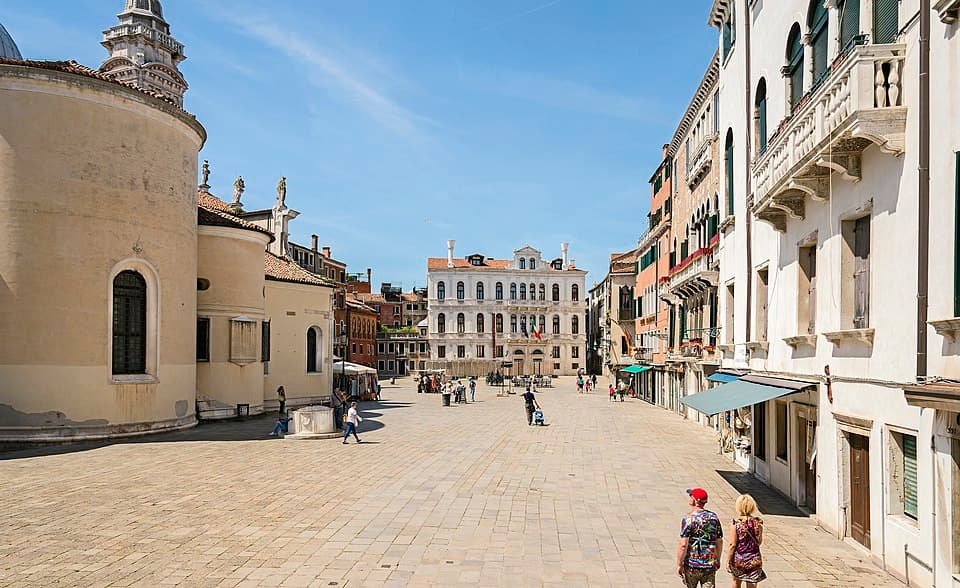
Campo Santa Maria Formosa
Lively neighborhood square of many faces
This stop explores Campo Santa Maria Formosa as a more intimate but historically rich urban space. The script should describe the irregularly shaped campo, the parish church with its distinctive façades, and the surrounding palaces with different architectural periods. It should explain the parish’s role in everyday religious life compared to grand state churches, and how campi acted as local marketplaces and gathering spots. Mention periodic flooding that can transform the campo and how residents adapt with raised walkways. Include a unique anecdote about a traditional festival or playful local legend linked to the unusual name “Formosa,” often connected to an apparition of the Virgin or to older stories about beauty and devotion.
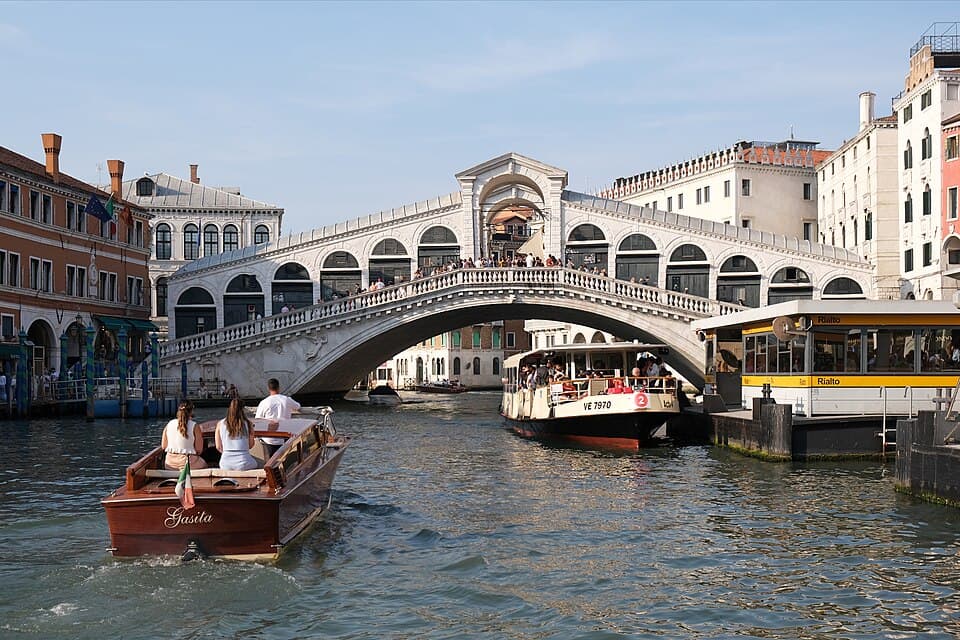
Rialto Bridge
Stone arch linking Venice’s trading banks
This stop presents the Rialto Bridge as the historic crossing and commercial symbol of Venice. The script should describe its single great stone arch, the central steps, and the rows of small shops lining the span. It should discuss earlier wooden bridges and the eventual decision to build in stone, reflecting the importance of the Rialto area as the financial and trading hub. Mention architects who proposed designs and the challenge of spanning the Grand Canal with a single arch. Include a unique anecdote about the skepticism some Venetians had that the stone bridge would stand, and how its survival became a point of civic pride over time.
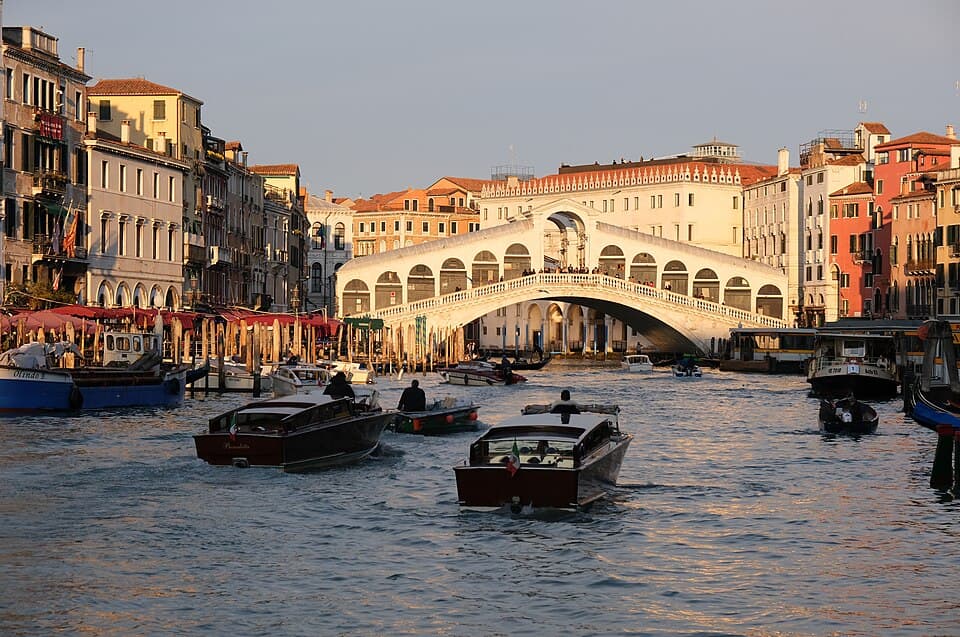
Rialto Market Area
Historic produce and fish stalls by the canal
This stop covers the Rialto Market (Erberia and nearby fish stalls) as Venice’s traditional food supply center. The script should evoke the colors and smells of fruits, vegetables, and fish, and describe the open arcades and canopies near the Grand Canal. It should explain how goods arrived by boat and were sold under strict regulations and guild oversight, ensuring quality for citizens. Mention the early-morning atmosphere when traders and restaurateurs still buy fresh catch today. Include a unique anecdote about official market inspectors who would publicly shame or fine dishonest vendors, sometimes dumping poor-quality fish straight into the canal as a warning.
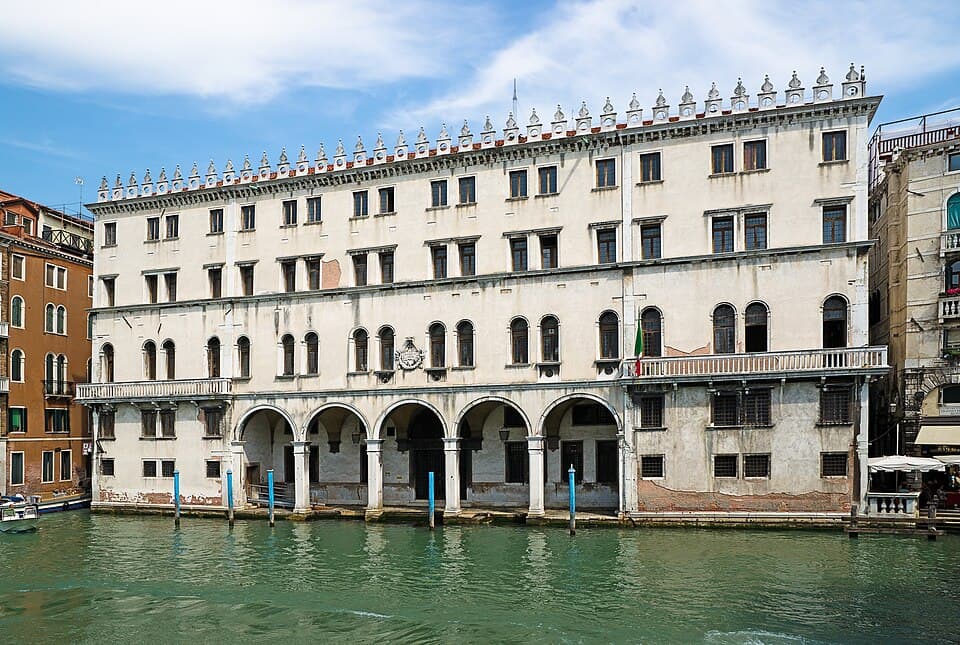
Fondaco dei Tedeschi
German merchants’ warehouse with panoramic views
This final stop presents the Fondaco dei Tedeschi as the historic base of German-speaking merchants in Venice, now known for its rooftop viewpoint. The script should describe the building’s solid exterior, central courtyard layout, and position by the Rialto Bridge on the Grand Canal. It should explain what a "fondaco" was: a combined warehouse, lodging, and customs checkpoint under close state supervision. Mention that its walls once held large frescoes or painted decorations by famous Venetian artists, now mostly lost. Include a unique anecdote about nightly curfews and locked gates imposed on foreign merchants here, illustrating how Venice welcomed trade but tightly controlled outsiders, before ending with reflections over the modern rooftop panorama.
Start This Tour
Download Roamway to experience this audio tour
Tour Details
Access
Free
Stops
11 points of interest
Languages
GermanEnglishSpanishFrench
More tours in Venezia
View all tours in VeneziaOther tours you might enjoy:
Venice: Quiet Sestieri, Canalside Life & Hidden Campi
This tour explores lesser-known areas of Venice across the Santa Croce, Dorsoduro, and Cannaregio districts, focusing on everyday urban spaces and canalside life. It includes historic campi, traditional gondola craftsmanship at Squero di San Trovaso, and neighborhood landmarks such as Campo San Polo and Madonna dell’Orto. Topics include local history, urban layout, and social life away from major monuments.
Venice: Great Churches, Relics and Renaissance Art
This tour explores major churches in Venice, including St Mark’s Basilica, Santa Maria della Salute, San Zaccaria, Zanipolo, and the Frari, along with selected smaller churches and confraternity spaces. It focuses on religious relics, Byzantine and Renaissance mosaics, architectural styles, and key artworks such as Tintoretto’s cycles at the Scuola Grande di San Rocco.
Venice: Grand Canal Palaces and San Marco Architecture
This tour explores central Venice from Piazza San Marco to the Grand Canal, focusing on major public spaces and noble palaces. It examines Venetian Gothic, Renaissance, Baroque, and 19th‑century styles through façades, courtyards, and skyline landmarks. Key topics include political power, trade wealth, and the evolution of Venetian urban form.
Frequently Asked Questions
How do I start this audio tour?
Download the Roamway app, search for this tour, and tap 'Start Tour'. The app will guide you to the starting point using GPS. Once you're there, the audio narration begins automatically.
Do I need an internet connection?
No! Once you've downloaded the tour in the Roamway app, it works completely offline. The GPS navigation and audio narration function without an internet connection.
Can I pause and resume the tour?
Yes! You can pause the tour at any time and resume later. Your progress is automatically saved, so you can complete the tour over multiple sessions if needed.