
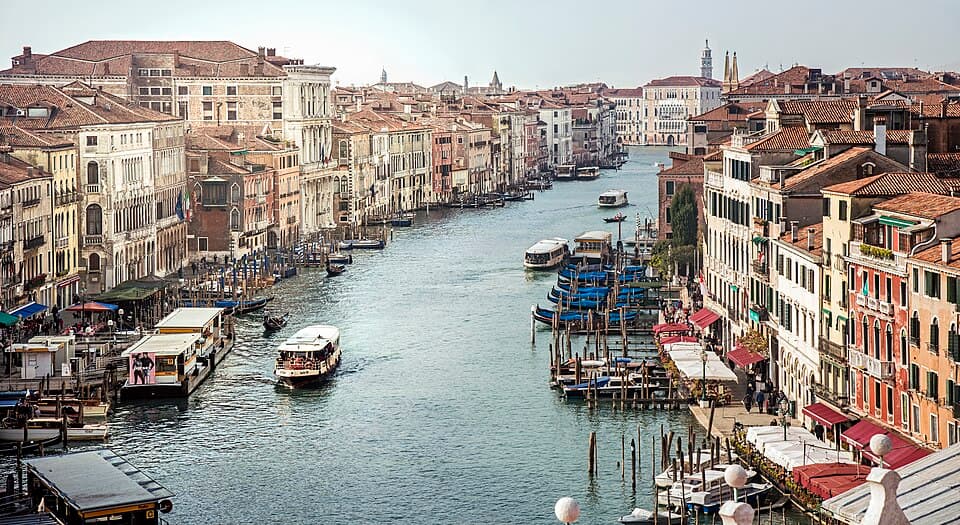
Venice: Grand Canal Palaces and San Marco Architecture
Venezia, Italia
Audio Preview
Listen to a sample of this audio tour to get a feel for the experience.
What You'll Experience
On this Venice: Grand Canal Palaces and San Marco Architecture audio tour in Venezia, you'll discover 11 carefully selected points of interest, each with its own story. The tour is designed to be completed at your own pace, with GPS navigation guiding you from one location to the next. As you approach each stop, the audio narration automatically begins, bringing history, culture, and local insights to life.
About This Tour
This tour explores central Venice from Piazza San Marco to the Grand Canal, focusing on major public spaces and noble palaces. It examines Venetian Gothic, Renaissance, Baroque, and 19th‑century styles through façades, courtyards, and skyline landmarks. Key topics include political power, trade wealth, and the evolution of Venetian urban form.
Points of Interest
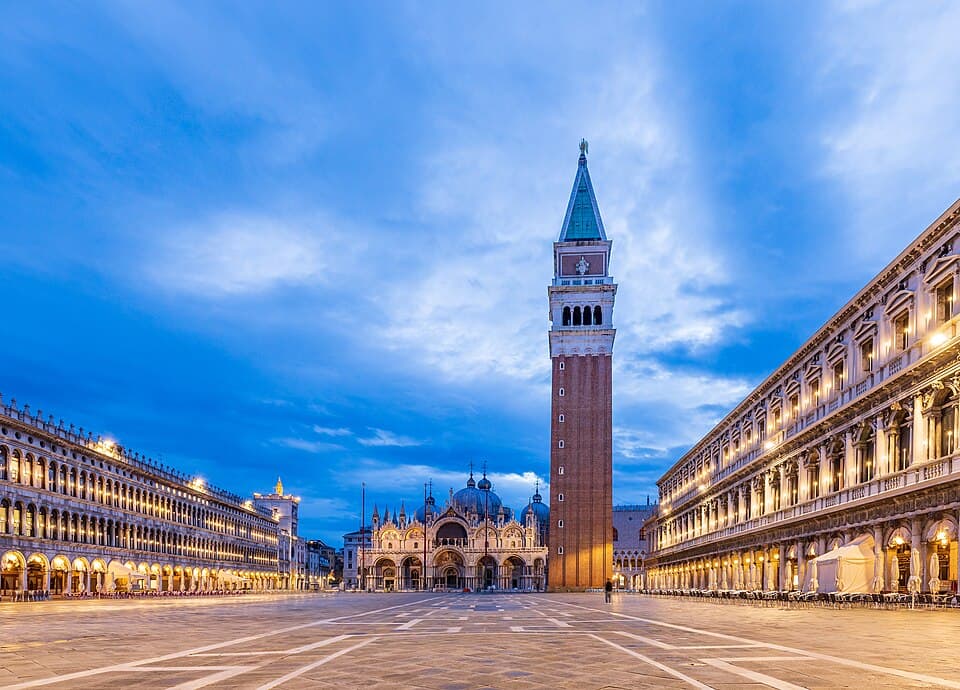
Piazza San Marco
Political heart framed by arcades and clock tower
This stop introduces Piazza San Marco as Venice’s political and ceremonial center, focusing on the Procuratie Vecchie and Nuove and the Clock Tower. The guide should explain how the flanking arcades define the piazza’s shape and hosted offices, shops, and cafés tied to state administration and commerce. It should highlight the Clock Tower’s elaborate façade, blue and gold zodiac dial, and the bell‑striking figures above. An anecdote can describe how processions and festivals used the long rectangular space as a sort of open‑air stage, and how the clock mechanism had to be maintained to keep trade and religious time synchronized.
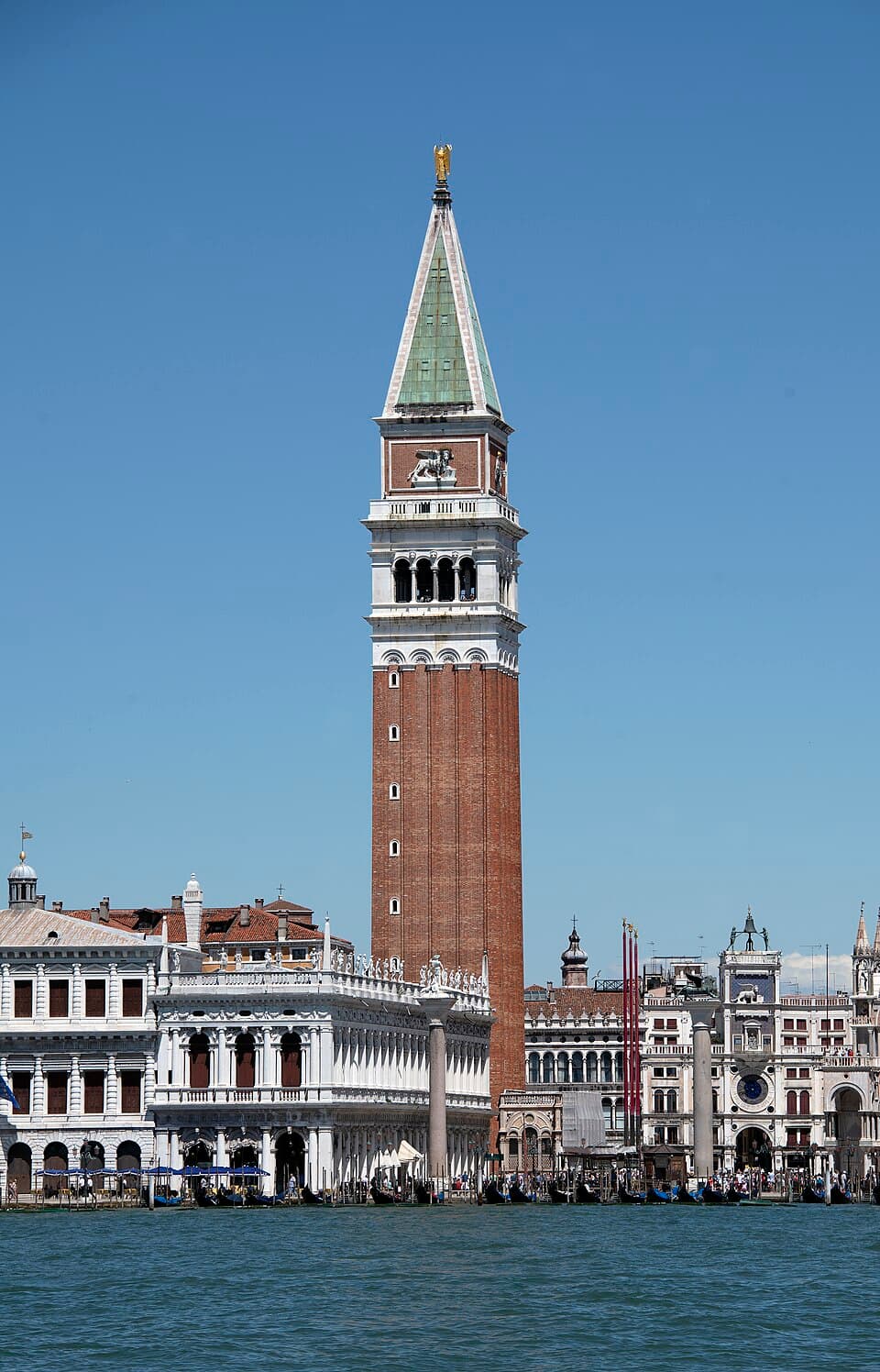
St. Mark’s Campanile
Venice’s bell tower and enduring skyline marker
This stop examines St. Mark’s Campanile as a vertical landmark, bell tower, and symbol of Venice’s authority. The narration should describe its simple brick shaft, pyramidal spire, and golden figure at the top, and how it served sailors and citizens as a navigational beacon and timekeeper. It should cover the dramatic collapse in the early 20th century and the decision to rebuild it "as it was" using modern techniques. An anecdote may mention how the falling tower narrowly spared nearby buildings or how Venetians gathered in the piazza to watch its reconstruction as a civic ritual of resilience.
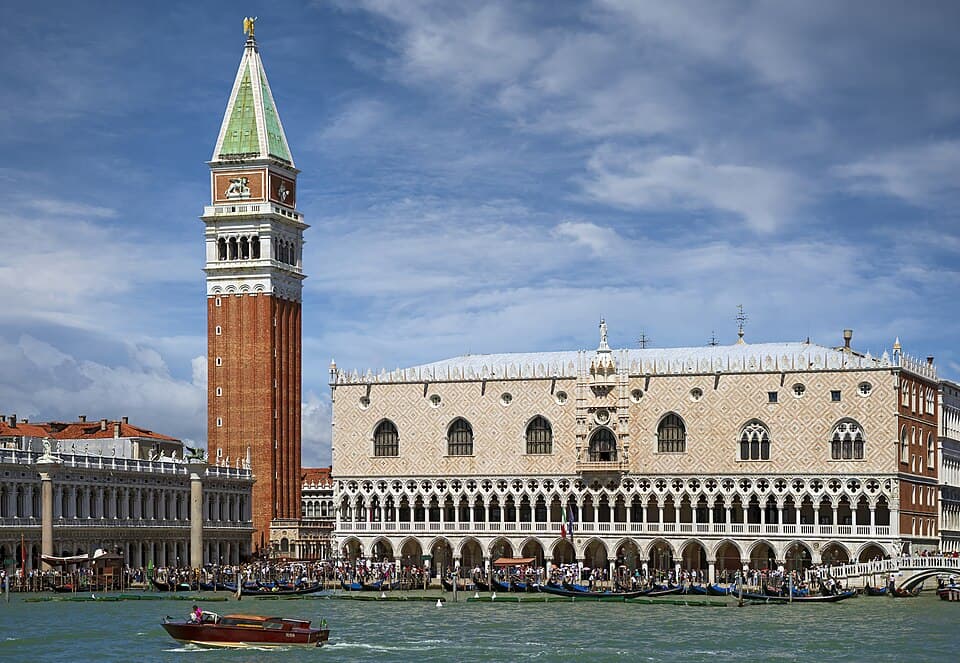
Doge’s Palace
Gothic palace of councils, justice, and ceremony
This stop focuses on the Doge’s Palace exterior, especially the lagoon and piazza façades and the sculpted corner capitals. The guide should explain how its delicate stone tracery and marble patterns mask the heavy political functions inside, including the doge’s apartments and major council chambers. It should highlight corner sculptures that personify virtues, biblical scenes, or episodes from Venice’s history, and how they framed the palace’s symbolic "edges". An anecdote can recount a notable public execution or sentencing announced from these façades, or the tradition of citizens in the piazza watching for newly elected doges to appear at the balcony.
Marciana Library
Renaissance library facing the ceremonial waterfront
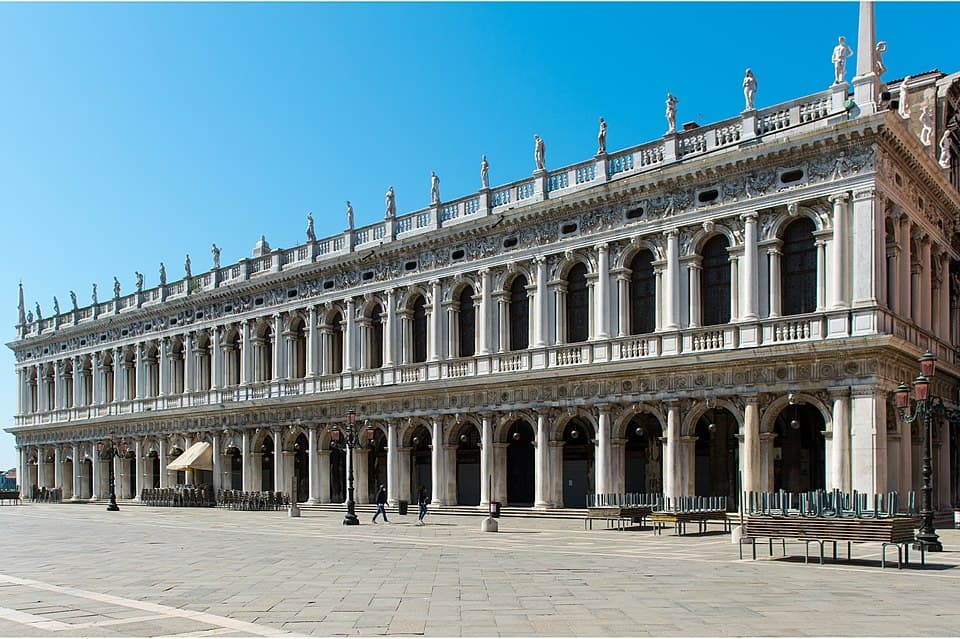
This stop explores the exterior of the Libreria Nazionale Marciana, or Marciana Library, as a key Renaissance building beside Piazza San Marco. The narration should highlight its Classical vocabulary—columns, pediments, and rich sculptural decoration—and how it contrasts with the Gothic Doge’s Palace opposite. It should explain the library’s role in housing Greek and Latin manuscripts and Venice’s importance in early printing and humanist culture. An anecdote might mention a famous scholar who worked here or how donated collections from learned Venetian patricians turned the building into a repository of prestige as well as knowledge.
Riva degli Schiavoni Palaces
Lagoon-facing noble residences and trading façades
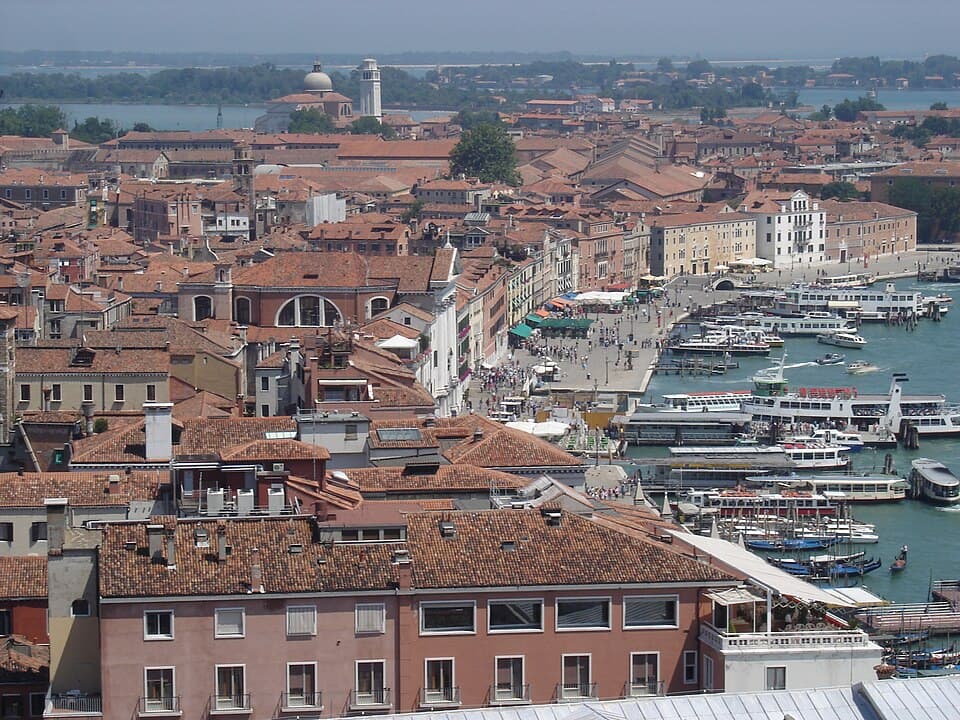
This stop examines palaces along the Riva degli Schiavoni, focusing on the complex known today as Hotel Danieli, historically Palazzo Dandolo. The guide should describe its Gothic façade facing the lagoon, with balconies and tracery designed to impress arriving visitors by boat. It should situate the Dandolo family within Venetian politics and crusading ventures, linking maritime wealth to prestigious waterfront housing. An anecdote may recount how foreign ambassadors or notable travelers were received in such palaces upon arrival, or how the waterfront below teemed with small craft and porters serving these elite residences.
Palazzo Grimani di San Luca
Classical elegance on the Grand Canal bend
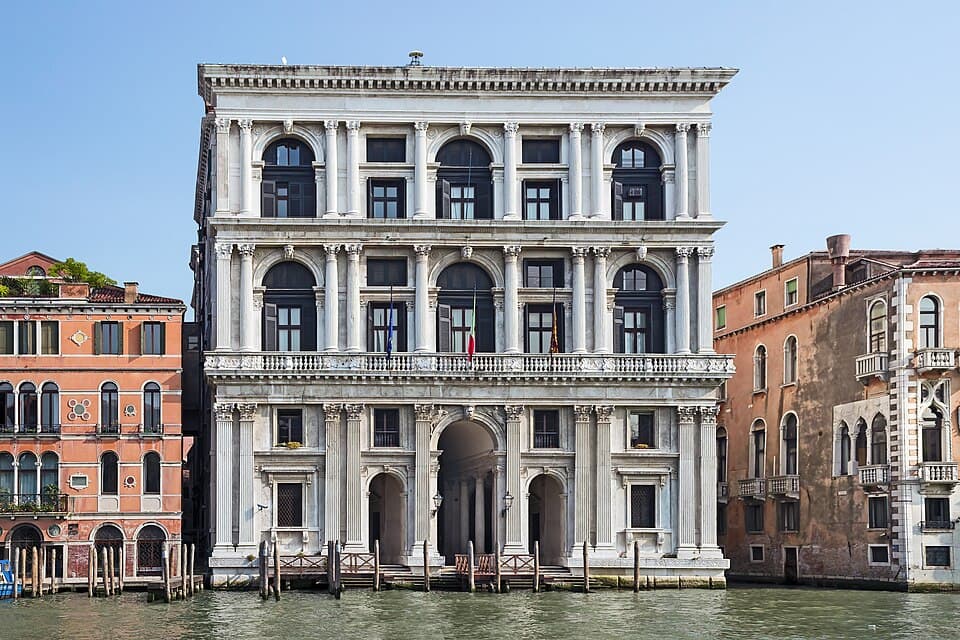
This stop introduces Palazzo Grimani di San Luca as a major example of Classical, all’antica architecture on the Grand Canal. The narration should focus on its ordered façade with strong horizontal divisions, columns or pilasters, and a temple-like central emphasis, contrasting it with nearby Gothic palaces. It should discuss the Grimani family’s roles in politics and their reputation as collectors of antiquities and patrons of artists. An anecdote can describe how visitors entering by boat would encounter interior spaces decorated with ancient statues and frescoes, turning the palazzo into a statement of learning as much as wealth.
Palazzo Contarini del Bovolo
Hidden spiral staircase in dense urban fabric
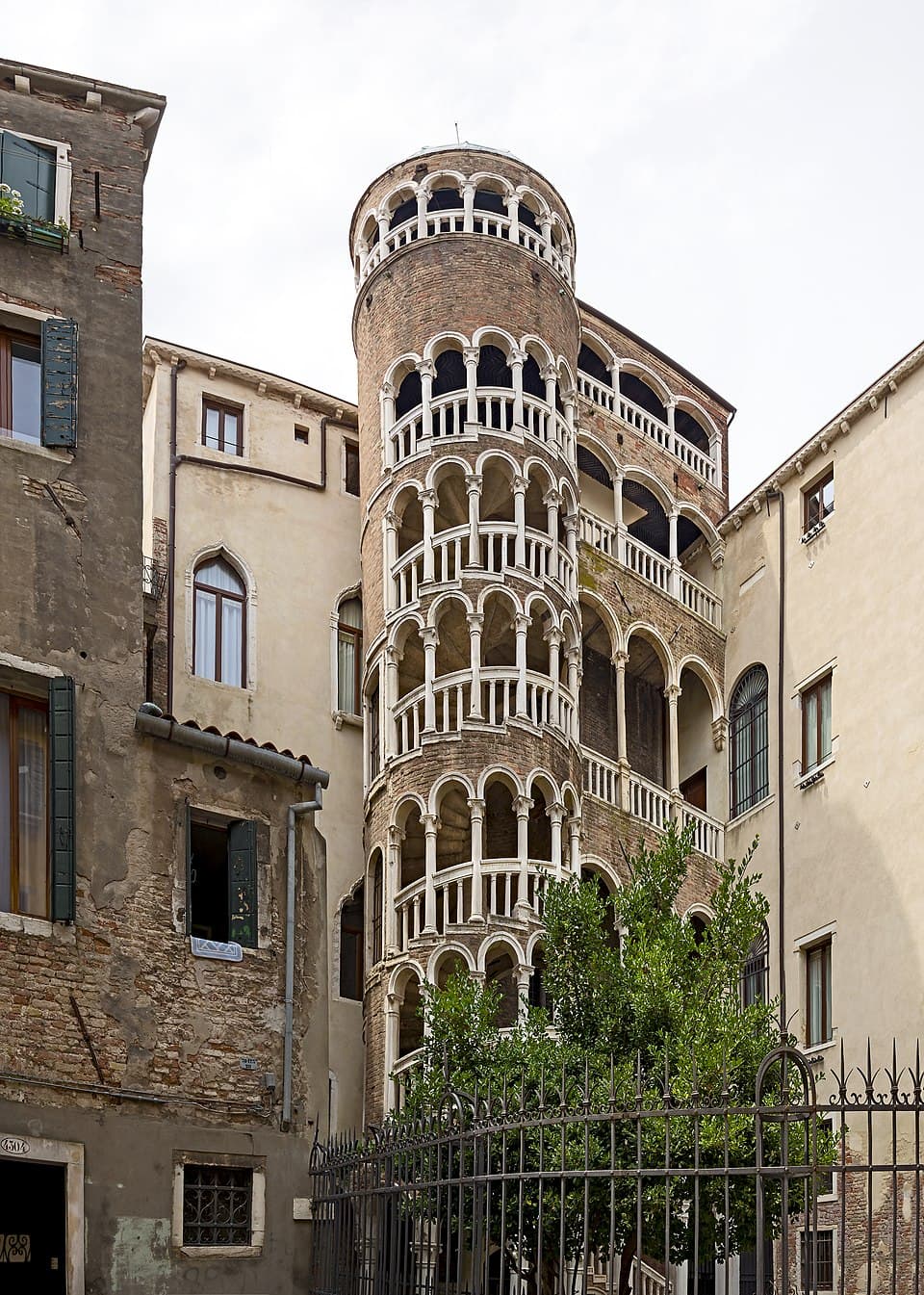
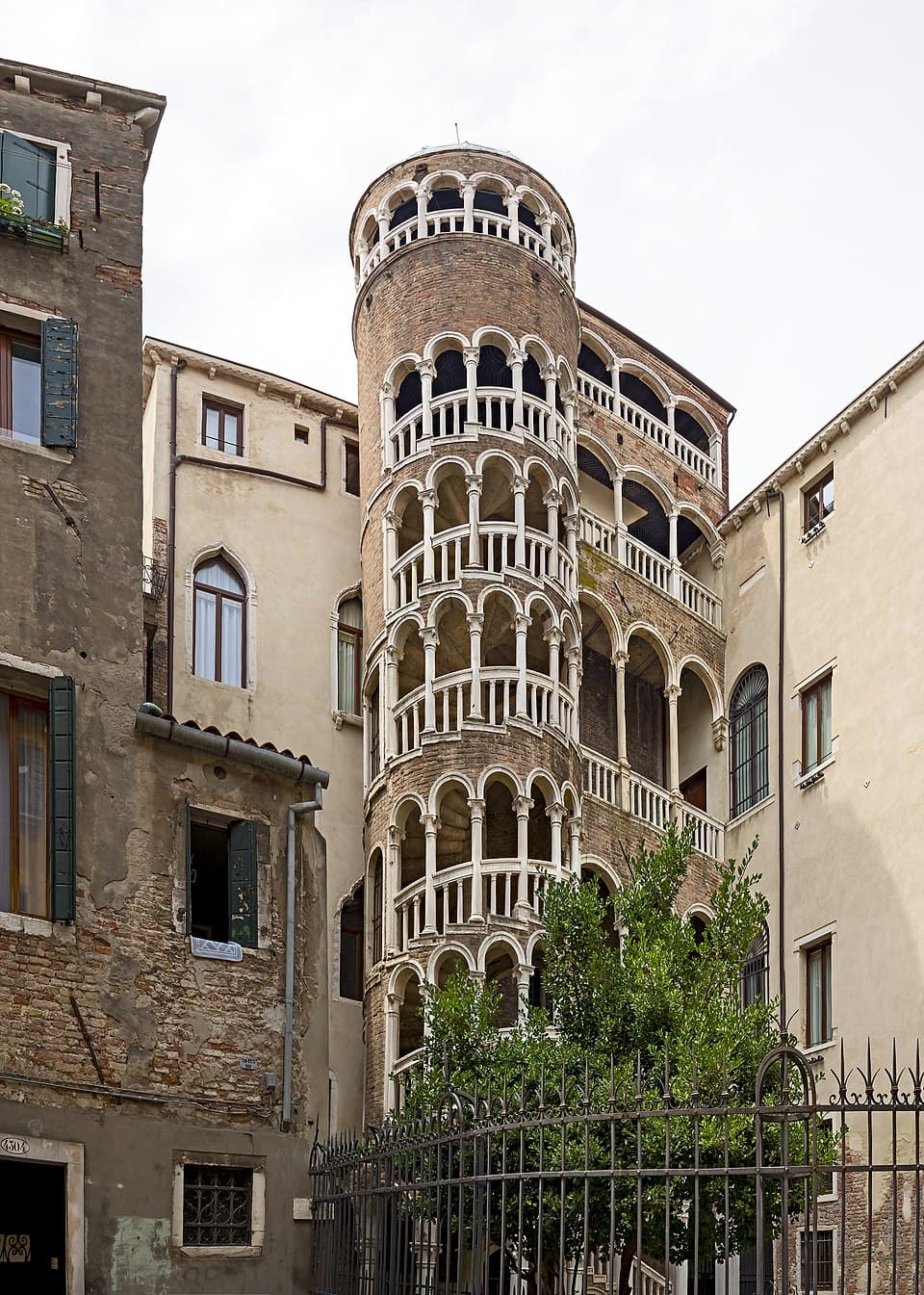
This stop focuses on the Palazzo Contarini del Bovolo and its famous external spiral staircase, the Scala Contarini del Bovolo. The guide should describe the stacked arcades and circular ramps climbing the small courtyard, showing how it solves vertical circulation in a tight urban plot. It should explain the Contarini family’s status and the fashion for such architectural curiosities among patricians. An anecdote may evoke how the staircase’s name, linked to a "snail" shape, entered local speech, or how neighbors glimpsed masked figures ascending during private gatherings or carnival seasons.
Campo Manin
Irregular campo revealing Venice’s urban logic
This stop uses Campo Manin to explain Venetian urban form and the role of campos as neighborhood centers. The narration should note the irregular shape, surrounding palazzi, and the monument in the middle, showing how open space is carved out amid dense building fabric. It should reference past religious or institutional uses nearby that helped structure the campo before later transformations. An anecdote might describe how residents historically used this space for small markets, children’s games, or local gatherings, contrasting it with the ceremonial scale of Piazza San Marco discussed earlier in the tour.
Palazzo Cavalli-Franchetti
Gothic Revival palace on the Grand Canal curve
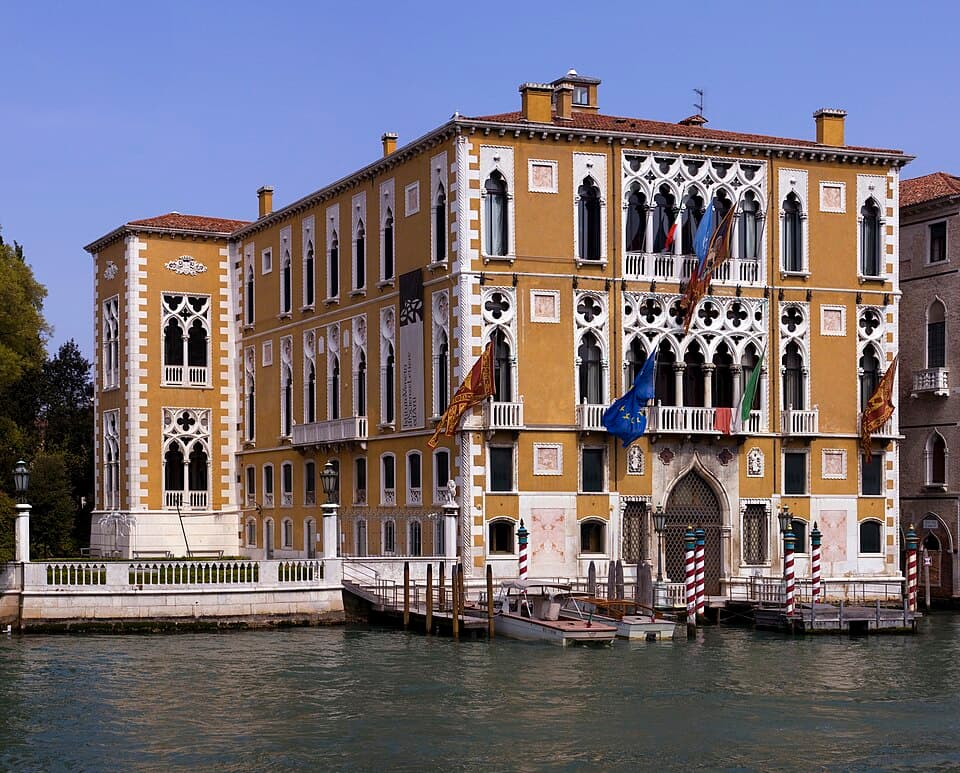
This stop examines Palazzo Cavalli‑Franchetti as a 19th‑century reinterpretation of Venetian Gothic on the Grand Canal. The guide should highlight its pointed arches, ornate window groupings, and decorative tracery, noting how they echo medieval models while reflecting later tastes. It should explain changes in ownership and use, including conversion to institutional or cultural functions. An anecdote may mention how 19th‑century artists and writers admired such palaces from their hotel windows or sketchbooks, helping to cement the romantic image of Venice that influenced restorations and new designs like this one.

Accademia Bridge Viewpoint
Panoramic bend of Grand Canal palaces
This stop uses the Accademia Bridge as a viewpoint over one of the Grand Canal’s most famous curves. The narration should invite listeners to scan up and down the canal, identifying palaces of different periods and styles along the banks. It should also describe the bridge itself as a relatively modern wooden structure that replaced earlier solutions, and how it frames iconic views in paintings and photographs. An anecdote can recount how temporary wartime or construction structures once altered this crossing, or how locals initially debated the aesthetics of a wooden bridge in such a historic setting.
Ca’ Rezzonico
Baroque canal palazzo of late patrician splendor
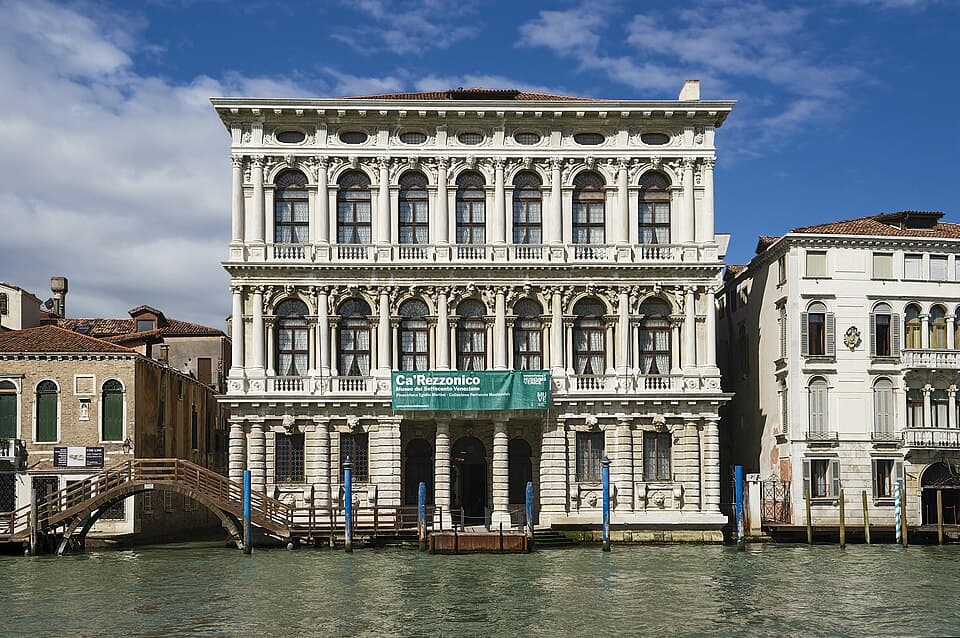
This final stop focuses on Ca’ Rezzonico’s Baroque façade and its role as a grand 18th‑century patrician residence on the Grand Canal. The guide should describe its powerful, rhythmic exterior with large windows and balconies, and how arriving guests by boat would experience its monumental water entrance. It should connect the Rezzonico family to late‑Republic wealth and social life, including lavish interiors and festivities. An anecdote may reference notable residents or guests associated with the palazzo, or how later conversion into a museum reflected Venice’s shift from aristocratic seat to heritage city, closing the tour’s narrative arc.
Start This Tour
Download Roamway to experience this audio tour
Tour Details
Access
Free
Stops
11 points of interest
Languages
GermanEnglishSpanishFrench
More tours in Venezia
View all tours in VeneziaOther tours you might enjoy:
Venice: St. Mark’s to Rialto History & Canals
This tour explores central Venice from Piazza San Marco to the Rialto area, focusing on major civic and religious landmarks. It covers the exteriors of St. Mark’s Basilica, the Doge’s Palace, and the Bridge of Sighs, then continues along the Riva degli Schiavoni to historic campos, markets, and viewpoints, highlighting Venetian politics, trade, and architecture.
Venice: Quiet Sestieri, Canalside Life & Hidden Campi
This tour explores lesser-known areas of Venice across the Santa Croce, Dorsoduro, and Cannaregio districts, focusing on everyday urban spaces and canalside life. It includes historic campi, traditional gondola craftsmanship at Squero di San Trovaso, and neighborhood landmarks such as Campo San Polo and Madonna dell’Orto. Topics include local history, urban layout, and social life away from major monuments.
Venice: Great Churches, Relics and Renaissance Art
This tour explores major churches in Venice, including St Mark’s Basilica, Santa Maria della Salute, San Zaccaria, Zanipolo, and the Frari, along with selected smaller churches and confraternity spaces. It focuses on religious relics, Byzantine and Renaissance mosaics, architectural styles, and key artworks such as Tintoretto’s cycles at the Scuola Grande di San Rocco.
Frequently Asked Questions
How do I start this audio tour?
Download the Roamway app, search for this tour, and tap 'Start Tour'. The app will guide you to the starting point using GPS. Once you're there, the audio narration begins automatically.
Do I need an internet connection?
No! Once you've downloaded the tour in the Roamway app, it works completely offline. The GPS navigation and audio narration function without an internet connection.
Can I pause and resume the tour?
Yes! You can pause the tour at any time and resume later. Your progress is automatically saved, so you can complete the tour over multiple sessions if needed.