
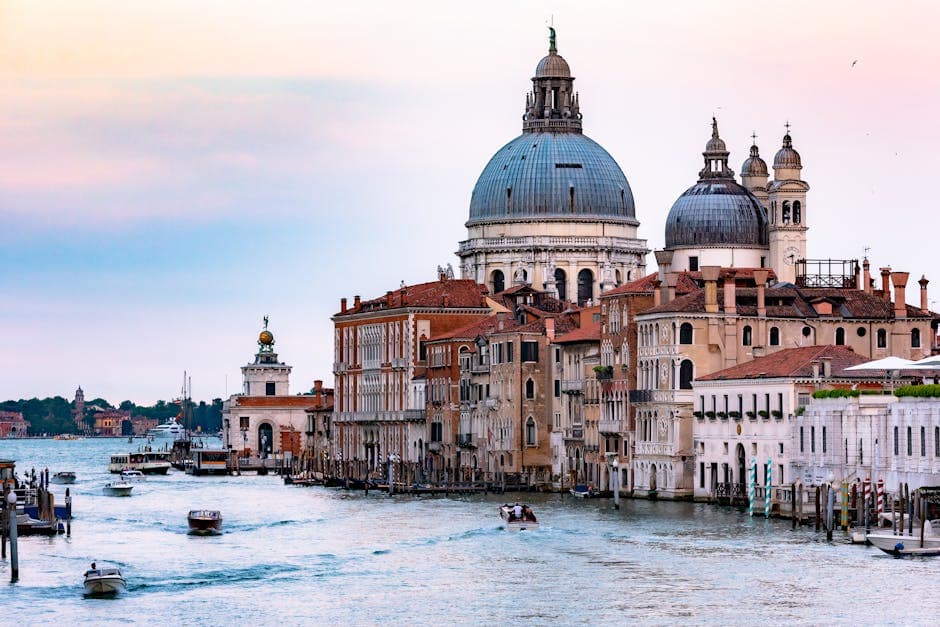
Audiotours in Venezia — Explore at your own pace
Venice, Italy is a city of shimmering canals, marble palaces, and centuries of seafaring legend, where every alley and waterway hides a story. Our audio-guided, self-paced tours lead you through grand squares, quiet backstreets, and lagoon vistas with history in your ears as the city unfolds around you. Explore when and how you like, with flexible routes that adapt to your own schedule and curiosity.
Free Tours
7 tours available
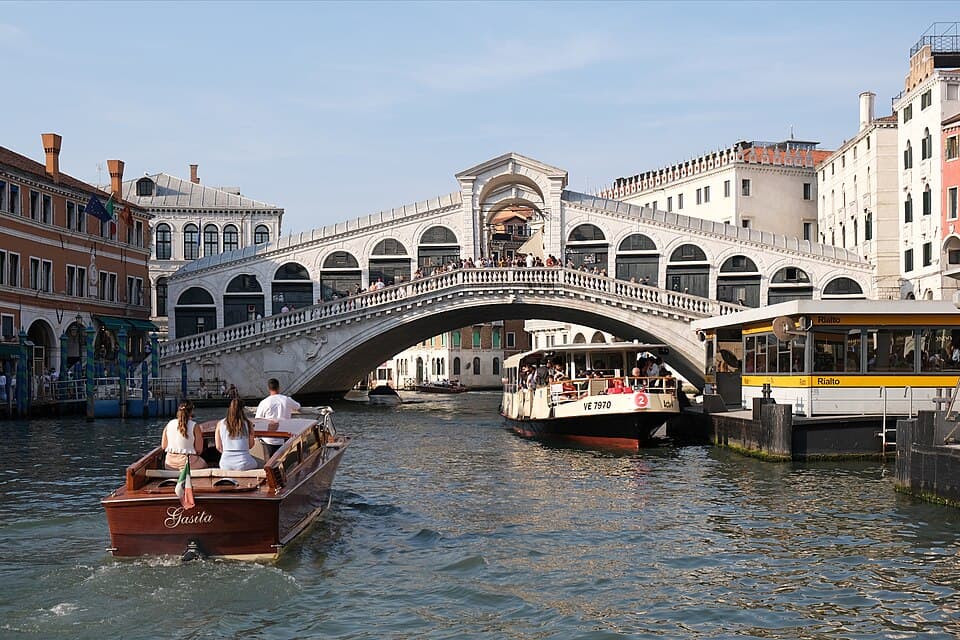
Venice: St. Mark’s to Rialto History & Canals
This tour explores central Venice from Piazza San Marco to the Rialto area, focusing on major civic and religious landmarks. It covers the exteriors of St. Mark’s Basilica, the Doge’s Palace, and the Bridge of Sighs, then continues along the Riva degli Schiavoni to historic campos, markets, and viewpoints, highlighting Venetian politics, trade, and architecture.
Venice: Quiet Sestieri, Canalside Life & Hidden Campi
This tour explores lesser-known areas of Venice across the Santa Croce, Dorsoduro, and Cannaregio districts, focusing on everyday urban spaces and canalside life. It includes historic campi, traditional gondola craftsmanship at Squero di San Trovaso, and neighborhood landmarks such as Campo San Polo and Madonna dell’Orto. Topics include local history, urban layout, and social life away from major monuments.
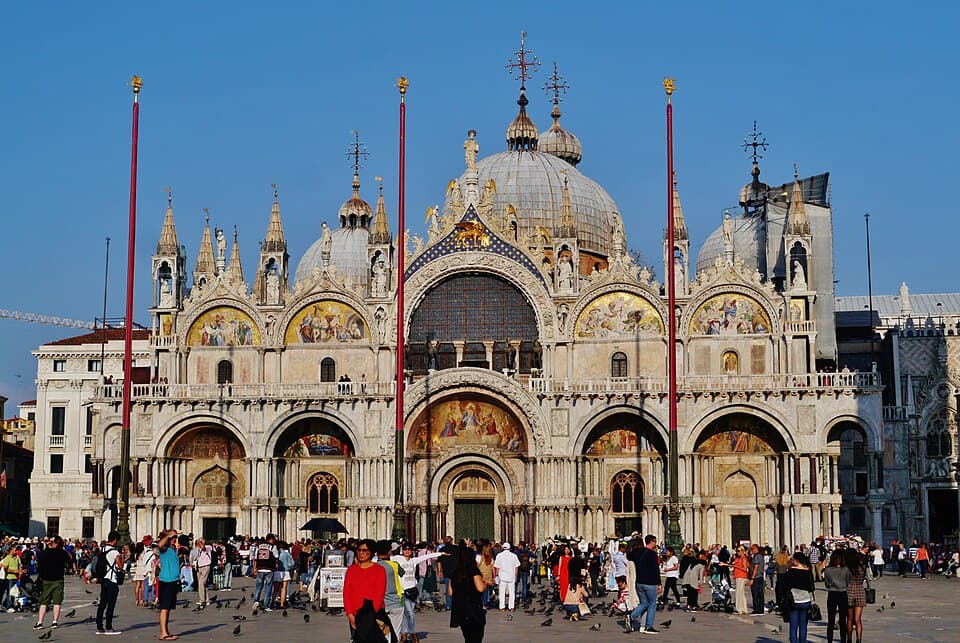
Venice: Great Churches, Relics and Renaissance Art
This tour explores major churches in Venice, including St Mark’s Basilica, Santa Maria della Salute, San Zaccaria, Zanipolo, and the Frari, along with selected smaller churches and confraternity spaces. It focuses on religious relics, Byzantine and Renaissance mosaics, architectural styles, and key artworks such as Tintoretto’s cycles at the Scuola Grande di San Rocco.
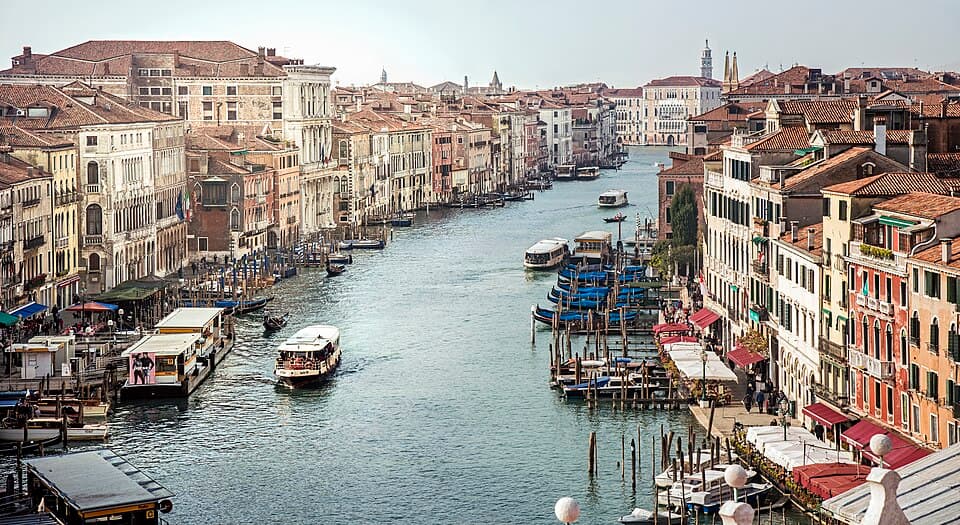
Venice: Grand Canal Palaces and San Marco Architecture
This tour explores central Venice from Piazza San Marco to the Grand Canal, focusing on major public spaces and noble palaces. It examines Venetian Gothic, Renaissance, Baroque, and 19th‑century styles through façades, courtyards, and skyline landmarks. Key topics include political power, trade wealth, and the evolution of Venetian urban form.
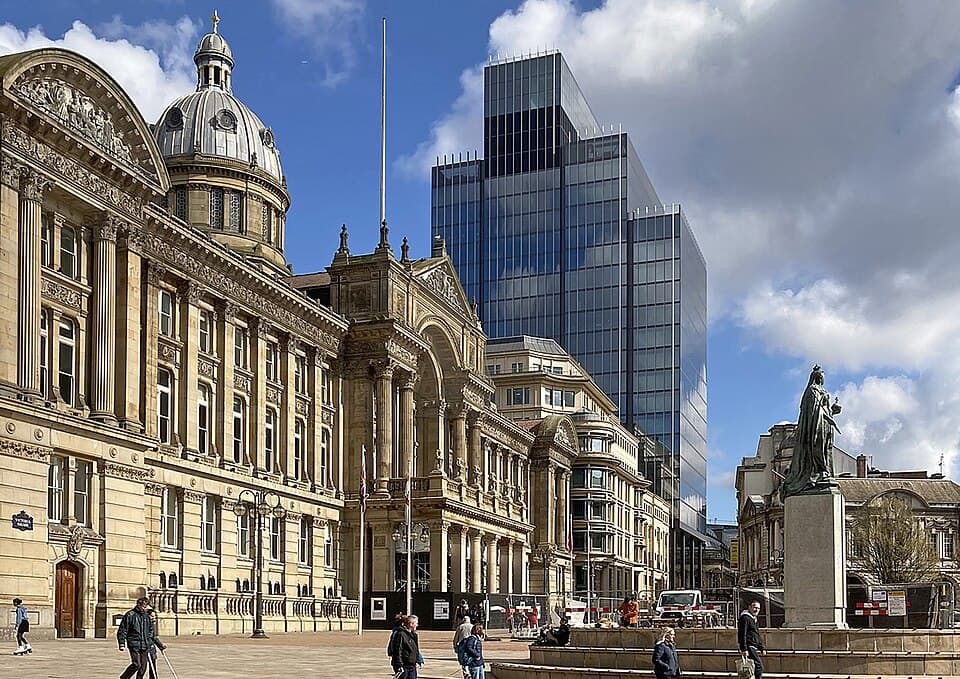
Venice: Grand Canal Art, Churches and Canalside Views
This tour follows the Grand Canal between the Accademia and Dorsoduro areas, focusing on major art collections, churches, and historic campos. It covers sites such as the Gallerie dell’Accademia, Santa Maria della Salute, the Peggy Guggenheim Collection (exterior), and Scuola Grande di San Rocco. Topics include Venetian painting, religious architecture, and the city’s shift from maritime power to modern cultural center.
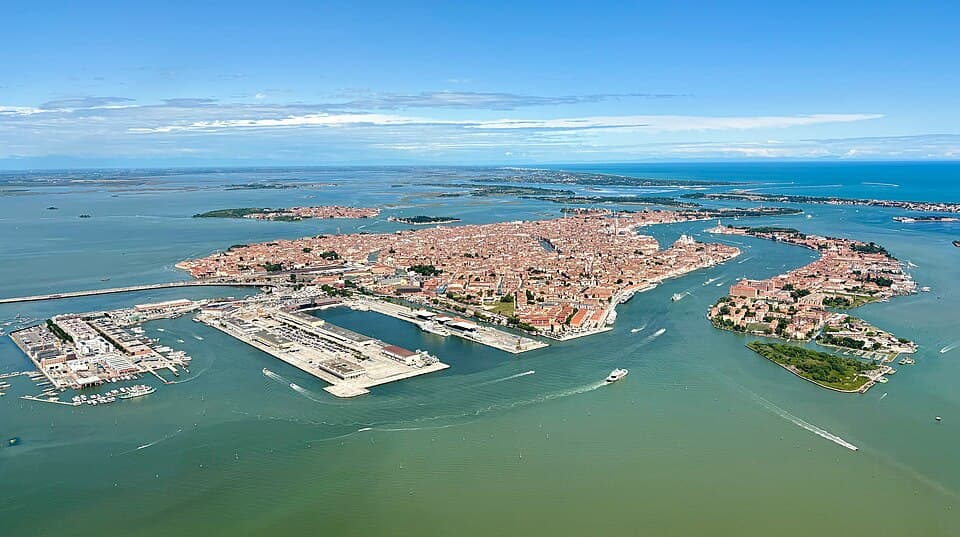
Venice: Rialto Markets and Cannaregio Food Culture
This tour follows a route from the historic Rialto Market area through central Venice to the quieter Cannaregio district. It focuses on traditional food markets, bàcari wine bars, and everyday squares along the Grand Canal and neighborhood canals. Topics include local food culture, social life, urban history, and characteristic Venetian architecture.

Venice: Canals, Theatres and St. Mark’s by Night
Evening route through central Venice from Campo Santo Stefano to the Molo by St. Mark’s Square, focusing on theatre history, urban spaces, and waterfront views. The tour includes Teatro La Fenice, the Accademia bridge, Punta della Dogana, Riva degli Schiavoni, and Piazza San Marco, highlighting architecture, lagoon vistas, and cultural life after dark.
About Venezia
Top Attractions
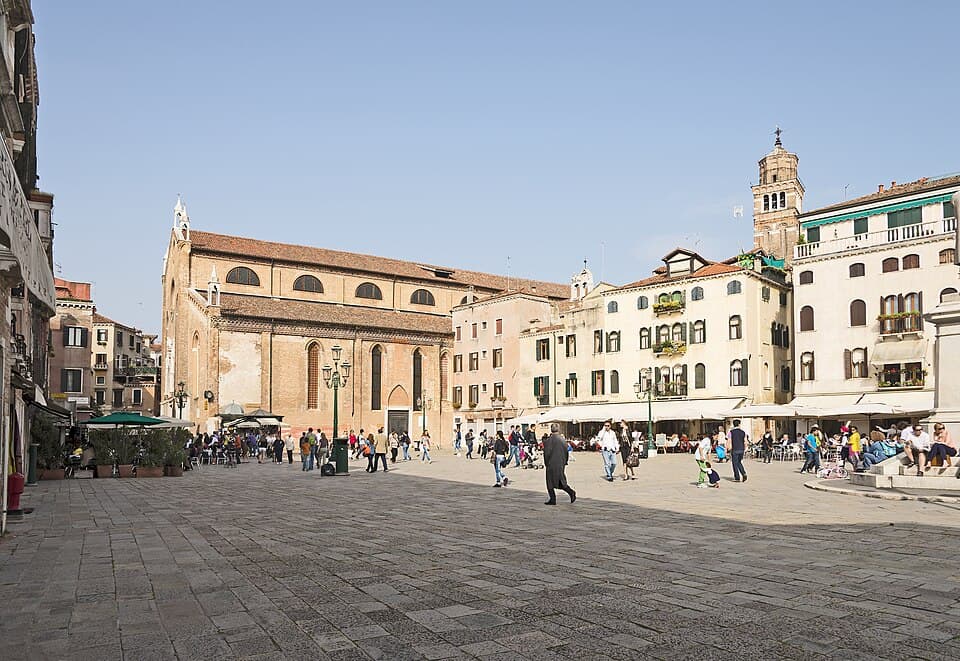
Campo Santo Stefano
Spacious evening square of churches and palaces
This stop introduces Campo Santo Stefano as a wide, elongated Venetian campo that feels like an outdoor living room at night. Scripts should describe the surrounding palazzi, the church of San Vidal at one end, and how such campi historically functioned as social and commercial hubs. The narration can touch on public events once held here, including gatherings and occasional festivities, and how the campo was altered over time when its church of Santo Stefano was reoriented. An anecdote could mention how winter ice once formed in the nearby rio, leading locals to skate or slide in a way that surprised foreign visitors.
View Tour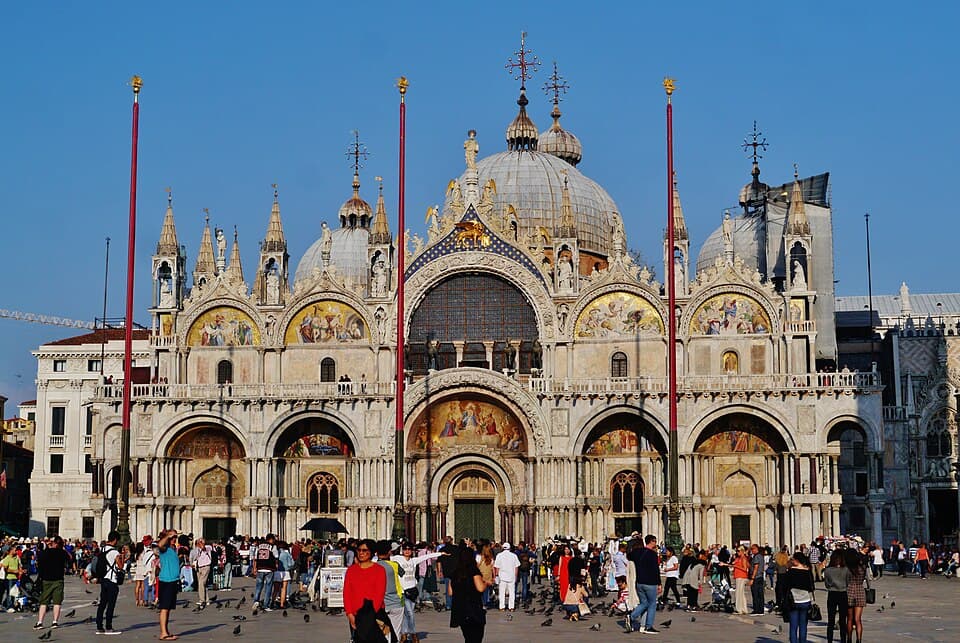
Basilica di San Marco
Relics, mosaics, and Venice’s Byzantine heart
This stop introduces St Mark’s Basilica as Venice’s spiritual and political core, focusing on its interior relics and glittering mosaics. The script should explain how the supposed relics of Saint Mark came to Venice and how they underpinned the city’s status, along with the layering of Byzantine and later mosaics inside. It should describe the golden vaults, narrative biblical scenes, and the sense of entering a “stone reliquary”. An anecdote can cover the dramatic hiding and later rediscovery of Saint Mark’s relics within the basilica during a period of rebuilding, emphasizing how the story enhanced the relic’s mystique. The church’s connection to Venice’s ties with the Eastern Mediterranean should be highlighted throughout.
View Tour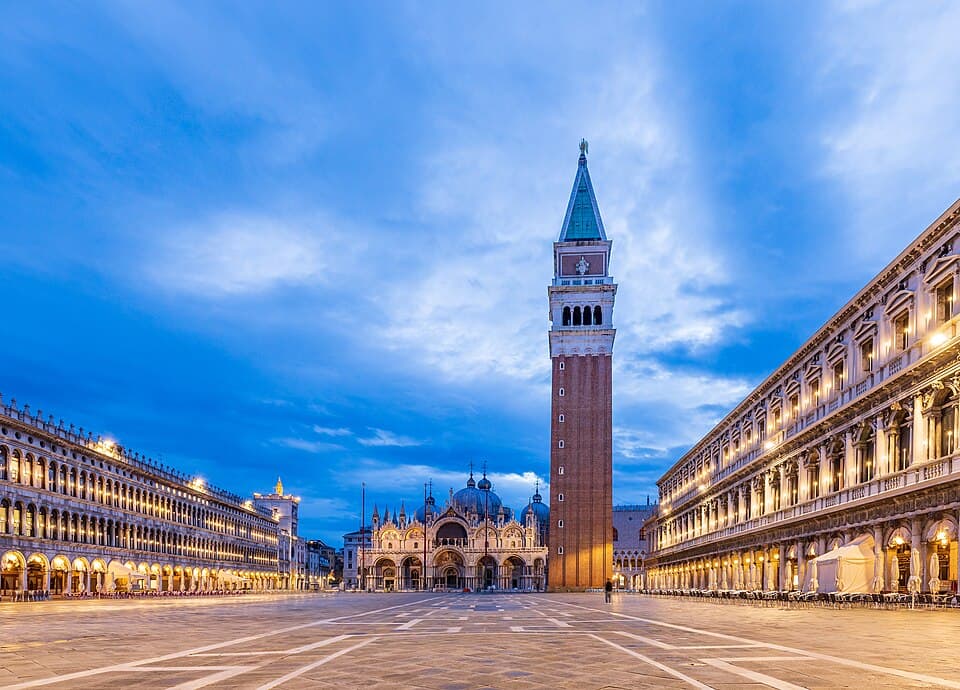
Piazza San Marco
Political heart framed by arcades and clock tower
This stop introduces Piazza San Marco as Venice’s political and ceremonial center, focusing on the Procuratie Vecchie and Nuove and the Clock Tower. The guide should explain how the flanking arcades define the piazza’s shape and hosted offices, shops, and cafés tied to state administration and commerce. It should highlight the Clock Tower’s elaborate façade, blue and gold zodiac dial, and the bell‑striking figures above. An anecdote can describe how processions and festivals used the long rectangular space as a sort of open‑air stage, and how the clock mechanism had to be maintained to keep trade and religious time synchronized.
View Tour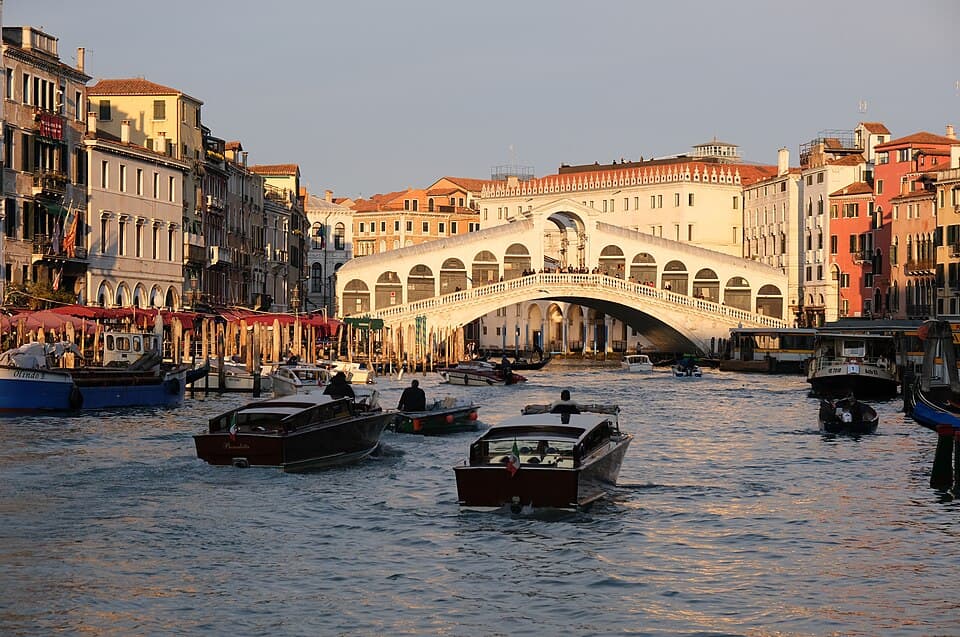
Rialto Fish Market
Venice’s lagoon catch at the Grand Canal
This stop introduces the Pescheria as the symbolic start of the tour and Venice’s historic food supply chain. The script should describe the neo-Gothic arcaded hall, the stone fish-carving measurements, and the daily rhythm of boats unloading lagoon and Adriatic catch. It should explain Venice’s reliance on the sea, traditional species sold here, and how early morning auctions once worked. One unique anecdote could mention a longstanding local superstition or joking insult about smelling of fish, linked to early-morning fishmongers. Another anecdote might evoke the sudden silence when the market closes at midday, transforming the hall into an almost empty stage set.
View Tour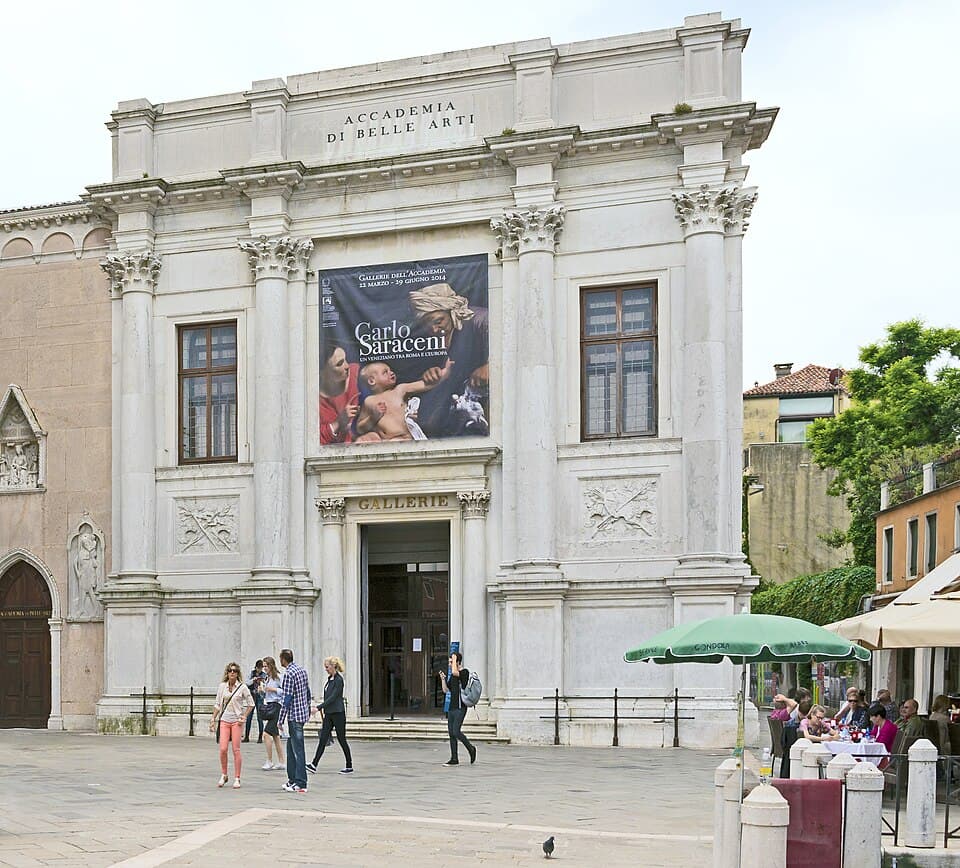
Gallerie dell’Accademia
Gateway to Venetian painting and visual traditions
This stop introduces the Gallerie dell’Accademia as Venice’s main museum of Venetian painting and a gateway to the tour’s art-historical themes. The script should sketch how the gallery grew from an art academy and religious complexes, and how its collection maps the rise of Venetian color, light, and storytelling. It should highlight a few emblematic works—such as pieces by Bellini, Carpaccio, Giorgione, Titian, Tintoretto, or Veronese—and relate them to the city’s identity and the Grand Canal nearby. An anecdote could mention how some large canvases were moved from churches, requiring ingenious methods to extract them from tight interiors without damage.
View Tour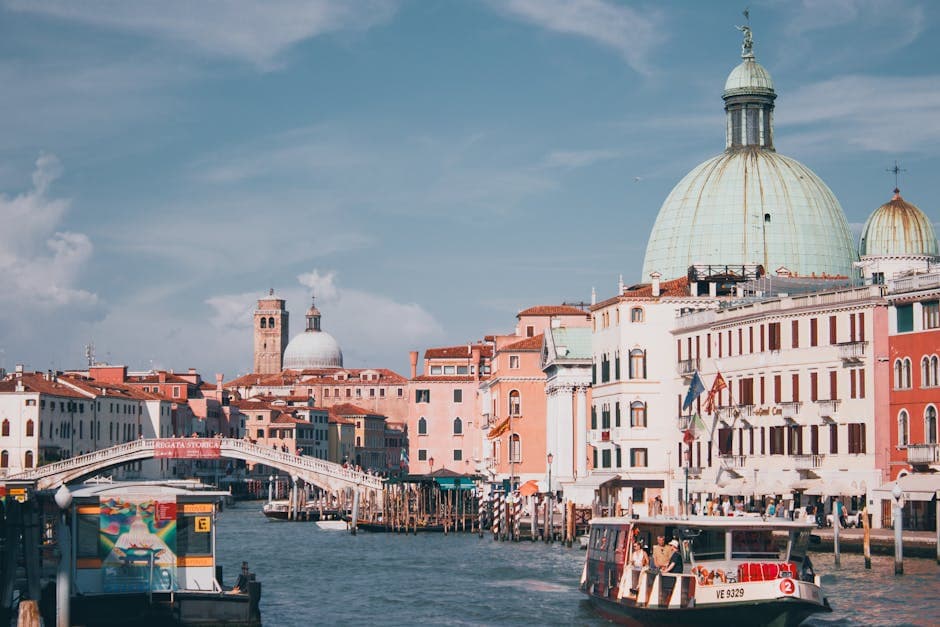
Campo San Giacomo dell’Orio
Everyday life in a shaded neighborhood square
This opening stop introduces Campo San Giacomo dell’Orio as a lived-in Venetian campo with trees, benches, and children playing, rather than a monumental tourist square. The narration should explain what a “campo” is, how it differs from a piazza, and how such spaces structure neighborhood life. It should describe the church’s mixed medieval and later elements, the slightly irregular shape of the campo, and visible wells and trees. One anecdote can mention how locals use this campo for low-key festivals and community events, and another can note the tradition that parts of the church incorporate reused stones from earlier buildings, symbolizing Venice’s habit of recycling materials and spaces.
View Tour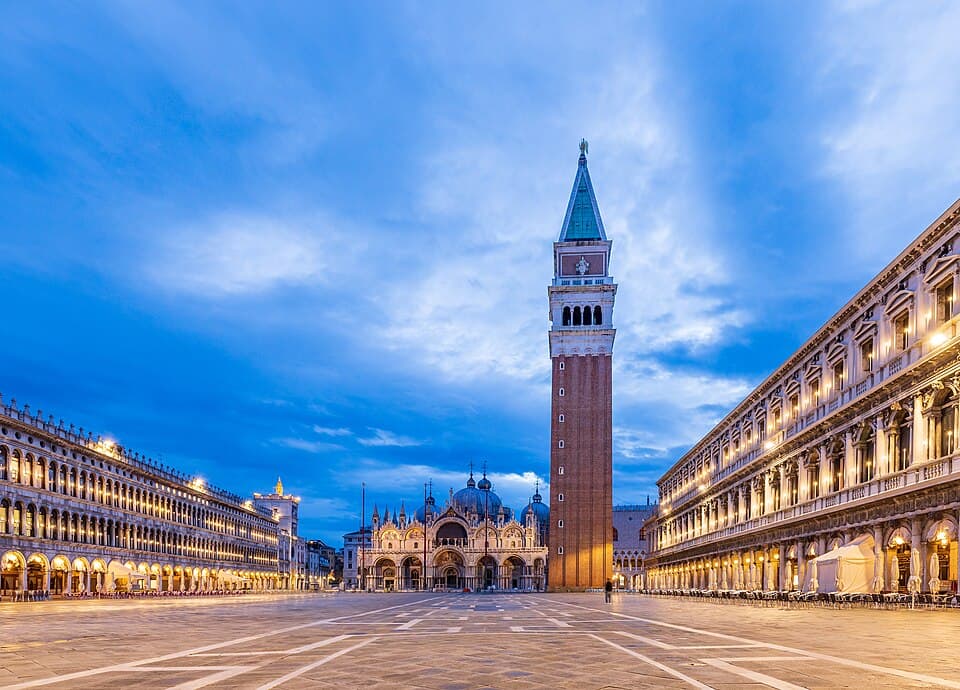
Piazza San Marco
Venice’s grand ceremonial and political stage
This stop introduces Piazza San Marco as Venice’s main civic stage and the symbolic heart of the republic. The script should set the scene: the vast rectangular space, the Campanile, the arcades of the Procuratie, St. Mark’s Basilica at one end, and the Doge’s Palace to the side. It should explain the piazza’s role in ceremonies, festivals, and daily life, including visiting rulers and public announcements. Mention the old practice of flooding turning the square into a shallow reflective pool and the historical use of the Campanile as both watchtower and symbol. Include an anecdote about the Campanile’s dramatic collapse in the early 20th century and its faithful reconstruction “as it was, where it was.”
View Tour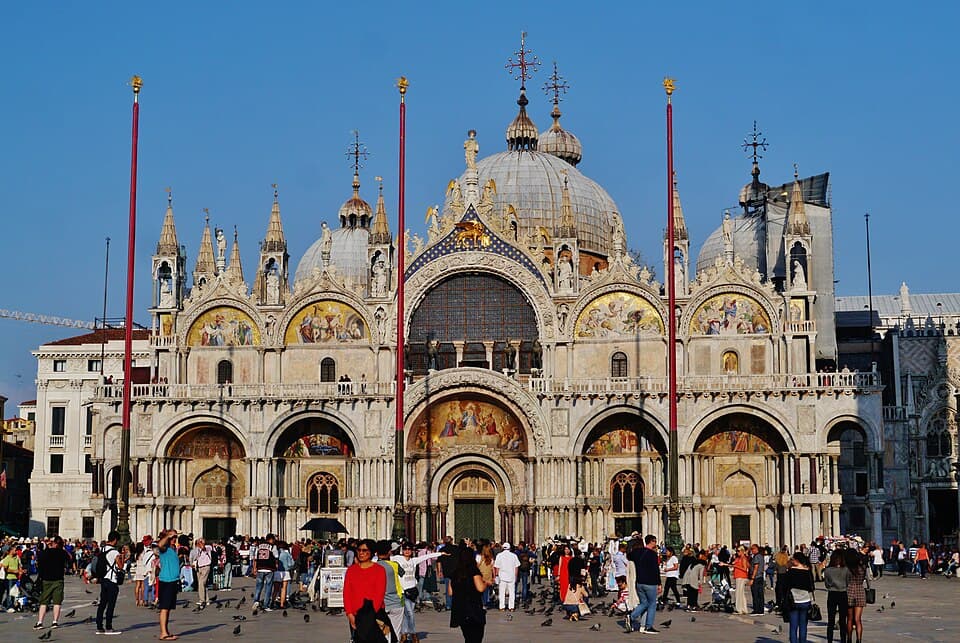
St. Mark’s Basilica
Byzantine relic shrine and Venetian state church
This stop focuses on the exterior of St. Mark’s Basilica as both a religious shrine and a statement of Venice’s power. The script should describe the domes, arches, and golden mosaics above the main portals, emphasizing the strong Byzantine and Eastern influences. It should recount how the relics of St. Mark were brought from Alexandria and how that story shaped Venice’s patron saint and identity. Mention the famed horses above the central arch, their journey as spoils of war from the Eastern Mediterranean, and later removal indoors for conservation. Include a unique anecdote about the smugglers hiding St. Mark’s body in a barrel or basket, supposedly covered with pork to evade Muslim inspectors.
View Tour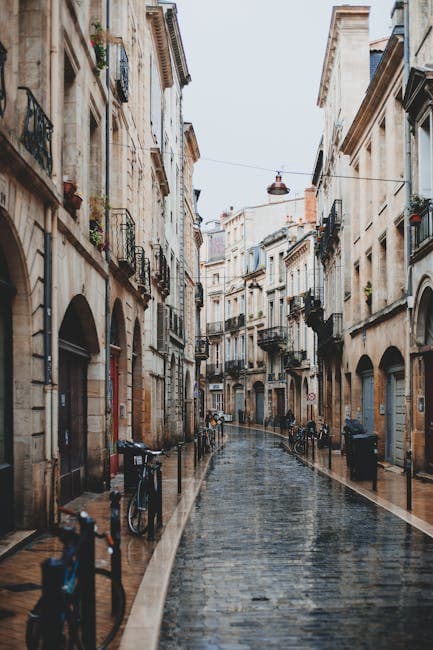
Erbaria Terrace
Produce stalls and outdoor bars by canal
Here the focus shifts to the Erbaria, historically the vegetable and herb market, and today a mix of produce stalls and outdoor bar terraces. The script should describe the open space along the Grand Canal, the low steps, and views of palazzi across the water. It should explore how goods from the mainland arrived by boat, the importance of spices and herbs in Venetian cuisine, and the evolution of this space into a social drinking area at sunset. One anecdote can recall how, in the past, farmers from the mainland dozed in their boats between market days. Another could note the custom of finishing market shopping with a small glass of wine here, using crates as impromptu tables.
View Tour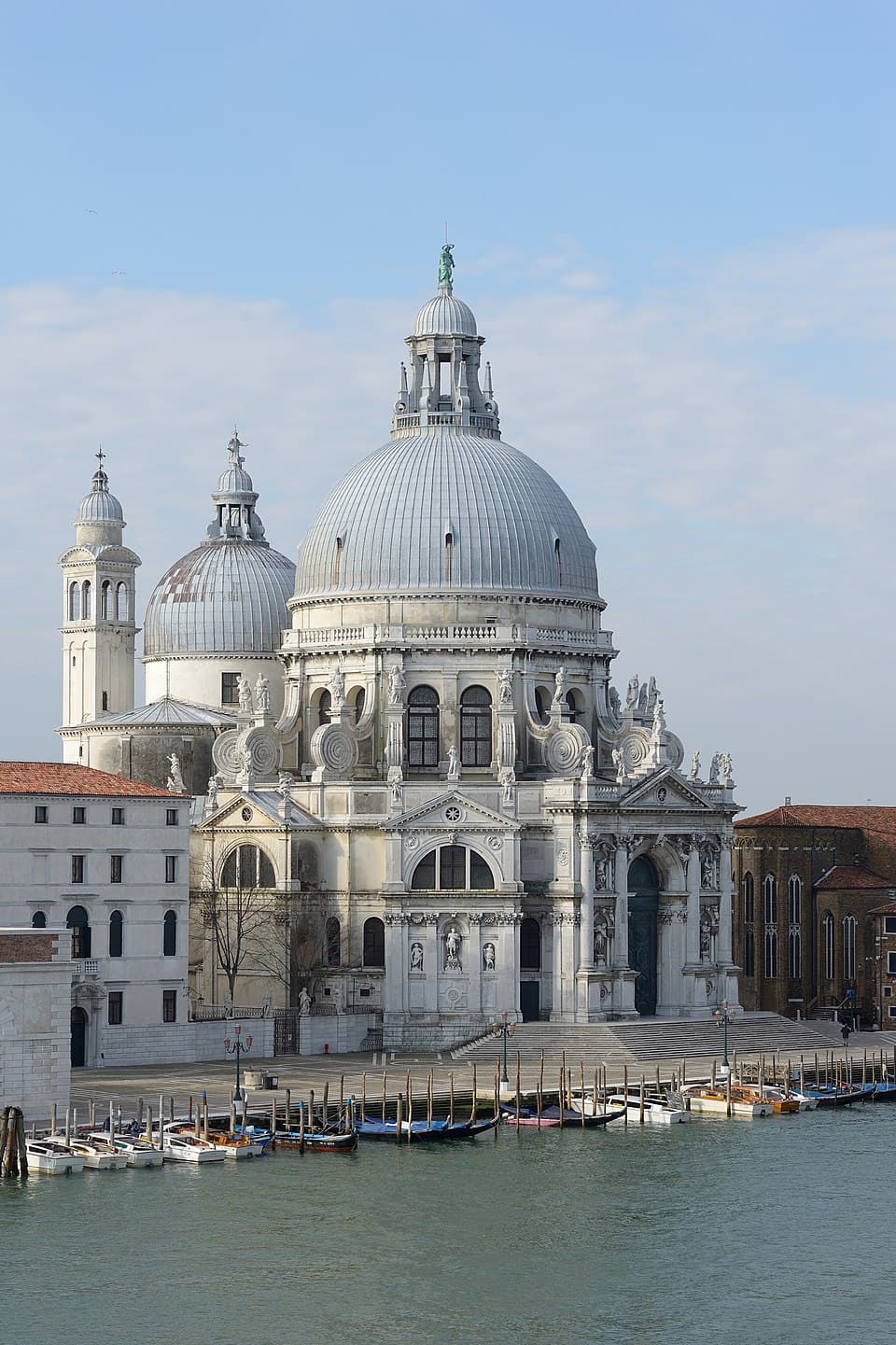
Santa Maria della Salute
Plague votive church guarding the Grand Canal
This stop presents Santa Maria della Salute as a grand Baroque votive church built in thanks for deliverance from plague. The script should emphasize its commanding position at the Grand Canal’s mouth, its octagonal form, and its great dome visible across the lagoon. Inside, it can discuss the strong Marian devotion, the long annual procession across a temporary bridge, and key paintings linked to the Virgin. A unique anecdote should recount how the Venetian Senate vowed to build this church if the plague subsided, and how its foundation required driving thousands of wooden piles into the lagoon mud to support the immense weight of the structure.
View Tour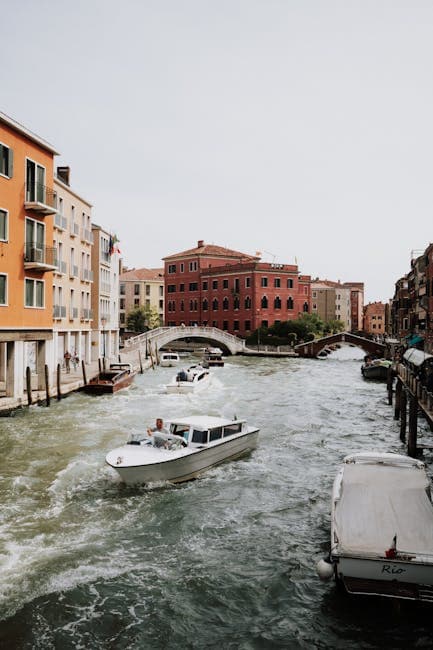
Rio de San Stin
Narrow canal and intimate residential calli
This stop explores the Rio de San Stin and its surrounding calli as an example of Venice’s intimate, small-scale fabric between campi. The narration should explain terms like rio, ponte, calle, and corte, and highlight how people navigate through this seemingly confusing network. Visual details include low bridges, small courtyards, laundry lines, and ground-floor doors opening almost directly onto water. One anecdote can describe how residents once used small boats for ultra-short hops across such canals, and another can mention how, during exceptionally high tides, locals memorize which calli flood first and adapt their daily routes accordingly.
View Tour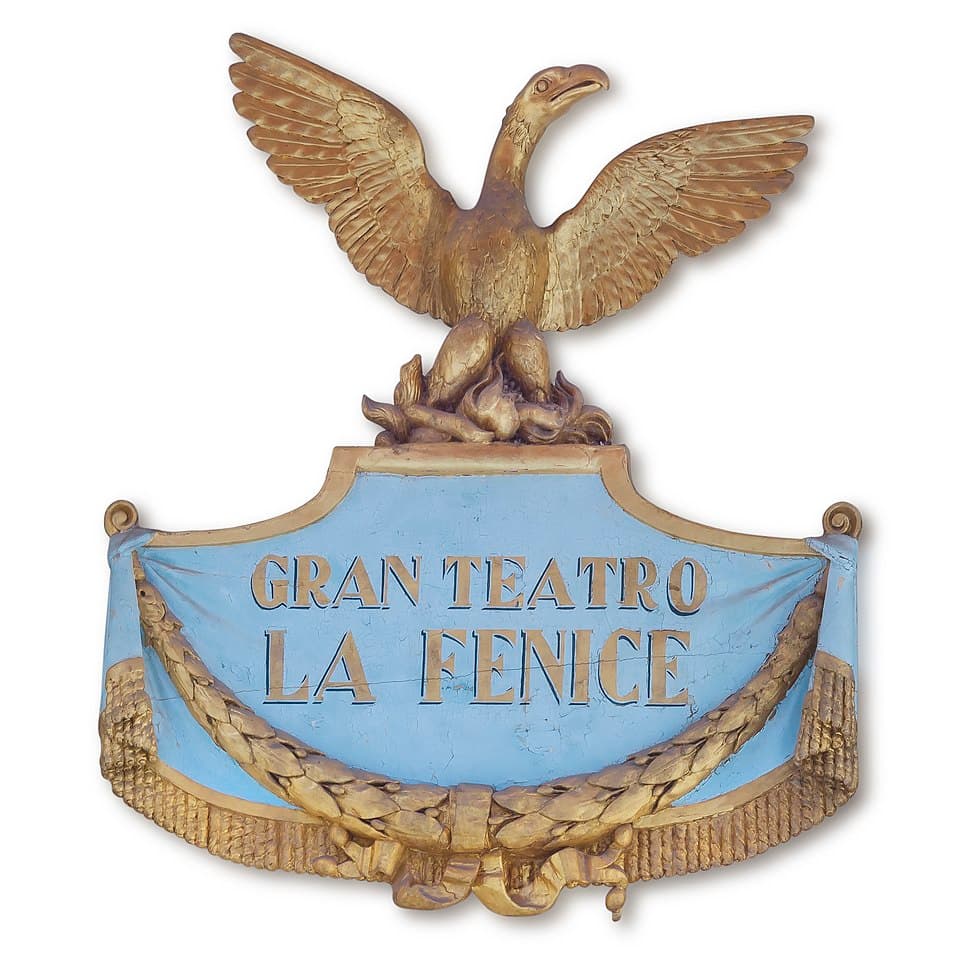
Teatro La Fenice
Historic opera house reborn from repeated fires
This stop focuses on the exterior and legends of Teatro La Fenice, one of Italy’s most important opera houses. Scripts should cover its origins under the Venetian nobility, its role in premiering works by major composers, and its repeated destruction and reconstruction after devastating fires. Architectural details of the neoclassical façade and its position within a tight network of calli are worth highlighting. A unique anecdote could relate how, after one of the fires, locals joked that the theatre’s name—“The Phoenix”—was almost too prophetic as it kept rising again from ashes.
View TourFrequently Asked Questions
How do audio walking tours work in Venezia?
Our audio walking tours in Venezia are self-guided experiences that you can start anytime. Simply download the Roamway app, select a tour, and follow the GPS-guided route. The audio narration automatically plays as you approach each point of interest, allowing you to explore at your own pace.
Are self-guided tours better than guided tours?
Self-guided audio tours offer flexibility that traditional guided tours can't match. You can pause, rewind, or skip sections, explore at your own pace, and start whenever you're ready. Plus, our tours are available in multiple languages and work offline once downloaded.
Do I need an internet connection during the tour?
No! Once you've downloaded a tour in the Roamway app, it works completely offline. The GPS navigation and audio narration function without an internet connection, making it perfect for international travelers who want to avoid data charges.
How long do the audio tours take?
Tour durations vary, but most of our audio tours in Venezia range from 1 to 3 hours, depending on your pace and how much time you spend at each point of interest. You can complete them in one go or split them across multiple visits.
Ready to explore Venezia?
Download Roamway and start your audio-guided adventure today.