

Venice: Canals, Theatres and St. Mark’s by Night
Venezia, Italia
Audio Preview
Listen to a sample of this audio tour to get a feel for the experience.
What You'll Experience
On this Venice: Canals, Theatres and St. Mark’s by Night audio tour in Venezia, you'll discover 11 carefully selected points of interest, each with its own story. The tour is designed to be completed at your own pace, with GPS navigation guiding you from one location to the next. As you approach each stop, the audio narration automatically begins, bringing history, culture, and local insights to life.
About This Tour
Evening route through central Venice from Campo Santo Stefano to the Molo by St. Mark’s Square, focusing on theatre history, urban spaces, and waterfront views. The tour includes Teatro La Fenice, the Accademia bridge, Punta della Dogana, Riva degli Schiavoni, and Piazza San Marco, highlighting architecture, lagoon vistas, and cultural life after dark.
Points of Interest
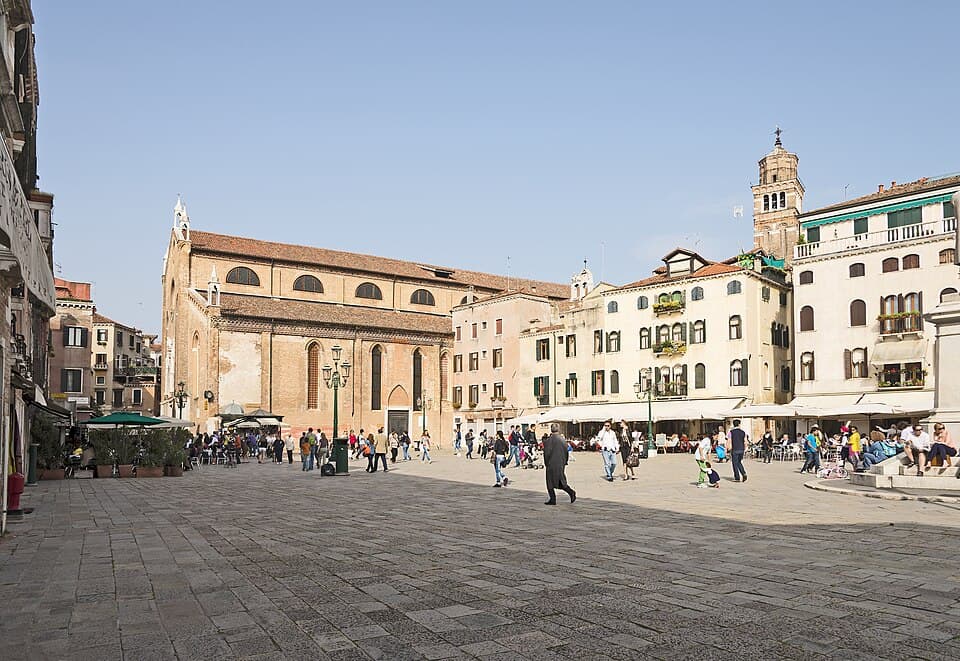
Campo Santo Stefano
Spacious evening square of churches and palaces
This stop introduces Campo Santo Stefano as a wide, elongated Venetian campo that feels like an outdoor living room at night. Scripts should describe the surrounding palazzi, the church of San Vidal at one end, and how such campi historically functioned as social and commercial hubs. The narration can touch on public events once held here, including gatherings and occasional festivities, and how the campo was altered over time when its church of Santo Stefano was reoriented. An anecdote could mention how winter ice once formed in the nearby rio, leading locals to skate or slide in a way that surprised foreign visitors.
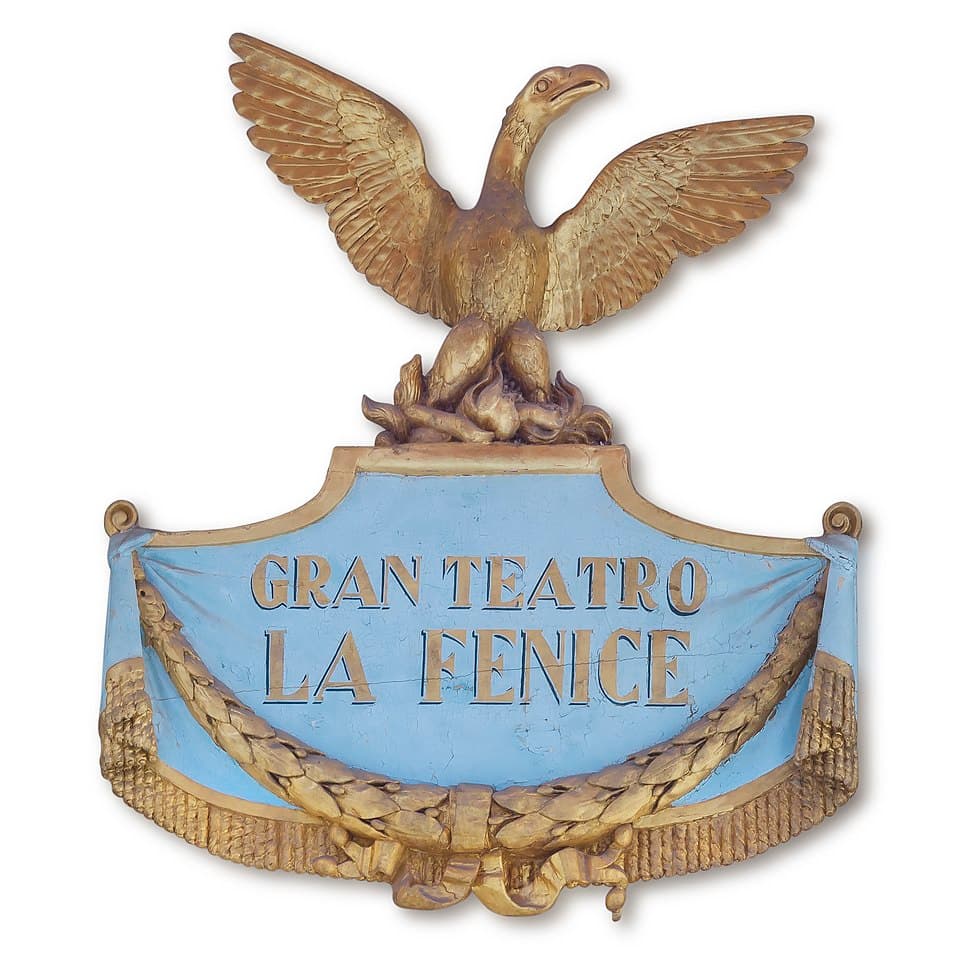
Teatro La Fenice
Historic opera house reborn from repeated fires
This stop focuses on the exterior and legends of Teatro La Fenice, one of Italy’s most important opera houses. Scripts should cover its origins under the Venetian nobility, its role in premiering works by major composers, and its repeated destruction and reconstruction after devastating fires. Architectural details of the neoclassical façade and its position within a tight network of calli are worth highlighting. A unique anecdote could relate how, after one of the fires, locals joked that the theatre’s name—“The Phoenix”—was almost too prophetic as it kept rising again from ashes.
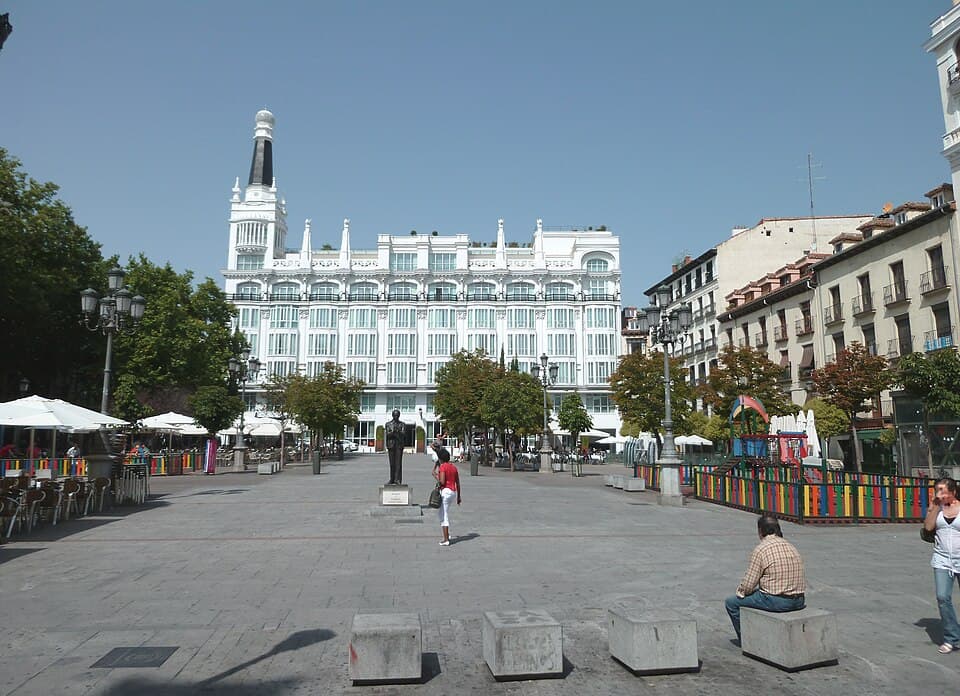
Corte del Teatro
Backstage alleys behind the opera house
This stop explores Corte del Teatro and the surrounding calli as the backstage world of La Fenice, where stagehands, artisans, and residents mingled. Scripts should evoke the tight, twisting alleyways and small courtyards that made moving scenery, costumes, and performers a logistical dance. It can explain how deliveries arrived by canal and were hoisted inside, out of sight of elegant audiences. A distinct anecdote might recount how singers sometimes slipped through these back routes after performances to avoid waiting admirers at the main entrance, vanishing into the maze of calli within minutes.
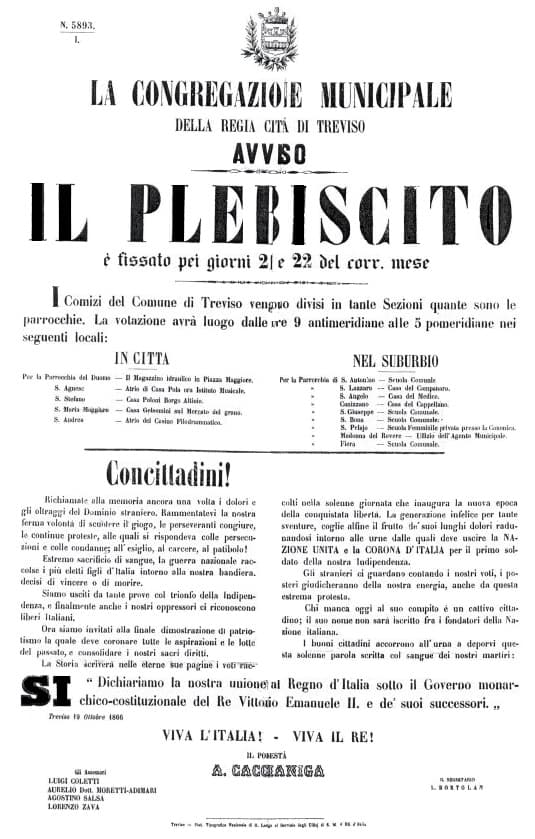
Campo San Fantin
Refined square beside church and theatre
This stop examines Campo San Fantin as a compact, elegant square between La Fenice and the surrounding quarter, anchored by the church of San Fantin and academic buildings. Scripts should cover its quieter, almost "foyer"-like atmosphere and its historic association with learned societies and artistic circles. The façade of the church and nearby institutions offer a chance to talk about Venetian classicism and education. A unique anecdote could highlight how, on opera nights, latecomers hurried through this campo clutching tickets, while nearby residents looked down from their windows, judging outfits and carriages as much as the music inside.
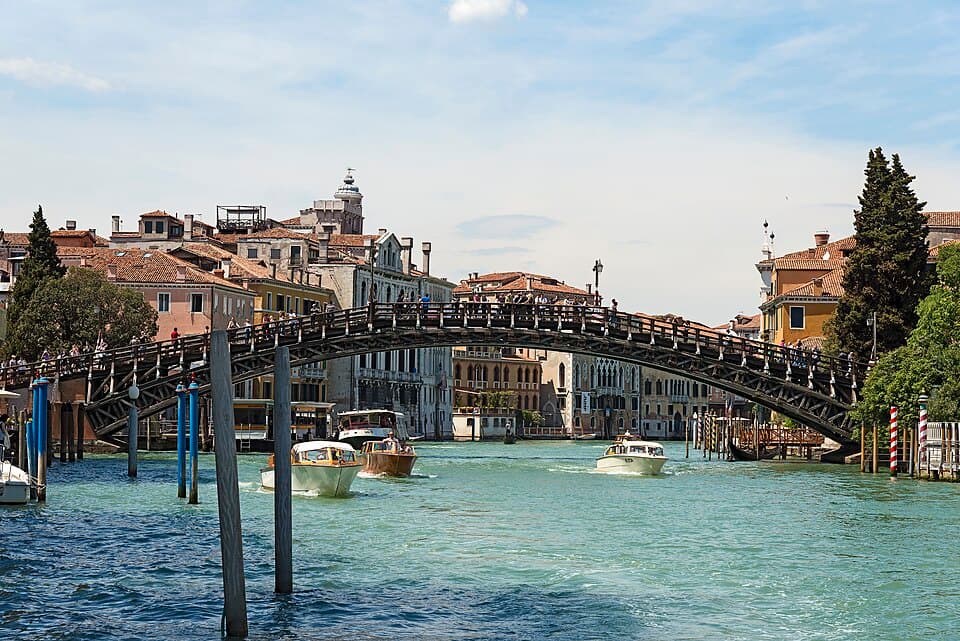
Accademia Bridge
Wooden span framing dusk over Grand Canal
This stop uses the Accademia Bridge at dusk as a major viewpoint over the Grand Canal. Scripts should describe the wooden structure, its relatively modern origin compared with Venice’s stone bridges, and why it became loved for its panoramic views. The narration can introduce the Accademia galleries nearby and the palaces lining the wide bend of the canal. A distinct anecdote might recall how artists and photographers began to gather here in the 20th century to capture sunsets, gradually turning the bridge itself into a quiet evening spectacle as tripods and easels lined the railings.
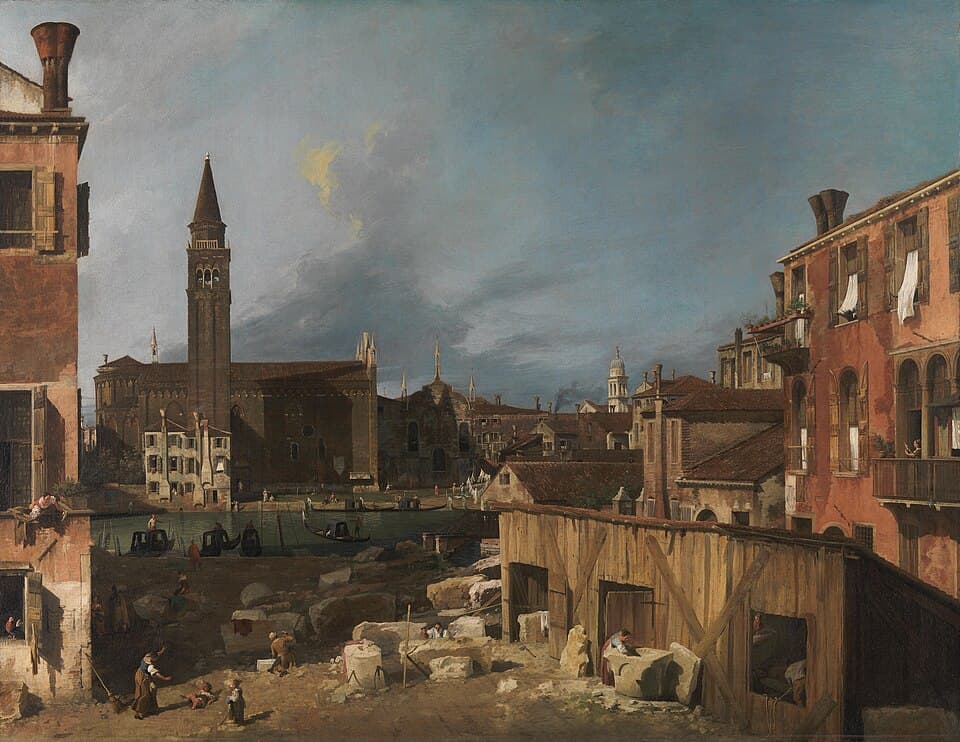
Campo San Vidal
Corner campo at sudden Grand Canal bend
This stop looks at Campo San Vidal and its sudden opening onto a sharp bend of the Grand Canal. Scripts should discuss the church of San Vidal, its adaptive use for concerts, and the impressive façades of palazzi across the water. Emphasis can be placed on how Venice’s street-like canals create unexpected vistas where land routes meet water. A unique anecdote could describe how gondoliers here have long used local architectural features—like a particular balcony or cornice—as informal ‘signposts’ when navigating the bend at night, calling them by nicknames among themselves.
Salute Waterfront
Plague church steps facing San Marco basin
This stop focuses on the waterfront in front of Santa Maria della Salute and Punta della Dogana, emphasizing sunset and early night views over the basin. Scripts should cover the church’s origins as a votive offering after plague, the baroque architecture with its domes, and the repurposed Punta della Dogana customs building as a symbol of Venice’s trading past. The narration should invite listeners to imagine historical processions arriving by boat here. A unique anecdote might evoke how, during certain religious festivals, temporary wooden bridges of boats once connected this area to San Marco, creating a floating walkway crowded with candles and participants after dark.
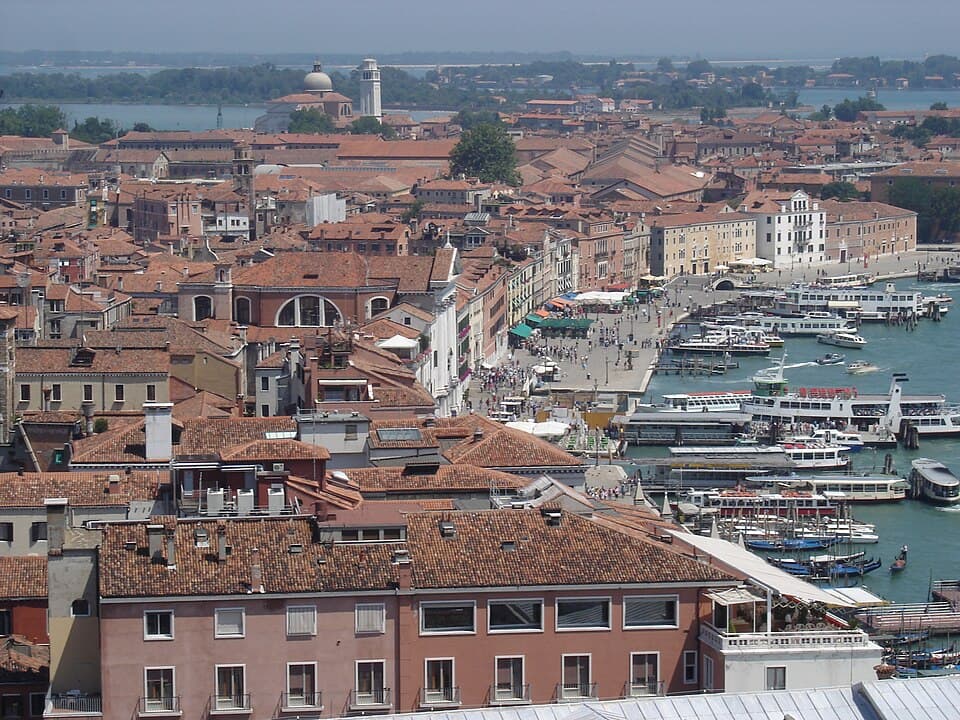
Riva degli Schiavoni
Lively evening promenade along the waterfront
This stop presents Riva degli Schiavoni as the bustling waterfront promenade east of the Molo, lined with hotels, stalls, and constant boat traffic. Scripts should explain its name, linked historically to merchants and sailors from Slavic lands, and its role as a landing area for ships arriving from the Adriatic. The narration can contrast today’s evening crowds with quieter historic scenes of moored vessels and maritime trade. A distinct anecdote could mention how, in the 19th century, visiting writers stayed in waterfront hotels here and described falling asleep to the clatter of rigging and the murmur of conversations drifting up from the quay at night.
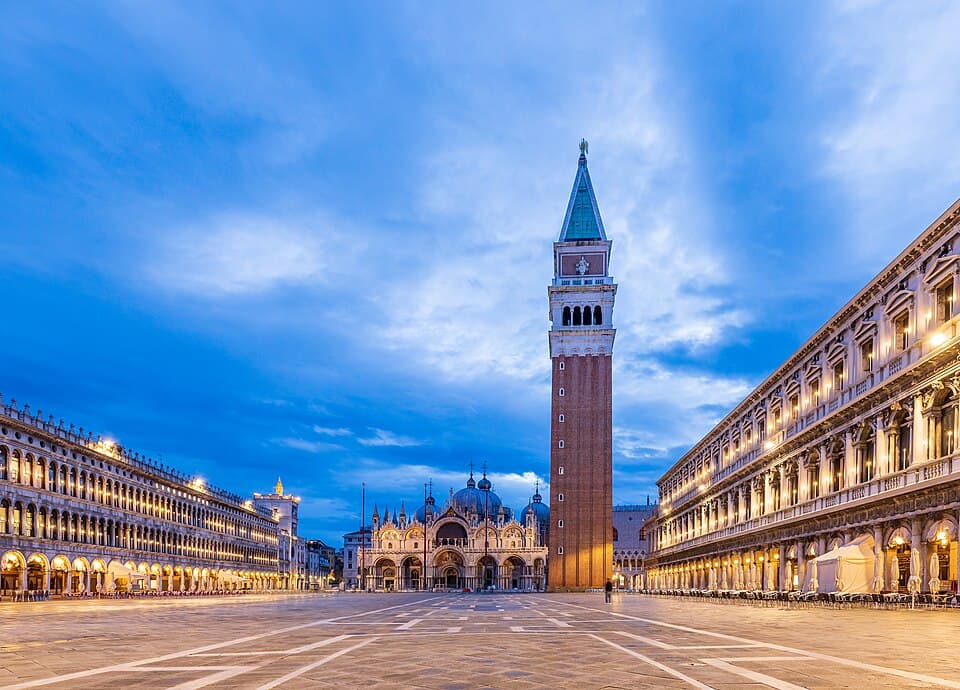
Piazza San Marco
Illuminated arcades and café orchestras at night
This stop explores Piazza San Marco at night, focusing on the arcades, café terraces, and evening orchestras. Scripts should trace the square’s evolution as the political and ceremonial heart of the Republic, framed by the Procuratie buildings and dominated by the Campanile and Basilica. Emphasis should be on how artificial light, music, and reflections transform the space after dark. A unique anecdote might recount how café orchestras once engaged in playful musical ‘duels’, each band taking turns to outdo the others with waltzes or popular arias, to the delight of patrons seated under the arcades.
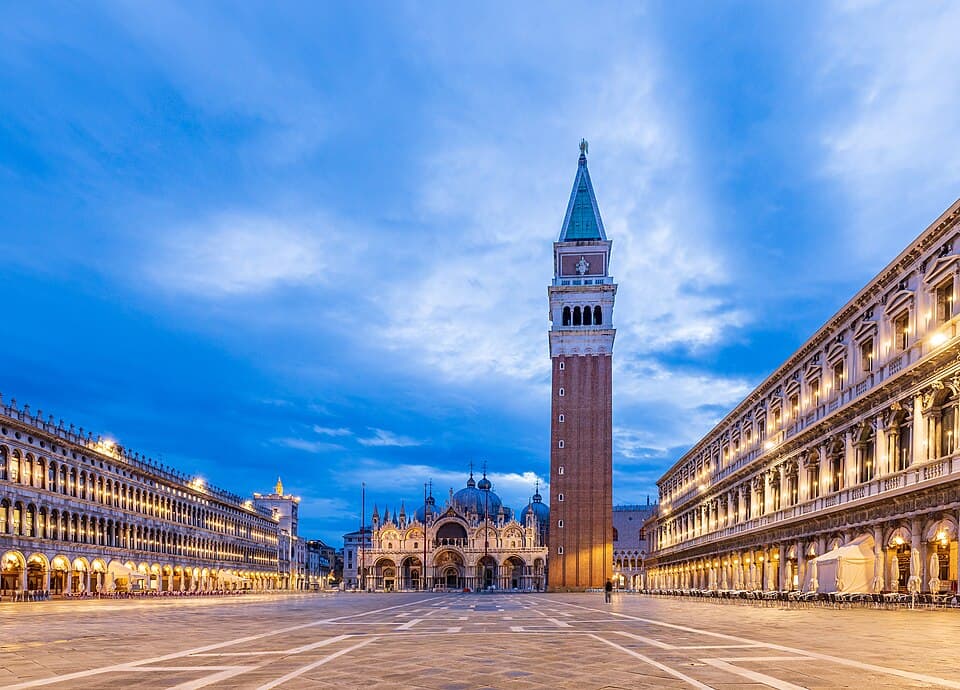
Piazzetta San Marco
Ceremonial gateway between palace and lagoon
This stop considers the Piazzetta San Marco as the narrow, theatrical space linking Piazza San Marco with the waterfront, flanked by the Doge’s Palace and Biblioteca Marciana. Scripts should highlight the twin columns bearing St. Mark’s lion and St. Theodore, and their long-standing symbolic role as a threshold of power. The narration may evoke how this space framed processions moving between city and sea. A distinct anecdote could reference how executions were historically carried out between the two columns, leading many Venetians to avoid lingering directly between them even long after the practice ended.
Molo Waterfront
Nighttime lagoon views toward San Giorgio Maggiore
This final stop focuses on the Molo, the quay along the basin in front of the Piazzetta, looking toward the island church of San Giorgio Maggiore. Scripts should describe the view of the basilica’s classical façade and campanile across the water, with reflections of lights on the lagoon. It should tie together themes of Venice as a maritime republic, facing outward to sea and inward to its ceremonial heart. A unique anecdote might note how visiting dignitaries once first saw Venice from this angle when arriving by ceremonial barge, glimpsing the Doge’s Palace and San Marco as a nighttime silhouette before stepping ashore.
Start This Tour
Download Roamway to experience this audio tour
Tour Details
Access
Free
Stops
11 points of interest
Languages
GermanEnglishSpanishFrench
More tours in Venezia
View all tours in VeneziaOther tours you might enjoy:
Venice: St. Mark’s to Rialto History & Canals
This tour explores central Venice from Piazza San Marco to the Rialto area, focusing on major civic and religious landmarks. It covers the exteriors of St. Mark’s Basilica, the Doge’s Palace, and the Bridge of Sighs, then continues along the Riva degli Schiavoni to historic campos, markets, and viewpoints, highlighting Venetian politics, trade, and architecture.
Venice: Quiet Sestieri, Canalside Life & Hidden Campi
This tour explores lesser-known areas of Venice across the Santa Croce, Dorsoduro, and Cannaregio districts, focusing on everyday urban spaces and canalside life. It includes historic campi, traditional gondola craftsmanship at Squero di San Trovaso, and neighborhood landmarks such as Campo San Polo and Madonna dell’Orto. Topics include local history, urban layout, and social life away from major monuments.
Venice: Great Churches, Relics and Renaissance Art
This tour explores major churches in Venice, including St Mark’s Basilica, Santa Maria della Salute, San Zaccaria, Zanipolo, and the Frari, along with selected smaller churches and confraternity spaces. It focuses on religious relics, Byzantine and Renaissance mosaics, architectural styles, and key artworks such as Tintoretto’s cycles at the Scuola Grande di San Rocco.
Frequently Asked Questions
How do I start this audio tour?
Download the Roamway app, search for this tour, and tap 'Start Tour'. The app will guide you to the starting point using GPS. Once you're there, the audio narration begins automatically.
Do I need an internet connection?
No! Once you've downloaded the tour in the Roamway app, it works completely offline. The GPS navigation and audio narration function without an internet connection.
Can I pause and resume the tour?
Yes! You can pause the tour at any time and resume later. Your progress is automatically saved, so you can complete the tour over multiple sessions if needed.