
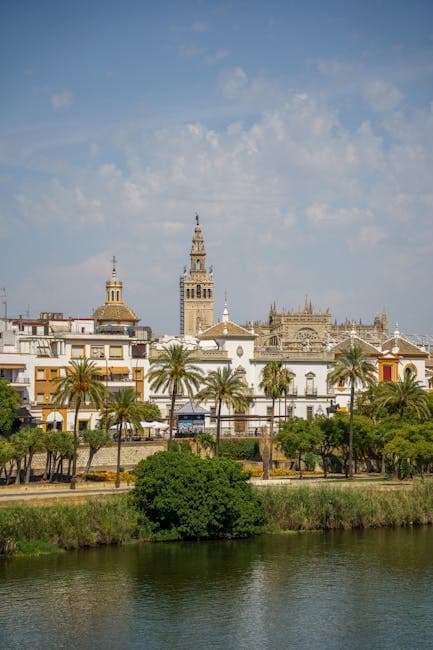
Seville: Historic Center, Riverside Trade & 1929 Expo
Sevilla, España
Audio Preview
Listen to a sample of this audio tour to get a feel for the experience.
What You'll Experience
On this Seville: Historic Center, Riverside Trade & 1929 Expo audio tour in Sevilla, you'll discover 10 carefully selected points of interest, each with its own story. The tour is designed to be completed at your own pace, with GPS navigation guiding you from one location to the next. As you approach each stop, the audio narration automatically begins, bringing history, culture, and local insights to life.
About This Tour
This tour explores central Seville from Puerta de Jerez through the Real Alcázar, Seville Cathedral, the Archivo de Indias, and surrounding historic streets. It continues through the former port district of Arenal, the Torre del Oro and Guadalquivir riverside, ending at Plaza de España. Themes include medieval and early modern history, maritime trade, architecture, and the 1929 Ibero-American Exposition.
Points of Interest
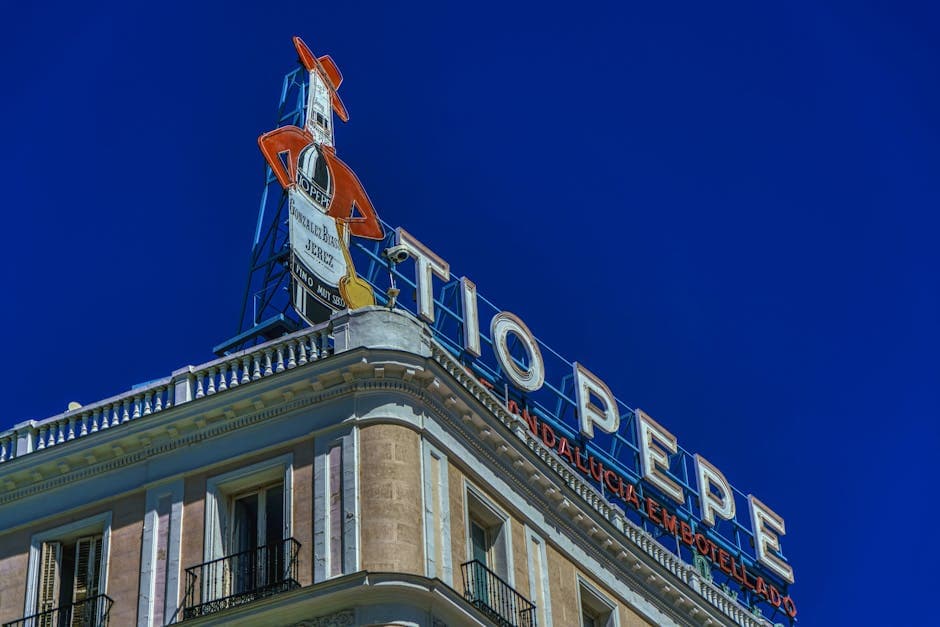
Puerta de Jerez
Historic gateway into Seville’s medieval city core
This stop introduces Puerta de Jerez as a historic entry point to Seville’s walled city and a present‑day orientation hub between the old town and the 19th–20th‑century expansions. Scripts should explain that the original city gate and walls once stood nearby, connected to the Alcázar’s defensive system and the riverside. Describe how the square evolved with modern urban reforms, tramlines, and hotels, reflecting Seville’s transition into a more modern city. An anecdote can highlight how visiting dignitaries in the 19th century often entered the city through this area, noting early travel accounts that describe their first impressions of Seville’s gardens, palaces, and orange trees.
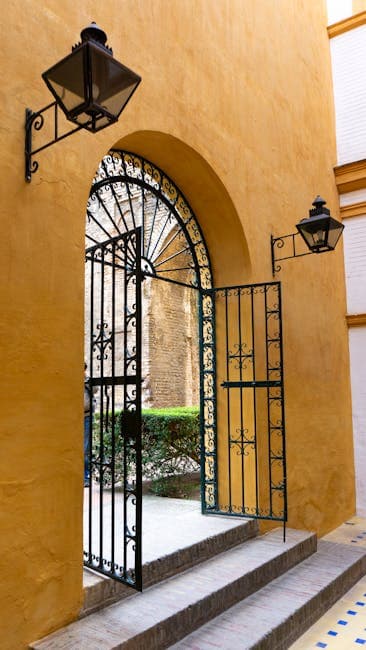
Real Alcázar de Sevilla (main entrance at Patio de Banderas)
Royal palace blending Islamic, Mudéjar and Renaissance art
This stop focuses on the Alcázar as a layered royal complex, viewed from Patio de Banderas and the main entrance area. Scripts should explain its origins under Islamic rule, its transformation after the Castilian conquest, and the remarkable Mudéjar palace commissioned by later Christian kings. Describe the exterior walls, towers, gateways, and glimpses of gardens beyond, emphasizing the mixture of decorative tilework, brick, and stone. Include references to monarchs who stayed here and decisions connected with Atlantic exploration. A unique anecdote might mention how parts of the palace were hastily re‑decorated or adapted ahead of royal weddings and ceremonies, reflecting the palace’s ongoing role as an active royal residence.
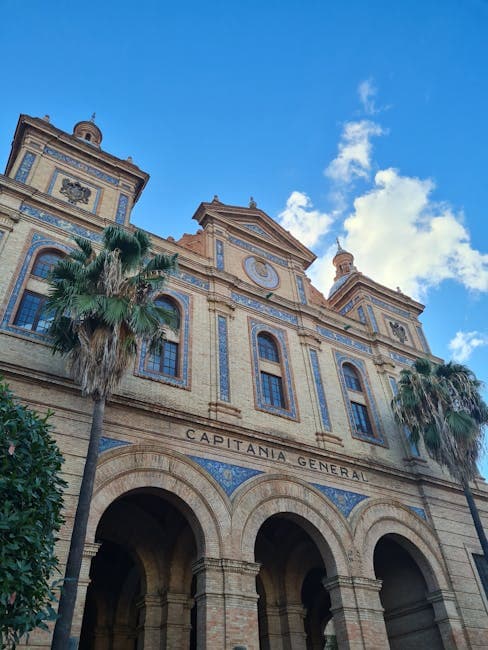
Archivo General de Indias
Imperial archive of Spain’s American possessions
This stop presents the Archivo General de Indias as the documentary heart of Spain’s early modern empire. Scripts should explain that the building was originally conceived as a merchants’ exchange before being repurposed as a central archive for documents relating to Spain’s overseas territories. Describe its sober Renaissance architecture, arcaded courtyards, and harmonious proportions, contrasting its calm order with the bustling trade it once oversaw. Mention how the archive today holds millions of pages on voyages, colonial administration, and trade routes. A unique anecdote may note that some researchers have spent decades here tracing a single expedition or family line, underlining the archive’s role in reconstructing personal and global histories.
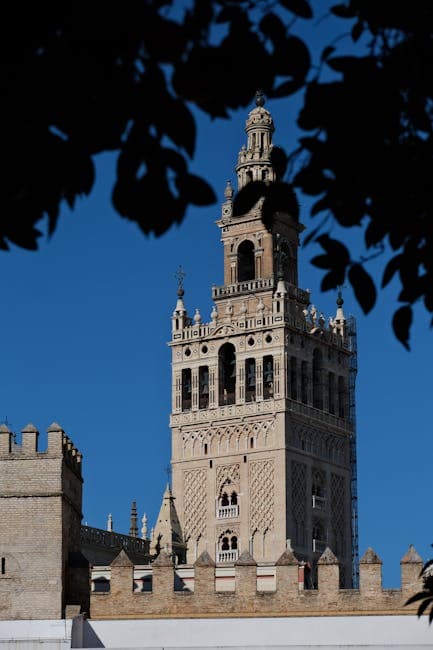
Seville Cathedral & Giralda (exterior focus)
Gothic cathedral and former mosque’s towering minaret
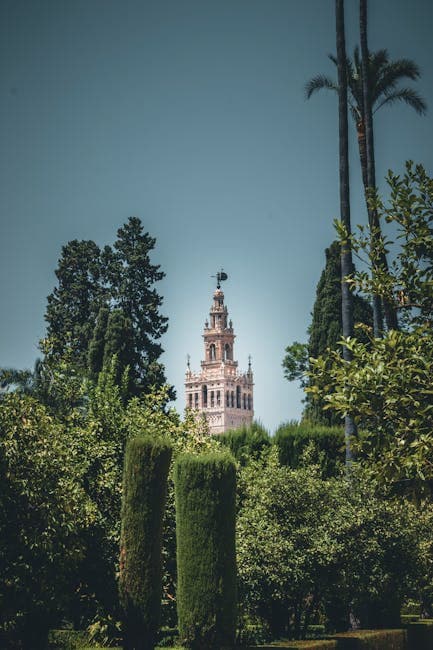
This stop highlights Seville Cathedral and the Giralda as monumental symbols of religious and urban transformation. Scripts should explain that the cathedral was built on the site of the former Great Mosque, with the Giralda tower reworked from its original minaret into a bell tower. Describe exterior features: flying buttresses, portals, sculptural programs, and the tower’s changing textures from Islamic brickwork to later additions. Emphasize the cathedral’s size and its role during Seville’s Golden Age, when wealth from American trade funded chapels and artworks. A unique anecdote can recall the reported ambition of the medieval builders who allegedly vowed to create a church so grand that future generations would think them mad, capturing the audacity behind its scale.
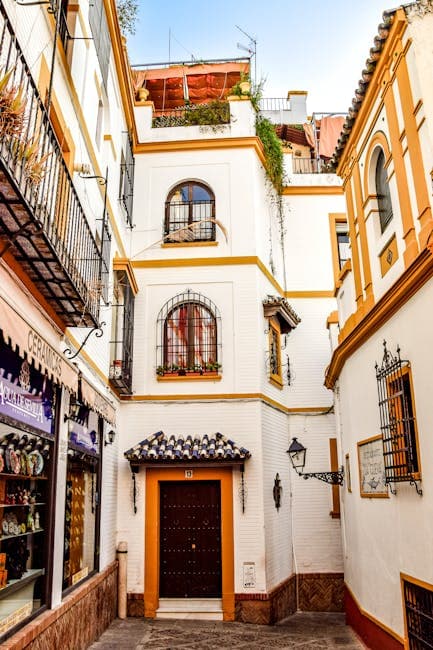
Plaza del Triunfo & Calle Mateos Gago
Transition space between monuments and historic streets
This stop uses Plaza del Triunfo and Calle Mateos Gago to transition from monumental complexes to the lived‑in cityscape. Scripts should describe Plaza del Triunfo as the space framed by the Alcázar, Cathedral, and Archivo, including its commemorative column and the sense of being at the junction of royal, religious, and administrative power. Then shift into Calle Mateos Gago, with its narrow profile, traditional houses, bars, and views of the Giralda above. Highlight how processions, religious festivals, and daily life thread through these spaces. A unique anecdote may mention how local residents once rented out balcony spots along Mateos Gago for major Holy Week processions, turning their homes into prime viewing stands for a few nights each year.
Casa de la Contratación area (around Archivo / Cathedral side)
Administrative core of Spain’s Atlantic trade monopoly
This stop focuses on the area where the Casa de la Contratación once operated, near the Cathedral and Archivo. Scripts should explain that this institution regulated trade with Spain’s American possessions, overseeing ship registration, taxes, and navigation charts, and that its buildings were embedded in this cluster of royal and ecclesiastical power. Emphasize the proximity of church, crown, and commerce here. Describe any remaining architectural hints or plaques and invite listeners to imagine crowded offices, pilots consulting maps, and cargoes being documented. A unique anecdote could highlight the role of cosmographers who met here to update sea charts after each voyage, sometimes debating new coastlines that challenged classical geography.
Arenal Quarter (old port area, including Plaza de Toros exterior)
Former river port district beside Seville’s bullring
This stop introduces the Arenal Quarter as Seville’s historic port area and links it to the exterior of the Plaza de Toros. Scripts should explain that Arenal once held shipyards, warehouses, and docks where goods from the Americas arrived before being redistributed across Europe. Describe how the area’s streets, façades, and open spaces still hint at its working‑harbor character. Then connect this riverside zone to the building of the bullring, noting its curved white and yellow façades and its role in the city’s social life. A unique anecdote might recall how sailors on leave reportedly crowded into nearby taverns, sometimes timing their shore visits to coincide with major bullfights, blending maritime and festive cultures in the same neighborhood.
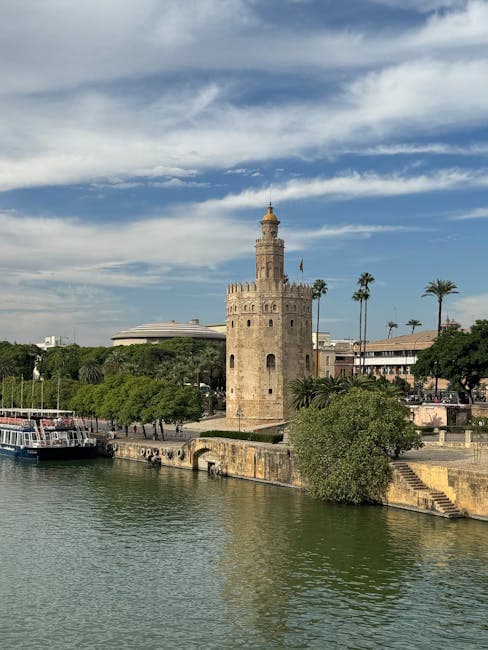
Museo Naval Torre del Oro (Torre del Oro surroundings)
Medieval riverside tower linked to naval defense
This stop centers on the Torre del Oro and its immediate surroundings by the river. Scripts should explain that the tower formed part of Seville’s medieval defenses and later helped control river traffic during the age of Atlantic trade. Describe its dodecagonal shape, pale masonry, and reflected image in the Guadalquivir, and mention later modifications and restorations. Note its connection to naval history and the nearby museum, without focusing on interior exhibits. A unique anecdote can mention the old chain system that reportedly stretched from this tower across the river to another fortification, illustrating how authorities could physically block ships from reaching the inner port.
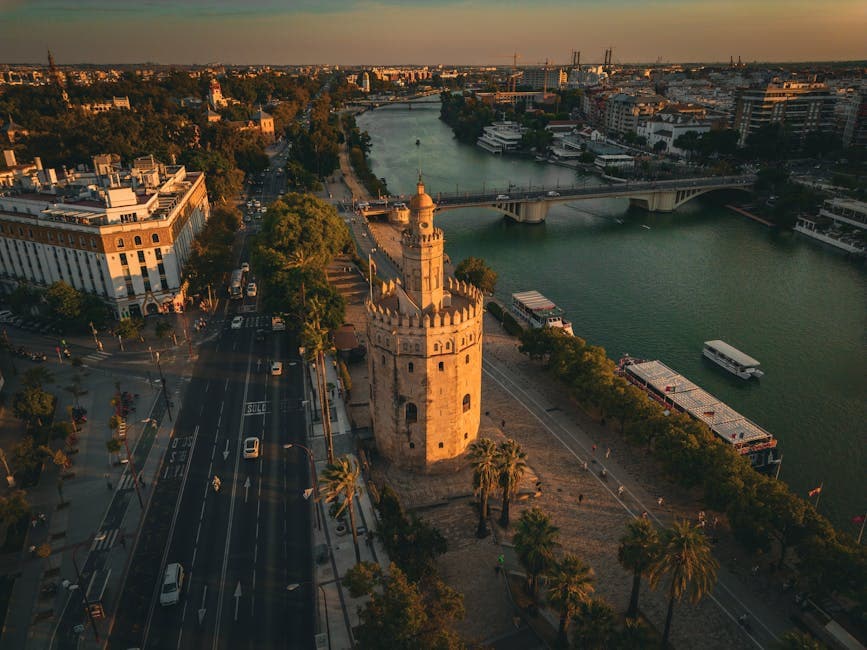
Paseo de Colón riverside walk
Modern promenade along Seville’s historic riverfront
This stop uses the Paseo de Colón to explore how Seville’s relationship with the Guadalquivir has changed over time. Scripts should describe the broad promenade, the views toward Triana across the water, and the mix of trees, benches, and modern traffic. Explain that where people now stroll and relax, there were once busy docks, shipyards, and warehouses serving Seville’s imperial trade. Emphasize shifts in river management, including efforts to control flooding and improve navigation, which altered the river’s course and banks. A unique anecdote could reference 19th‑century romantic travelers who described evening walks here and compared the lamplit riverfront to a theater stage, with silhouettes of boats and buildings as the backdrop.
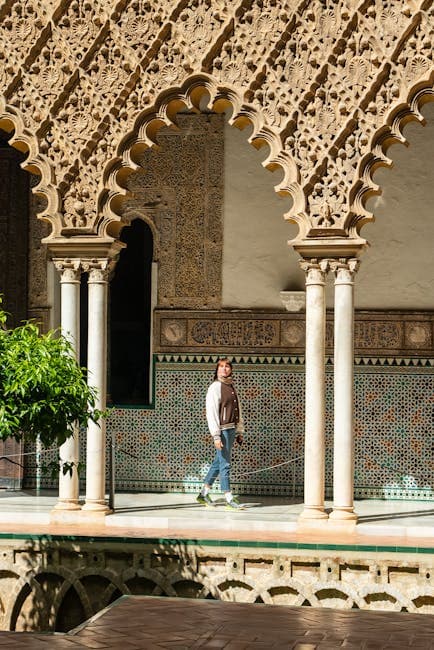
Plaza de España (historical exposition focus)
1929 exposition plaza celebrating Spain’s regions and past
This final stop presents Plaza de España as the architectural centerpiece of the 1929 Ibero‑American Exposition and a summation of the tour’s themes. Scripts should describe its sweeping semi‑circular layout, central canal, bridges, and the richly tiled alcoves representing Spain’s provinces. Explain how its design blends historicist styles, including regional Andalusian motifs, to project an image of a unified yet diverse Spain looking toward its ties with the Americas. Connect this to broader trends of world’s fairs and national self‑presentation. A unique anecdote may note that some provinces lobbied to adjust or update their ceramic scenes over time, reflecting ongoing debates about which episodes best symbolized their history on this prominent stage.
Start This Tour
Download Roamway to experience this audio tour
Tour Details
Access
Free
Stops
10 points of interest
Languages
GermanEnglishSpanishFrench
More tours in Sevilla
View all tours in SevillaOther tours you might enjoy:
Seville: Historic Tapas Streets and Riverside Barrios
This tour explores Seville’s central and riverside neighborhoods through traditional markets, historic taverns, and classic tapas streets. It covers areas around Las Setas, San Pedro, Santa Cruz, Triana, and El Arenal, focusing on food culture, everyday architecture, and the social history of bars, bodegas, and market life along the Guadalquivir River.
Seville: Palaces, Churches and City Walls Highlights
This tour follows a route from Puerta de Jerez through Seville’s historic center to the Macarena district. It features exterior views of the Real Alcázar, Cathedral and Giralda, major Baroque churches, and noble palaces, ending at the surviving city walls. Themes include medieval, Mudéjar, Renaissance, Baroque, and 19th–20th century urban history.
Seville & Triana: Riverside History, Flamenco and Crafts
This tour explores central Seville and the historic Triana neighborhood, following the river from Plaza Nueva to Calle Betis. It covers key sites such as Puente de Isabel II, Plaza del Altozano, Mercado de Triana, and Iglesia de Santa Ana, with context on flamenco origins, Inquisition history, river trade, and local ceramic traditions.
Frequently Asked Questions
How do I start this audio tour?
Download the Roamway app, search for this tour, and tap 'Start Tour'. The app will guide you to the starting point using GPS. Once you're there, the audio narration begins automatically.
Do I need an internet connection?
No! Once you've downloaded the tour in the Roamway app, it works completely offline. The GPS navigation and audio narration function without an internet connection.
Can I pause and resume the tour?
Yes! You can pause the tour at any time and resume later. Your progress is automatically saved, so you can complete the tour over multiple sessions if needed.