
Seville Riverside and 1929 Expo Parks: History and Culture
Sevilla, España
Audio Preview
Listen to a sample of this audio tour to get a feel for the experience.
What You'll Experience
On this Seville Riverside and 1929 Expo Parks: History and Culture audio tour in Sevilla, you'll discover 10 carefully selected points of interest, each with its own story. The tour is designed to be completed at your own pace, with GPS navigation guiding you from one location to the next. As you approach each stop, the audio narration automatically begins, bringing history, culture, and local insights to life.
About This Tour
This tour follows the Guadalquivir river from the Torre del Oro and Paseo de Colón to the Puente de San Telmo and Parque de María Luisa. It explores Plaza de España, literary monuments, and Plaza de América while examining Seville’s 1929 Ibero-American Exposition legacy, urban development, and cultural history amid gardens, pavilions, and historic façades.
Points of Interest
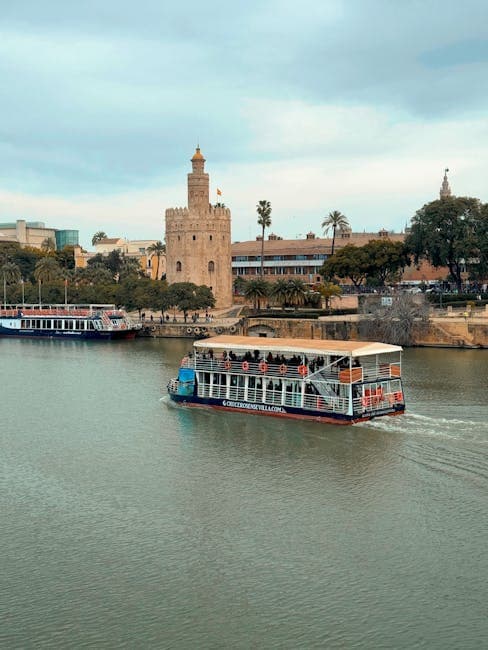
Torre del Oro (riverside starting point)
Medieval river tower guarding Seville’s historic harbor
This stop introduces the Guadalquivir riverfront through the Torre del Oro, a medieval defensive tower later linked to Seville’s role in Atlantic trade. The guide should describe its construction, materials, and how it formed part of the city walls and port control system. It should situate the listener in imperial Seville, when ships from the Americas arrived nearby, and mention the tower’s changing uses over time. An anecdote to include is the popular belief that its name may derive from golden reflections on its tiles or from storing precious cargo, highlighting how legend and economic history blend in local memory.
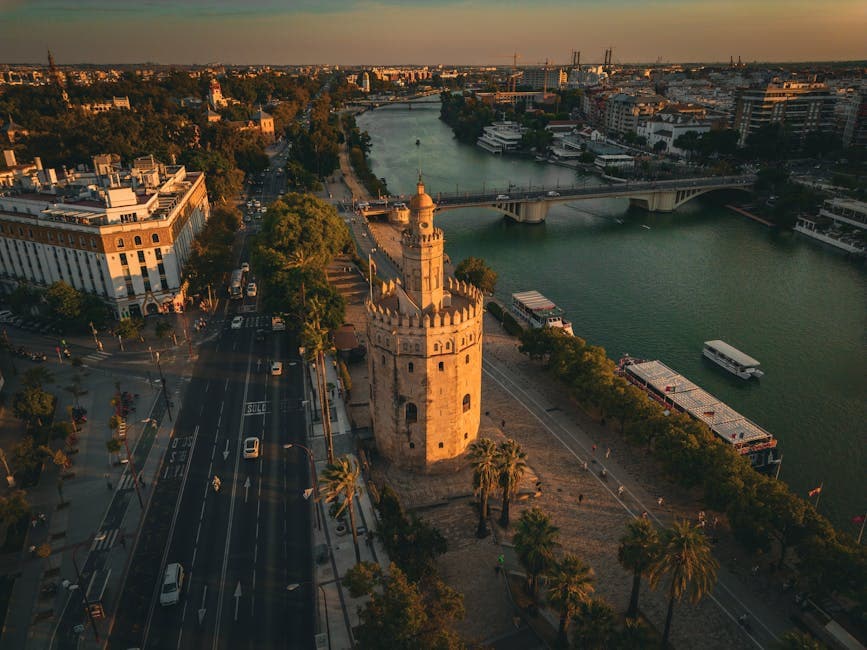
Paseo de Colón riverside promenade
Riverside walk from port city to leisure space
Here the focus shifts to how Seville’s riverfront transformed from a crowded working port into today’s landscaped promenade. The guide should evoke historic activity along the quay—warehouses, shipyards, and bustling trade—contrasted with modern joggers, cafés, and cultural venues. It should touch on 19th–20th century urban reforms, river modifications to prevent flooding, and the emergence of public promenades as symbols of bourgeois leisure. A unique anecdote could recall how temporary structures for fairs or Holy Week viewing stands have periodically turned this riverside into a theatrical backdrop for processions and festivals.
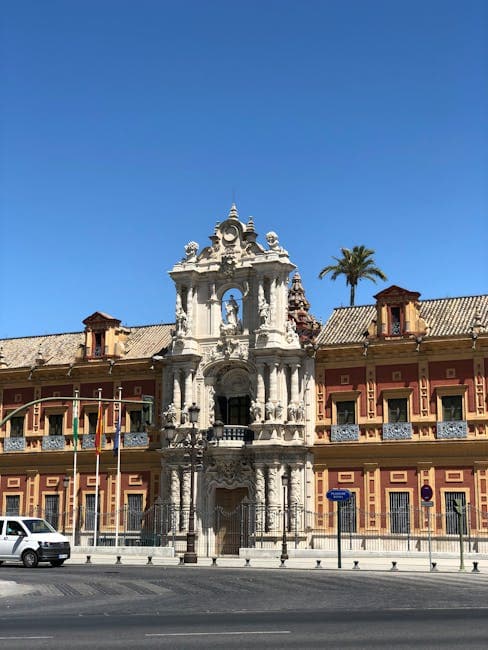
Puente de San Telmo (crossing views, exterior of Palacio de San Telmo)
Bridge vistas and baroque Palacio de San Telmo
At this stop, the listener stands on or near Puente de San Telmo, using river views to understand Seville’s geography and expansion across the Guadalquivir. The narration should explain how modern bridges eased access between the historic center and southern districts, contrasting them with earlier ferry crossings. Attention should also go to the exterior of Palacio de San Telmo, emphasizing its baroque façade, former role as a maritime college, and later as a residence for nobles and regional authorities. A distinct anecdote can describe how, before the bridge existed, processions and traffic converged around the palace’s riverside edge, making it both a physical and symbolic gateway to the city’s elite quarters.
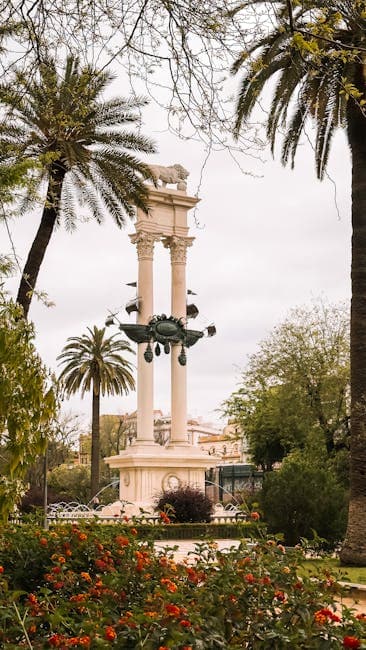
Parque de María Luisa (main entrance)
From private palace gardens to public urban park
This stop marks the transition from riverfront streets into the green world of Parque de María Luisa. The guide should explain that the park originated as part of the gardens of Palacio de San Telmo and was later donated to the city, then redesigned into a public park. It should highlight the shift from aristocratic, semi‑rural grounds to structured avenues and romantic landscaping in preparation for the 1929 exposition. A unique anecdote might recall early public reactions to the newly opened park, when locals marveled at formerly inaccessible shaded walks and fountains that had belonged to a closed-off noble estate.
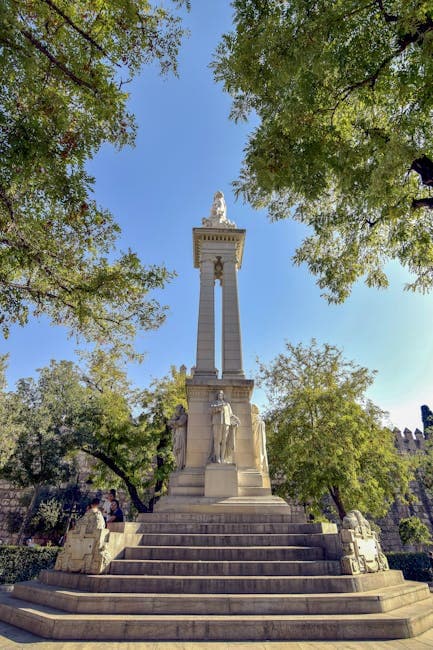
Monumento a Bécquer and nearby romantic corners
Romantic poet’s statue amid intimate garden corners
Here the focus narrows to the Monumento a Bécquer and the surrounding secluded paths. The guide should introduce Gustavo Adolfo Bécquer as a key Spanish romantic poet with strong ties to Seville, describing the sculptural group’s figures of love and melancholy as they relate to his writings. It should explore how this section of the park, with benches, trees, and semi-hidden spots, became associated with introspection and couples. A distinctive anecdote can note how some Sevillans informally consider the Bécquer monument an almost ritual spot for declarations or breakups, reflecting the poet’s enduring association with passionate, sometimes tragic, love.
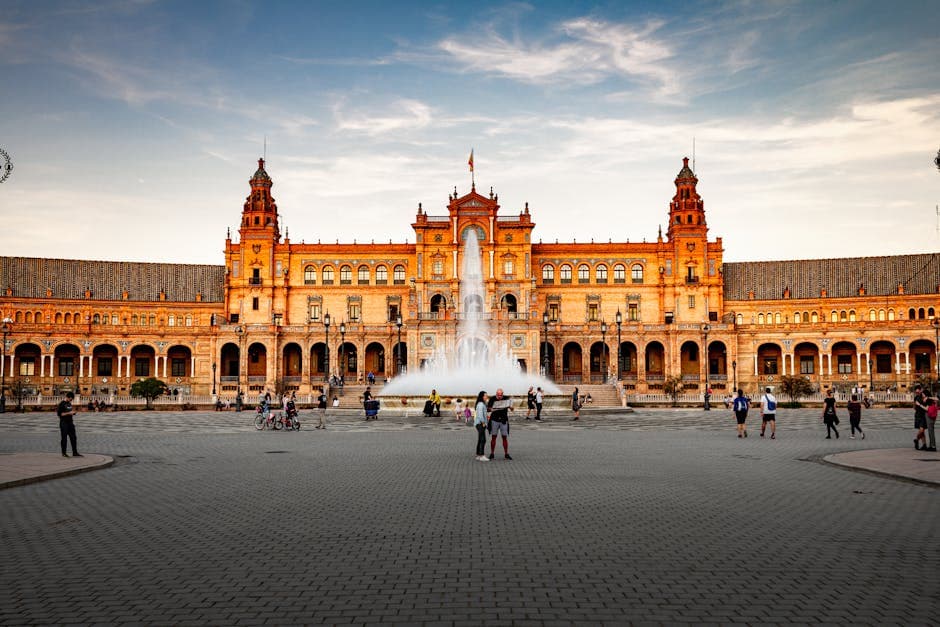
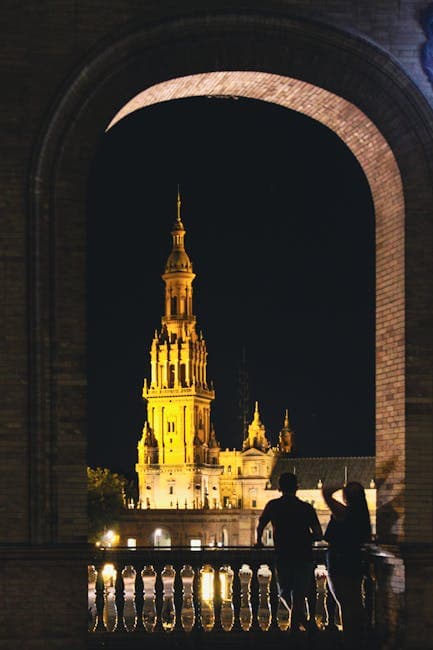
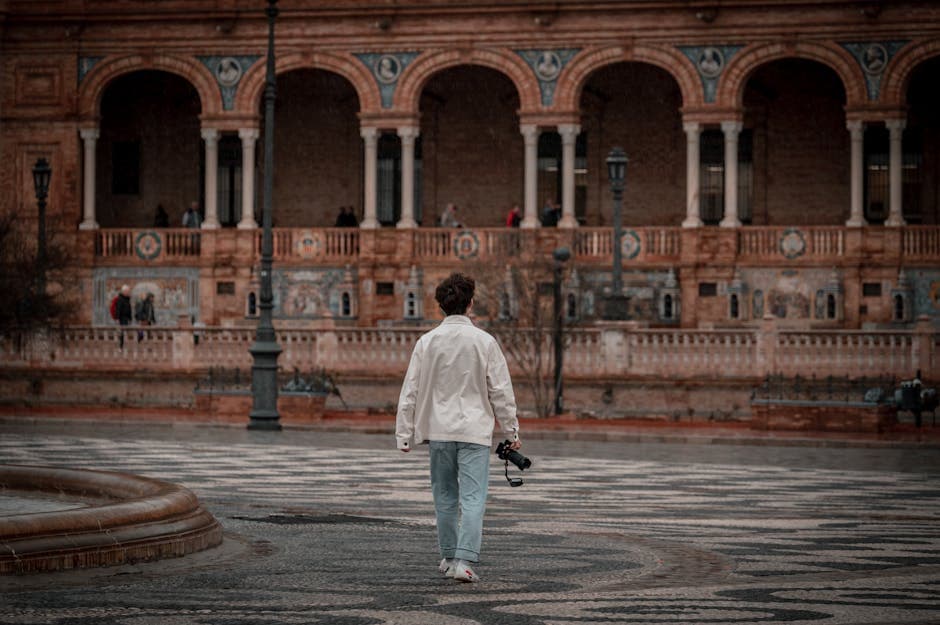
Plaza de España (central square and canal)
Monumental 1929 square uniting architecture, water, and tiles
This stop centers on Plaza de España as the grand architectural emblem of the 1929 Ibero‑American Exposition. The guide should describe its sweeping semi‑circular layout, central fountain, canal with small bridges, and elaborate ceramic balustrades and benches representing Spain’s provinces. It should present architect Aníbal González’s regionalist style, blending historical references with modern construction, and explain how the plaza symbolized Spain’s projected unity and ties to Latin America. A unique anecdote might mention how, after the exposition, locals slowly reclaimed the square for everyday uses—from children learning to ride bikes under the arches to students quietly revising on the tiled benches depicting their home provinces.
Glorieta de los Hermanos Álvarez Quintero / other literary roundabouts
Round garden plazas honoring writers and playwrights
This stop explores several small glorietas—circular clearings—dedicated to writers such as the Álvarez Quintero brothers and other literary figures. The guide should explain how these tributes, with benches, busts, and ceramic plaques, reflect early 20th‑century efforts to canonize authors connected to Seville or Andalusia. It should discuss how the Álvarez Quintero plays helped fix images of Andalusian customs and speech in popular culture. A unique anecdote could highlight how, in past decades, neighborhood theatre groups reportedly gathered near their glorieta to rehearse scenes or recite lines, treating the space almost like an open-air homage to their craft.
Plaza de América (Museo de Artes y Costumbres Populares exterior, Archaeological Museum exterior)
1929 museums framed by regionalist architecture
At Plaza de América, the guide should present the ensemble of pavilions built for the 1929 exposition, now housing museums such as the Archaeological Museum and the Museum of Popular Arts and Traditions. The narration should highlight the contrasting yet related architectural styles—neo‑Renaissance, neo‑Mudejar, and regionalist—and how they expressed a curated vision of Spain’s past. It should explain that these buildings later became repositories for artifacts from Roman Italica and for everyday Andalusian crafts and customs. A unique anecdote might mention how some Sevillans still remember school trips where the surrounding park, ducks, and ponds were as memorable as the exhibits, showing how the educational and recreational roles of the square blended together.
Remnants of 1929 pavilions along Avenida de la Palmera (walk-by of select façades)
Surviving 1929 expo façades along palm-lined boulevard
This walking segment examines remaining pavilions from the 1929 Ibero‑American Exposition that line Avenida de la Palmera. The guide should encourage visual attention to diverse architectural styles, national symbols, and decorative details that once served to represent different countries or regions. It should explain how, after the fair, many buildings found new lives as consulates, university facilities, or private residences, illustrating adaptive reuse. A unique anecdote may note that some locals like to guess which former pavilion they are passing based only on its façade ornaments—such as coats of arms, flags, or stylized flora—turning the avenue into a kind of informal guessing game of nations and identities.
Return toward the river via Jardines de Cristina
19th-century gardens easing return to the riverfront
The final stop uses the Jardines de Cristina as a gentle transition back toward the river and historic center. The guide should explain that these 19th‑century gardens predate the 1929 park developments and reflect earlier urban beautification efforts, with paths, statues, and tree-lined walks near important city gateways. It should connect them to the evolution of public green spaces as symbols of modernity and health. A unique anecdote could recall how, before larger parks drew attention southward, these modest gardens were a favored rendezvous spot for coach arrivals and promenading, serving as a sort of outdoor waiting room for travelers and locals meeting near the city’s edge.
Start This Tour
Download Roamway to experience this audio tour
Tour Details
Access
Free
Stops
10 points of interest
Languages
GermanEnglishSpanishFrench
More tours in Sevilla
View all tours in SevillaOther tours you might enjoy:
Seville: Historic Tapas Streets and Riverside Barrios
This tour explores Seville’s central and riverside neighborhoods through traditional markets, historic taverns, and classic tapas streets. It covers areas around Las Setas, San Pedro, Santa Cruz, Triana, and El Arenal, focusing on food culture, everyday architecture, and the social history of bars, bodegas, and market life along the Guadalquivir River.
Seville: Historic Center, Riverside Trade & 1929 Expo
This tour explores central Seville from Puerta de Jerez through the Real Alcázar, Seville Cathedral, the Archivo de Indias, and surrounding historic streets. It continues through the former port district of Arenal, the Torre del Oro and Guadalquivir riverside, ending at Plaza de España. Themes include medieval and early modern history, maritime trade, architecture, and the 1929 Ibero-American Exposition.
Seville: Palaces, Churches and City Walls Highlights
This tour follows a route from Puerta de Jerez through Seville’s historic center to the Macarena district. It features exterior views of the Real Alcázar, Cathedral and Giralda, major Baroque churches, and noble palaces, ending at the surviving city walls. Themes include medieval, Mudéjar, Renaissance, Baroque, and 19th–20th century urban history.
Frequently Asked Questions
How do I start this audio tour?
Download the Roamway app, search for this tour, and tap 'Start Tour'. The app will guide you to the starting point using GPS. Once you're there, the audio narration begins automatically.
Do I need an internet connection?
No! Once you've downloaded the tour in the Roamway app, it works completely offline. The GPS navigation and audio narration function without an internet connection.
Can I pause and resume the tour?
Yes! You can pause the tour at any time and resume later. Your progress is automatically saved, so you can complete the tour over multiple sessions if needed.